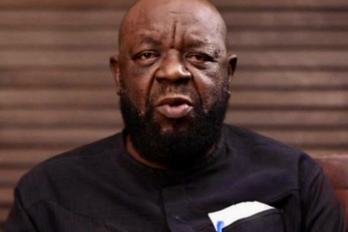
Barrister Aloy Ejimakor’s latest warning has landed at a moment when Mali is once again at the centre of West Africa’s security crisis. Reuters reported on Sunday that Malian Defence Minister Gen. Sadio Camara was killed in an attack by the al Qaeda-linked group JNIM on his residence at the Kati military base outside Bamako, while AP said the information came from a military officer and two other sources and that the government had not immediately commented.
Reuters also said JNIM claimed joint responsibility with the Tuareg-dominated FLA for coordinated attacks across Mali on Saturday.
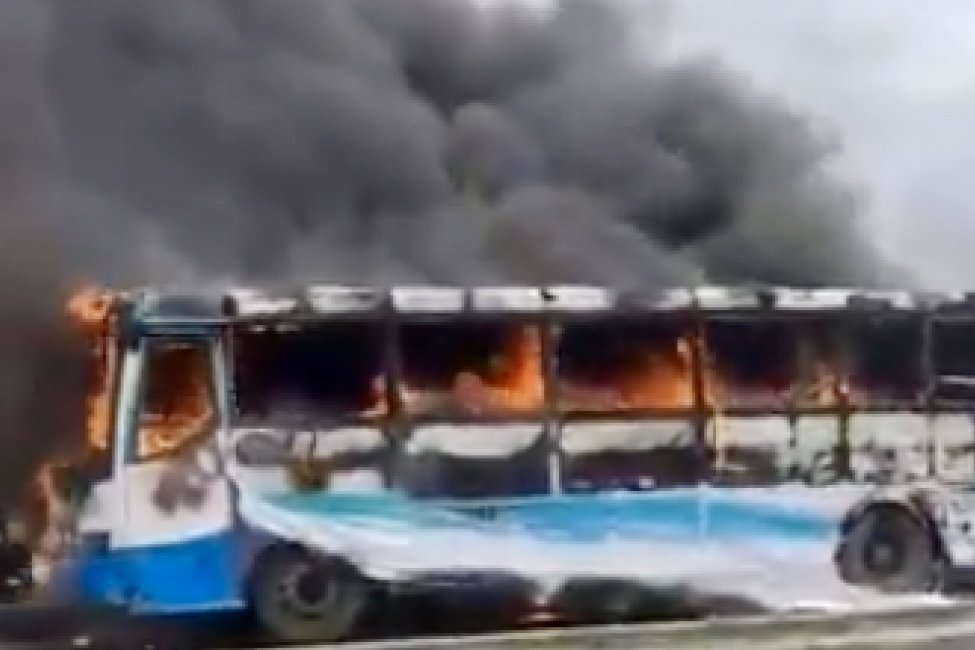
The attack was not an isolated strike but part of a wider offensive that exposed how fragile Mali’s security architecture has become.
AP described it as one of the biggest coordinated attacks in recent years, with hits across Bamako, Kati, Kidal and other cities, at least 16 wounded, and a three-day overnight curfew imposed in the capital.
ECOWAS condemned the violence and called for a coordinated regional response, while Reuters said the operation marked the first significant joint action between separatists and JNIM, with the FLA declaring Kidal “free”.
It was against that backdrop that Ejimakor took to X with a message aimed squarely at Nigeria’s counterterrorism debate.
He argued that “soft-pedalling on terror” “always backfires” and warned that there is “no such thing as a ‘repentant’ terrorist”.
His comments have been seized on because they strike at one of the most disputed questions in Nigeria’s security policy, namely whether insurgents who surrender can be genuinely de-radicalised and safely reintegrated.
That debate is far from academic. The Federal Government continues to defend Operation Safe Corridor as a structured non-kinetic response, not a reward for violence.
The programme’s own portal says Brigadier General Yusuf Ali has stressed that it is “not intended to prioritise ex-terrorists over victims”, while Punch reported that 744 former terrorists and victims graduated last week and that the Chief of Defence Staff said the scheme is “not an amnesty programme” but a deliberate strategy to reduce violence and weaken extremist recruitment.
Yet the official messaging also shows why the policy remains politically combustible. The programme’s materials and the Punch report both stress reception, monitoring and community acceptance as critical to success, which is effectively an admission that reintegration only works where trust is strong enough to prevent relapse and local backlash.
That is the heart of the dispute around the phrase “repentant terrorist”: the state uses it to describe surrender and rehabilitation, while critics hear a dangerous assumption that ideology can be erased simply by process and paperwork.
Mali’s crisis also carries a wider regional warning. Reuters reported in November 2025 that JNIM’s fuel blockade had pushed Bamako under severe pressure and that the group had been operating within 50 kilometres of the capital, with analysts saying the strategy was the gravest challenge yet to Mali’s military rulers.
In April 2026, Reuters further reported that violent rivalry between Sahel-based jihadist groups had spilled into Niger for the first time, while poor security cooperation between Niger and Nigeria was creating a gap JNIM could exploit.
In plain terms, the militant networks are becoming more mobile, more collaborative and more difficult to contain.
For Nigeria, that makes the Mali episode more than a headline from a neighbouring state. It is a warning about what happens when armed groups recover space, coordination and political leverage faster than governments can adapt.
The hard lesson is not that every reintegration effort is doomed, but that rehabilitation without rigorous screening, sustained monitoring and credible community safeguards can become a security liability.
That is the inference the Mali crisis now throws back at Abuja, and it is why Ejimakor’s warning has found such traction in the national conversation.
Mali’s battlefield shock, then, has become Nigeria’s policy argument. One camp sees confirmation that extremists do not change, only pause. The other insists that surrender, deradicalisation and reintegration remain necessary tools in a long war that cannot be won by force alone.
What the latest events in Mali do prove is that any state that gets its balance wrong pays for it in blood, territory and credibility.
Follow us on our broadcast channels today!
- WhatsApp: https://whatsapp.com/channel/0029VawZ8TbDDmFT1a1Syg46
- Telegram: https://t.me/atlanticpostchannel
- Facebook: https://www.messenger.com/channel/atlanticpostng