Explore Lagos State’s ambitious strategy to boost its music industry, elevate ‘Detty December,’ and drive economic growth through talent development and legal reforms.
IKEJA, Lagos State — In a strategic move to solidify Lagos as Africa’s premier entertainment hub, the Lagos State Ministry of Tourism, Arts, and Culture has announced comprehensive initiatives aimed at bolstering the music industry and enhancing the ‘Detty December’ experience.
This announcement follows the unprecedented success of the 2024 ‘Detty December,’ which attracted over 1.2 million attendees from both Nigeria and the diaspora.
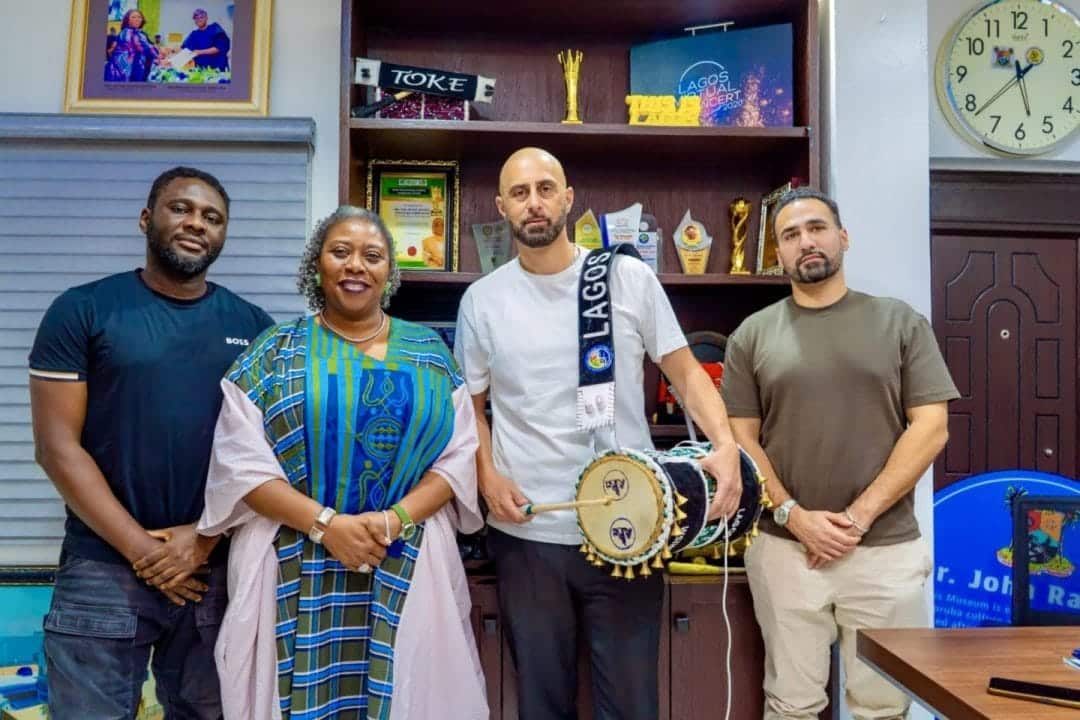
During a recent meeting with Ghazi Shami, founder of Empire Distribution, Records, and Publishing Company USA, Commissioner for Tourism, Arts, and Culture, Mrs. Toke Benson-Awoyinka, emphasised the pivotal role of the entertainment sector in the state’s economic and cultural development.
She highlighted the contributions of Nigerian music icons such as Wizkid, Burna Boy, Tiwa Savage, Olamide, Adekunle Gold, and Seyi Vibez, acknowledging their influence in elevating Lagos’s global profile.


Explore Lagos State’s ambitious strategy to boost its music industry, elevate ‘Detty December,’ and drive economic growth through talent development and legal reforms. Explore Lagos State’s ambitious strategy to boost its music industry, elevate ‘Detty December,’ and drive economic growth through talent development and legal reforms. Explore Lagos State’s ambitious strategy to boost its music industry, elevate ‘Detty December,’ and drive economic growth through talent development and legal reforms.


Strategic Initiatives to Propel the Music Industry
Recognising the need for structured support within the music sector, Mrs. Benson-Awoyinka unveiled plans to establish a music academy, conduct talent hunts, and introduce specialised training programmes.
These initiatives aim to cultivate a pipeline of skilled professionals, including musicians, executives, lawyers, and engineers, ensuring Lagos’s continued dominance on the global music stage.
She stated, “Our goal is to nurture talents and create a pipeline of skilled professionals, ensuring Lagos continues to dominate the global music scene.”
Legal Framework and Industry Challenges
Ghazi Shami commended Lagos for its achievements but pointed out the critical need for a robust legal framework to support the Nigerian music industry. He expressed concern over the lack of specialised legal expertise, which often results in young artists signing unfavourable contracts.
Shami emphasised the importance of trained professionals well-versed in record deals, royalty agreements, and intellectual property rights, advocating for collaborative efforts to address these issues.
He expressed his willingness to work with the Lagos State Government to empower Nigerian artists in securing better deals and protecting their interests.
Economic Impact of ‘Detty December’
The ‘Detty December’ festivities have become a significant economic driver for Lagos, with the 2024 edition reportedly generating substantial revenue across various sectors. The hospitality industry experienced a surge, with hotels and short-let apartments reporting near-full occupancy rates.
Restaurants, bars, and tour operators also saw increased patronage, contributing to the state’s economy. The influx of over 1.2 million visitors underscores Lagos’s appeal as a global destination for entertainment and culture.
The Role of Afrobeats in Cultural Promotion
Afrobeats, Nigeria’s most celebrated cultural export, plays a central role in ‘Detty December’s’ allure. Artists like Burna Boy, Wizkid, and Tiwa Savage headline concerts that attract fans worldwide.
The genre’s global dominance has turned Lagos into a hub for concerts and festivals, further promoting the city’s cultural heritage. The synergy between Afrobeats and ‘Detty December’ is poised to reach new heights, reinforcing Lagos’s position on the world stage.
Future Prospects and Government Commitment
Aligning with Governor Babajide Sanwo-Olu’s vision of leveraging tourism for economic and cultural development, the Lagos State Government is committed to making future editions of ‘Detty December’ even more impactful.
The planned initiatives, including the establishment of a music academy and the development of a robust legal framework, aim to address existing challenges and foster a sustainable environment for the music industry.
These efforts are expected to enhance Lagos’s reputation as Africa’s entertainment capital and contribute to the overall growth of Nigeria’s creative economy.
A Positive Assessment
The Lagos State Government’s proactive approach to strengthening the music industry and enhancing the ‘Detty December’ experience reflects a strategic vision for cultural and economic advancement.
By addressing critical areas such as talent development and legal infrastructure, Lagos is poised to reinforce its status as a global entertainment hub, offering immense opportunities for artists, investors, and stakeholders in the creative sector.
A Deep Dive into Lagos’s Entertainment Economy
The Lagos State Government’s renewed focus on the music industry comes at a critical juncture for Nigeria’s entertainment economy. As the epicentre of the nation’s creative sector, Lagos has long been a breeding ground for artistic talent. Yet, the gap between the city’s potential and the structural support available has hindered sustainable growth.
By integrating its entertainment strategy with broader economic goals, the government is setting a precedent for how African cities can leverage their cultural assets for development.
The 2024 ‘Detty December’ festivities showcased the immense economic power of the entertainment industry. With over 1.2 million attendees, the event spurred a cascade of financial benefits across sectors. Small and medium-sized businesses, particularly in the hospitality, transportation, and retail industries, experienced a boom.
For instance, short-let apartments and ride-hailing services reported record revenue, while vendors at event venues saw unprecedented sales.
This economic ripple effect underscores the potential of the Lagos State Government’s plans to deepen investment in the music industry. Analysts note that if properly harnessed, the entertainment sector could rival oil and gas as a top revenue generator for Lagos State.
However, achieving this will require addressing systemic issues that have long plagued the industry, including a lack of formalised structures and regulatory oversight.
The Global Appeal of ‘Detty December’ and Afrobeats
Much of Lagos’s current entertainment clout stems from the global rise of Afrobeats. Artists such as Burna Boy, Wizkid, and Tiwa Savage are not just local celebrities—they are international icons whose music dominates global charts and streaming platforms. Their association with Lagos lends credibility and allure to events like ‘Detty December.’ Foreign tourists, drawn by these artists, flock to the city, contributing to its cultural tourism boom.
The integration of Afrobeats into the ‘Detty December’ framework has been a masterstroke for Lagos State. The genre’s infectious rhythms, paired with the festive atmosphere, create a unique cultural experience that is difficult to replicate elsewhere.
As a result, Lagos has become synonymous with December celebrations, a distinction that positions it favourably against global entertainment hubs like Miami, Ibiza, and Rio de Janeiro.
However, the success of these events also raises questions about their inclusivity. Critics argue that the high cost of tickets for many ‘Detty December’ concerts and events excludes a significant portion of Lagos’s population. While international tourists and affluent Nigerians enjoy star-studded performances, many local residents are left out. Addressing this disparity will be crucial for the government as it seeks to balance economic gains with social equity.
Legal Infrastructure: A Weak Link in the Music Ecosystem
Ghazi Shami’s critique of the Nigerian music industry’s legal framework shines a spotlight on one of its most glaring deficiencies. The lack of specialised legal expertise has left many artists vulnerable to exploitative contracts and unfavourable deals. Shami’s observation that international lawyers often handle contracts meant for Nigerian practitioners is a damning indictment of the system.
Without robust legal protections, Nigerian artists are at risk of losing ownership of their intellectual property. This issue has long-term implications not only for individual musicians but also for the broader industry. Intellectual property rights are the bedrock of a thriving creative economy, and their absence stifles innovation and discourages investment.
The Lagos State Government’s plans to address this gap through training programmes for music executives and lawyers are a step in the right direction. By equipping professionals with the knowledge to navigate complex contracts and royalty agreements, Lagos can create an ecosystem that safeguards artists’ interests while fostering industry growth.
The Promise of a Music Academy and Structured Talent Development
One of the most ambitious aspects of the government’s plan is the establishment of a music academy. This initiative has the potential to transform Lagos into a global talent hub, rivalling institutions like Berklee College of Music in the United States. By focusing on both the creative and technical aspects of music production, the academy could fill critical skill gaps in the industry.
Beyond training musicians, the academy aims to produce a new generation of music executives, sound engineers, and legal experts. This holistic approach is necessary to sustain Lagos’s dominance in the global music scene. It also aligns with the broader vision of the state government to create jobs and drive economic growth through the creative sector.
However, the success of this initiative will depend on its implementation. Similar projects in Nigeria have often fallen victim to bureaucratic inefficiencies and corruption. To avoid these pitfalls, the government must ensure transparency and accountability in the academy’s operations. Partnerships with private sector stakeholders, like Empire Distribution, could provide the expertise and resources needed to make the academy a world-class institution.
The Role of Public-Private Partnerships
The involvement of private entities like Empire Distribution underscores the importance of public-private partnerships in driving the growth of Lagos’s music industry. Such collaborations bring not only financial investment but also global best practices and networks. Empire’s willingness to work with the Lagos State Government on legal and structural reforms is a testament to the city’s potential as a global entertainment capital.
These partnerships could also pave the way for innovative financing models, such as music investment funds. By providing capital to emerging artists and entrepreneurs in the music industry, these funds could accelerate the development of Lagos’s creative economy. However, the government must establish clear guidelines to ensure that these partnerships benefit local stakeholders and do not perpetuate existing inequalities.
Challenges and the Way Forward
Despite the optimism surrounding these initiatives, significant challenges remain. The high cost of living in Lagos poses a barrier to the accessibility of its entertainment offerings. Additionally, the city’s infrastructure struggles to cope with the influx of tourists during peak periods like ‘Detty December.’ Traffic congestion, inadequate public transportation, and limited venue capacity are recurring issues that could undermine the long-term success of the government’s plans.
Moreover, the music industry itself faces internal challenges, including piracy, limited access to funding, and a lack of formalised distribution channels. Addressing these issues will require a multi-faceted approach that combines government intervention with private sector innovation.
A Vision for the Future
The Lagos State Government’s ambitious plans to elevate the music industry and enhance the ‘Detty December’ experience represent a bold vision for the city’s future. By addressing critical gaps in talent development, legal infrastructure, and industry regulation, Lagos is positioning itself as a global leader in entertainment and culture.
However, achieving this vision will require sustained effort, transparency, and collaboration. The government must remain committed to its goals, ensuring that the benefits of its initiatives are felt across all segments of society. If successful, Lagos could set a benchmark for how African cities can leverage their cultural assets to drive economic growth and global recognition.
Additional report by: Taiwo Adebowale
Atlantic Post Senior Business Correspondent