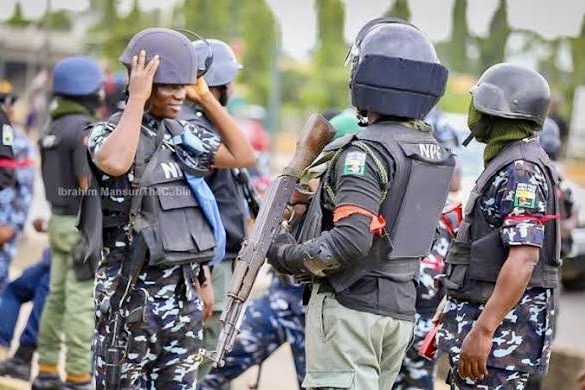
The Federal High Court in Abuja has authorised the Peoples Democratic Party (PDP) to conduct its South South Zonal Elective Congress in Calabar on February 22, 2025, dismissing an interim injunction sought against it. This ruling reflects ongoing struggles for democratic integrity in Nigeria’s political landscape, shaped by its tumultuous history.
ABUJA, Nigeria — The Federal High Court in Abuja, under Hon. Justice J.K. Omotosho, has made it possible for the Peoples Democratic Party (PDP) to hold its South South Zonal Elective Congress in Calabar, Cross Rivers State, on February 22, 2025. This is a dramatic development that has caused a stir in Nigerian politics.
This landmark ruling, handed down on Friday, February 21, 2025, comes as a repudiation of the interim injunction motion sought by plaintiffs Desmond Owei and Osahon Terry Okonedo—a decision that has not only immediate ramifications for the party but also a broader resonance within the historical tapestry of Nigerian politics.
The court’s decisive dismissal of the ex parte application to restrain the congress, and its insistence that the related Motion on Notice be served to all respondents with a subsequent hearing scheduled for March 4, 2025, underscores a judicial commitment to procedural fairness.
The order, supported by the affidavit of Vincent Sani from Dr. O.J. Onoja SAN and Associates and advocated by esteemed legal practitioners including Senior Advocate of Nigeria George Ibrahim, reveals an institutional determination to prevent any undue delay in the electoral processes within the PDP.
Yet, beneath the legalese of court orders lies a story of political turbulence and a quest for legitimacy—a narrative that finds echoes in Nigeria’s own troubled political past.
Indeed, the current internal dynamics within the PDP evoke memories of the fraught years under General Ibrahim Babangida’s military rule. For eight long years, Babangida’s regime (1985–1993) was marked by a precarious balancing act between repression and a semblance of democratic experimentation.
While the Babangida administration introduced policies that hinted at a transition to civilian rule, its penchant for political manipulation, electoral rigging, and calculated ambiguity sowed seeds of discontent and mistrust.
The legacy of Babangida’s tenure is indelibly linked to the phenomenon of political theatre—a spectacle where the rhetoric of reform masked the underlying realities of authoritarian control. This period of military autocracy culminated in the notorious June 12 struggle, an event that has since become a symbol of Nigeria’s unyielding demand for genuine democracy.
The annulment of the June 12, 1993, presidential election—a decision that was widely perceived as the culmination of military hubris—ignited a fervent resistance among Nigerians. It was a struggle characterised not merely by a rejection of a single political act, but by an enduring battle against the pervasive culture of electoral manipulation and institutional subjugation.
The June 12 movement, imbued with the spirit of resistance and the cry for democratic justice, continues to inspire political discourse and action, even as modern-day Nigeria grapples with its own electoral challenges.
Fast forward to the present, and the PDP’s internal election saga is unfolding against this backdrop of historical contestation. The High Court’s ruling is not merely a procedural victory; it is a reaffirmation of the necessity to uphold democratic principles even within party structures.
Critics argue that the PDP’s internal dynamics have, at times, mirrored the opaque and contentious practices of past regimes. The current legal battle, therefore, represents more than an isolated dispute—it is part of a broader narrative about the evolution of Nigeria’s political landscape from the shadow of military dominance to the complexities of a modern multiparty democracy.
The decision to allow the South South Zonal Elective Congress to proceed is emblematic of the judiciary’s cautious yet assertive approach in mediating internal party disputes.
It highlights the importance of adhering to constitutional processes, ensuring that no single faction can derail the democratic course of action by resorting to extrajudicial interventions.
In this sense, the court’s stance is reminiscent of the principles that were fought for during the June 12 struggle—a struggle that underscored the imperative of accountability, transparency, and the rule of law.
Yet, as the PDP gears up for the congress in Calabar, there remains an undercurrent of apprehension among political observers. The spectre of Babangida’s rule looms large, not as a nostalgic recall but as a cautionary tale.
It serves as a reminder that the vestiges of authoritarianism can persist in subtler forms, especially within the corridors of party politics. The internal divisions within the PDP, if left unchecked, could compromise not only the integrity of the party’s electoral processes but also the broader democratic aspirations of Nigeria.
In drawing these parallels, it is essential to recognise that the battle for democratic consolidation in Nigeria is far from over. While the High Court’s ruling is a significant milestone, it is merely one episode in a long, arduous journey towards genuine political reform.
The PDP, like many political entities in Nigeria, must now navigate a delicate balance—ensuring that internal electoral processes are conducted with the same rigour and fairness demanded of national elections. This is a challenge that requires not only legal rectitude but also a deep-seated commitment to the democratic ideals that emerged from the ashes of military rule and the June 12 struggle.
In conclusion, the High Court’s decision to permit the South South Zonal Elective Congress to proceed is a testament to the enduring strength of Nigeria’s legal and democratic institutions. It is a reminder that even as the ghosts of past regimes linger, the march towards a transparent and accountable political system remains unstoppable.
As Nigeria stands at this critical juncture, the lessons of Babangida’s era and the resolute spirit of the June 12 movement should serve as guiding lights, steering the nation away from the pitfalls of past autocracies and towards a future defined by true democratic governance.