United States Secretary of War Pete Hegseth has issued one of the starkest public warnings yet over the wave of violence afflicting Nigeria, telling Islamist militants and armed herder groups that Washington is prepared to act if Abuja fails to halt attacks on Christian communities.
The Department of War published a readout of high level talks between Secretary Hegseth and Nigeria’s National Security Adviser Mallam Nuhu Ribadu at the Pentagon. Many Nigerian outlets have reproduced what officials describe as an explicit statement. This statement shows intent to deter and degrade the militants responsible for mass murder.
Hegseth’s language, repeated in multiple press summaries and social posts, is deliberately martial. It frames the phenomenon as targeted violence against Christians and signals that the new War Department views the attacks as an affront that may justify direct kinetic measures if partner state action is insufficient.
The readout stresses the Department’s wish to work closely with Nigeria. The goal is to protect civilians and press for urgent Nigerian action. They aim for enduring efforts by Nigeria.
Numbers quoted by Hegseth and amplified in allied advocacy channels are both large and contested. He invoked cumulative figures of Christians killed since the insurgency widened in 2009 and cited dramatic 2025 rates.
Independent Nigerian NGOs and faith based monitors such as Intersociety have published data asserting that thousands of Christians were killed in 2025 alone. They claim that the broader toll since 2009 runs into the tens of thousands.
More than 7,000 Christian deaths occurred in the first 220 days of 2025, according to Intersociety’s reporting. Related catholic and missionary media also cite headline numbers of about 125,000 Christian fatalities in recent years. Those figures have driven the urgency behind calls for external action.
That said, the factual picture is complex and contested. International news organisations and analysts warn against simple causal readings.
Scholars and some reporters point to overlapping drivers of violence in Nigeria. These include jihadist insurgency in the north and Lake Chad basin. There are also communal clashes and the militarisation of farmer herder disputes in the Middle Belt. Additionally, competition over land and grazing routes is a factor. Porous state control and criminal economies exploit the weak rule of law.
A careful reading of the literature shows genuine patterns of targeted attacks on Christian communities in certain theatres. It also warns that different datasets use different inclusion criteria. Furthermore, attribution and motive need on the ground forensic work.
A historical perspective is essential. The Boko Haram insurgency emerged in 2009. It then splintered with ISWAP. This created waves of terror that have devastated the north east.
Violence linked to Fulani militia groups has surged in the Middle Belt and parts of the northwest. These groups are sometimes described as armed pastoralists. Their actions have produced mass displacements and communal killings over the past decade.
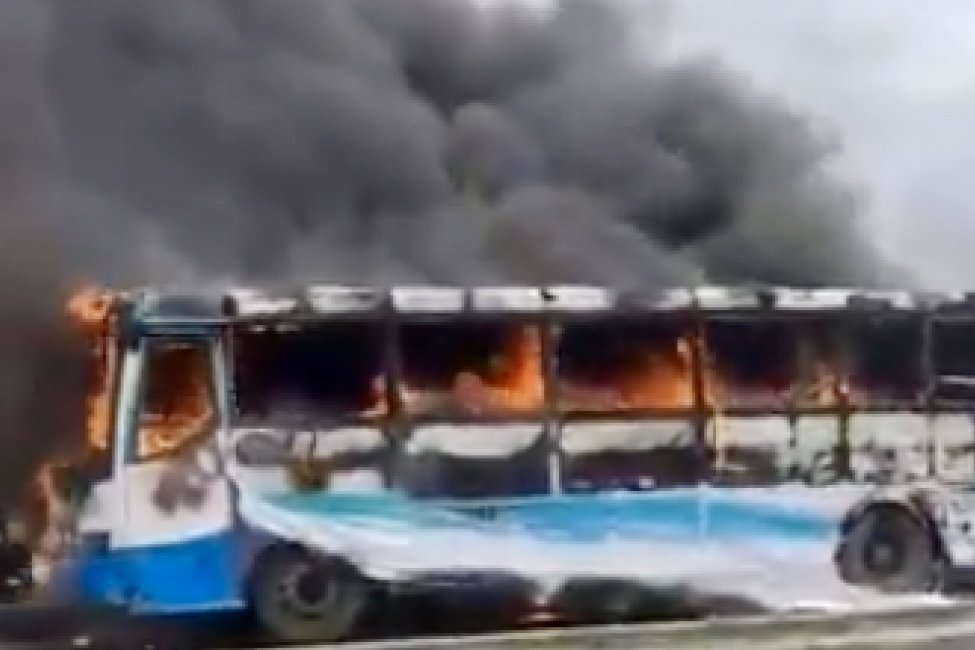
Independent monitors and church groups say entire Christian villages have been depopulated and dozens of church buildings burned. The legal threshold of genocide requires proof of intent to destroy, in whole or in part, a protected group.
That is a high bar. Therefore, the international legal conversation now pivots on evidence of discriminatory intent. It also focuses on scale.
The diplomatic calculation is delicate. A US department publicly warning of unilateral action risks a rupture with Abuja. It offers ability that Nigeria says it needs.
The Pentagon readout frames US action as contingent and cooperative. Nevertheless, the rhetoric is to inflame nationalist and sovereignty concerns inside Nigeria. It also complicates multilateral diplomacy. Equally, for victims and survivors, external pressure feel like a vindication after long years of perceived neglect.
What must happen next is plain from a security and humanitarian point of view.
First, transparent and independent forensic investigations should be opened into representative mass attacks. These investigations should establish the motive, decide the chain of command, and assign criminal responsibility.
Second, Nigeria should get tailored capacity assistance on intelligence, logistics, and protection of civilians. It should keep operational control where possible.
Third, all international actors must agree on a common standard for counting victims. Documenting incidents is also necessary. This ensures that policy is built on shared facts, not competing tallies.
For Nigerians, the Hegseth moment is consequential. It has transformed a contested rhetoric into a policy flashpoint. It has placed Nigeria’s internal security crisis on the strategic map of an administration prepared to name victims and threaten action. That in itself will change the politics of accountability at home and the posture of international partners abroad.
Additional reporting by Peter Jene, Senior National Affairs Correspondent.
Follow us on our broadcast channels today!
- WhatsApp: https://whatsapp.com/channel/0029VawZ8TbDDmFT1a1Syg46
- Telegram: https://t.me/atlanticpostchannel
- Facebook: https://www.messenger.com/channel/atlanticpostng