
Peter Jene, Senior National Correspondent
Nigeria is currently going through one of the most challenging periods in its agricultural history. In addition, the nation is dealing with an unparalleled food crisis that might result in millions of people losing hope and becoming hungry. The terrible floods that have destroyed ten states in the northern region, sinking farmlands and damaging the livelihoods of countless farmers, have alarmed the agro-allied business. There is a lot of pressure on the federal government to act quickly to avert a national emergency because experts are forecasting that the situation will only worsen.

A Record-Setting Agricultural Disaster
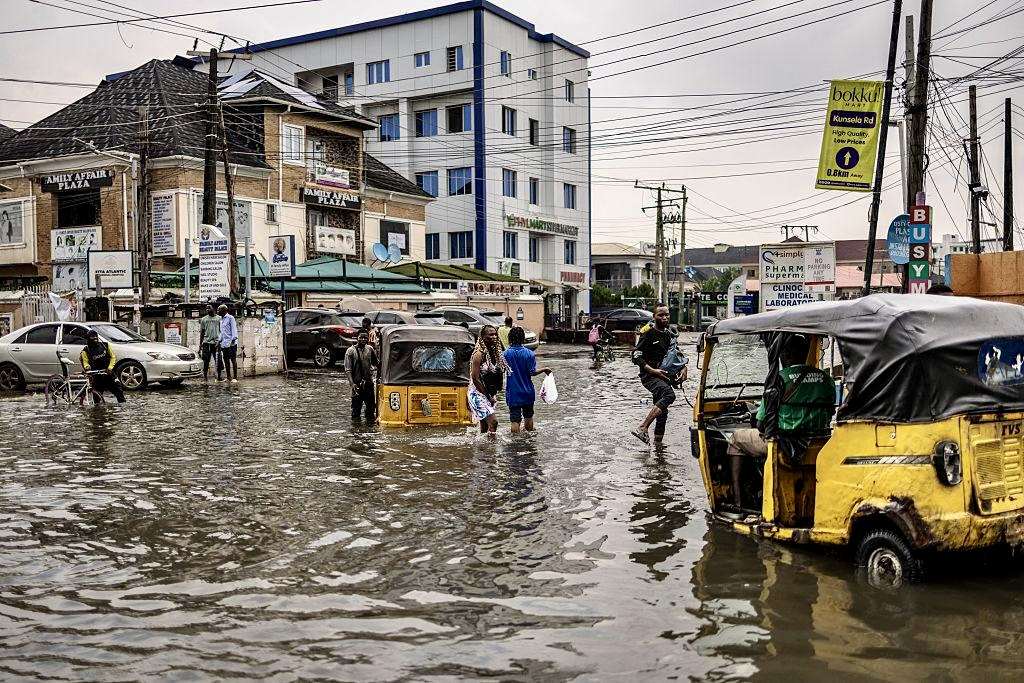
The recent floods in Kaduna, Kano, Jigawa, Nasarawa, Taraba, Bauchi, Zamfara, Yobe, Sokoto, and Kebbi states have been nothing short of disastrous. This natural disaster, which has been exacerbated by climate change, has devastated vast tracts of cropland. Millions of people who live in food poverty and the country’s food output are both at risk from this.
“We are seeing unprecedented levels of devastation, and the repercussions of inaction will be dire,” Bello Yakazsi, a prominent agricultural investor from Toro LGA in Bauchi State, warned in an exclusive interview with The PUNCH. “It is high time that the Federal Government declared a state of emergency in the country’s agricultural sector.”
Yakazsi’s appeal for action acknowledges how serious the issue is. He argues that while natural factors may be beyond human control, governments may be extremely important in mitigating the effects of disasters. “This is not the time for politics,” he continued, emphasising the need for prompt action to halt the hunger pandemic.
A Perfect Storm: The Combined Risks of Flood and Drought
A perfect storm of calamities is striking Nigeria’s northern states. The constant rains not only bring disastrous flooding but also pose a major risk to cereals and other important crops. Farmers now run the possibility of losing their whole crop to flooding, adding to the effects of the drought that they were already dealing with earlier in the year.
According to forecasts from the National Emergency Management Agency (NEMA), there was a high likelihood of flooding in 14 Local Government Areas (LGAs) in Kano State. With disastrous results, this prophecy has come true. Farmers in Ricin Gado, like as Mallam Musa Sani, have voiced serious concerns about how the extended rains will affect their crops. “We’ve had a lot of rain since the beginning of August, and it continues for several hours every day. Crop growth is hampered by excessive rains, and floods puts us at risk of losing everything,” said Sani.
Important infrastructure has also been destroyed as a result of the constant rains. For instance, the floods in Jigawa State destroyed approximately 2,744 hectares of agriculture; the State Emergency Management Agency said that 21 people had died and that homes and other structures had sustained major damage. The estimated loss of over N1 billion to farmers is a huge financial blow.
A Potential National Food Scarcity
An imminent national food scarcity is a problem that is growing along with the floodwaters. The agricultural industry is on the verge of collapse due to years of neglect and conflicting policies that have further damaged it. The country’s breadbasket, the northern states, are seeing farmland degradation, which might result in a rapid drop in food output, higher costs, and the non-affordability of basic food items for many Nigerians.
In Zamfara State, where flooding has damaged hundreds of hectares of crops, the situation is especially dire. Watching their crops rot in the fields is the harsh reality that faces farmers who had planned for a great harvest. Ahmed Bala Gusau, the secretary of the State Emergency Management Agency, affirmed the gravity of the situation and stated that the organisation has received several reports of communities swamped and farmlands damaged.
Not only have the floods in Yobe State flooded large areas of land, but they have also caused a humanitarian crisis. The state government is having difficulty providing help to the impacted citizens because entire towns have been relocated. Particularly affected are farmers, whose livelihoods are reliant on the yield of their crops. “Our situation is dire,” said Musa Dikko. a rice farmer from Jakusko Local Government Area. ” We could lose all if the authorities don’t initiate urgent relief efforts.
Was the Response from the Government Too Little, Too Late?
Concerns concerning the government’s handling of the problem are growing as the extent of the catastrophe becomes clear. The federal government has been sluggish to respond, leaving many farmers on their own, despite warnings from NEMA and other organisations. Critics contend that the situation has worsened and that a natural disaster has become a serious humanitarian crisis due to the government’s unwillingness to offer prompt and sufficient assistance.
Government involvement in the agriculture industry has long been tainted by corruption and incompetence. The Central Bank of Nigeria (CBN) introduced the much-discussed Anchor Borrowers’ Programme in 2015 with the goal of assisting smallholder farmers by lending money and other resources. Unfortunately, poor program management has left many farmers without the promised assistance.
Recent data shows that the CBN paid out over N1.12 trillion to 563 anchors as part of the initiative, but only N670.4 billion of that amount has been reimbursed, leaving an unpaid balance of N450.90 billion. Farmers are now widely disenchanted as a result, and many of them believe that the government has abandoned them.
The Human Cost: Lives Lost and Earned Incomes
The toll that the floods had on human life is incalculable. The floods have caused thousands of families to lose their homes and taken many lives in addition to the financial damages. One terrible flood, for instance, destroyed almost 500 homes and claimed 11 lives in Gummi LGA in Zamfara State. Food, clean water, and medical supplies are desperately needed by the survivors, who are currently residing in temporary shelters.
One of the several flood victims, Sanusi Garba, called the situation “a living nightmare.” He described, his eyes welling up with emotions, how his family had to escape their house in the middle of the night when their community was submerged with floodwaters. “Everything has been lost for us. Everything is gone: our house, our livestock, and our crops. We don’t know where to turn for assistance, so we’re homeless and hungry right now,” Garba remarked.
It is also a dire scenario in Nasarawa State. Farmers in the state have little chance of saving their crops after heavy rains devastated farmlands. A former commissioner, Amb. Lucky Yargwa, owned a five-hectare property that was devastated by floods, losing crops valued at millions of naira. “What is remaining now is not up to 20 percent of what I planted,” Yargwa said.
Does the Present Climate Crisis Portend Future Events?
The ongoing flooding is a stark reminder of the growing threat that climate change faces. As global temperatures rise, extreme weather events such as heatwaves, droughts, and floods are occurring more frequently and with greater severity. Nigeria’s poor infrastructure and weak disaster management systems make the country particularly vulnerable to these climate-related disasters.
This year’s flooding could be significantly worse than previous years, according to the Nigerian Hydrological Services Agency, which has classified 31 states and 148 LGAs as high flood-risk zones. Despite these warnings, the government has been reluctant to take anything to mitigate the effects of the floods, leaving many towns exposed to the full force of the disaster.
Given the current situation, environmental scientists argue that Nigeria’s government needs to take climate change seriously. Scientist studying the environment Dr. Haruna Mairiga stated, “What we are seeing is just the beginning.” “If we do not take urgent action to address the root causes of climate change, such as deforestation and the burning of fossil fuels, we will continue to see more frequent and more severe weather events in the future.”
The Way Forward: Urgent Measures Needed
In light of the quickly approaching disaster, experts are calling for a multipronged approach to tackle the short- and long-term issues posed by the floods. First and foremost, quick relief measures are required to give the afflicted populace access to food, clean water, and medical supplies. To help farmers rebuild their livelihoods and get over their losses, this should be combined with financial support.
The nation’s crisis management systems need to be improved, and this requires action from the government. This entails making investments in early warning systems, constructing infrastructure that is resistant to flooding, and enhancing the ability of organisations like NEMA and SEMA to handle emergencies. Along with collaborating closely with donor organisations and international organisations, the government should also mobilise resources and knowledge for disaster response and preparation.
Long-term, comprehensive strategies are required to address the crisis’s underlying roots. This entails combating climate change, enhancing farming methods, and allocating funds for sustainable growth. The repair of damaged ecosystems, such wetlands and forests, must also be given top priority by the government since they are essential for controlling the climate and lowering the risk of flooding.
In summary: A country at a Crossroads
Nigeria is facing a decision. The recent floods have exposed the nation’s severe deficiencies in both the agriculture sector and the economy as a whole. If Nigeria does not act swiftly to prevent a full-blown food crisis, millions of people could suffer tremendously.
The government, civil society, and international community must collaborate to address the crisis and build a more resilient and sustainable future for Nigeria. There’s never been a bigger stakes, and now is the moment to act.
Call to Action:
Share this article to raise awareness of the impending food crisis in Nigeria and urge the government to take immediate action.



One response to “Flooding Has Destroyed 10 Northern States, Putting Nigeria in Danger of a Catastrophic Food Crisis”
What are your thoughts on Nigeria’s response to the flooding crisis? How do you think the government should address the looming food shortage? Share your opinions below.