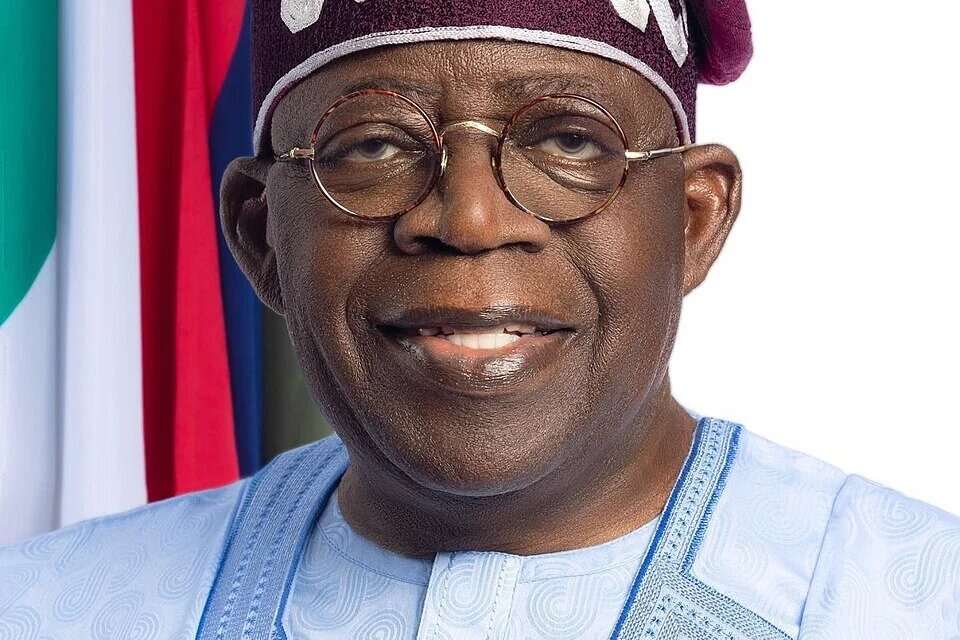
Fitch Ratings’ upgrade of Nigeria’s credit rating to B reflects confidence in President Tinubu’s economic reforms aimed at stability and growth. This change enhances Nigeria’s attractiveness to foreign investors, promoting infrastructure development and job creation. While challenges remain, the upgrade signals a pivotal shift towards a more resilient economy.
Fitch Ratings Upgrade: A Turning Point for Nigeria’s Economic Trajectory?
In a stunning endorsement of Nigeria’s renewed economic vision, global credit rating agency Fitch Ratings has upgraded the nation’s credit rating to B. This landmark decision, spurred by President Tinubu’s sweeping reforms, heralds a new era of economic stability and growth for Nigeria—a prospect that could redefine the country’s financial landscape and reinvigorate investor confidence.
A Signal of Economic Rebirth
Fitch’s upgrade, more than a mere numerical change, is a resounding vote of confidence in the Nigerian government’s commitment to orthodox economic policies. Since June 2023, President Tinubu’s administration has embarked on a series of bold reforms.
These include exchange rate liberalisation, monetary policy tightening, and decisive measures to end deficit monetisation and remove longstanding fuel subsidies.
The cumulative effect of these policies has been a marked improvement in policy credibility and a substantial reduction in near-term macroeconomic risks, according to Fitch.
For decades, Nigeria has been under the cloud of economic uncertainty, with recurring fiscal deficits and volatile currency movements undermining growth prospects. The recent upgrade signals a decisive shift towards a more stable and predictable economic environment.
This shift is particularly significant given the persistent challenges that have historically stifled investment and economic development in the region.
Investor Confidence and Foreign Investment: A New Dawn
One of the most compelling implications of the upgrade is its potential to attract foreign investment. With an enhanced credit rating, Nigeria now stands on more solid ground when negotiating international financial markets.
The ability to borrow money at better interest rates is a game-changer, offering the government the fiscal latitude necessary to fund critical infrastructure projects and social programmes.
For investors, the upgrade is a green light—a clear indicator that the Nigerian economy is on an upward trajectory and that the risks of an unpredictable economic environment are receding.
Moreover, this improved outlook could catalyse a surge in foreign direct investment (FDI), a vital ingredient for sustained economic growth. International investors, who have long been cautious due to Nigeria’s turbulent economic history, are likely to view this development as a transformative moment.
Increased FDI would not only bring in much-needed capital but also foster technology transfer, skills development, and more robust economic linkages with the global market.
Macroeconomic Stability: The Bedrock of Growth
The government’s swift move to implement orthodox economic policies has already begun to pay dividends, as reflected in Fitch’s latest statement.
By addressing structural imbalances and reducing fiscal vulnerabilities, Nigeria is paving the way for long-term economic stability. For a country that has grappled with high inflation and exchange rate volatility, these reforms are both timely and necessary.
Fitch’s upgrade, while primarily focused on near-term risks, also hints at a more positive long-term outlook. Although the long-term foreign currency debt rating remains at B-, the overall sentiment is one of cautious optimism.
This incremental progress, according to seasoned economists, is a critical step towards a more robust economic framework. As stability improves, it sets off a virtuous cycle: increased investor confidence leads to more investment, which in turn boosts economic growth and further enhances stability.
The Political Underpinnings of Economic Reform
It is impossible to discuss Nigeria’s economic renaissance without considering the political context. President Tinubu’s administration has shown a rare blend of political resolve and economic pragmatism.
The decision to liberalise the exchange rate and tighten monetary policy did not come without its risks. However, these moves were essential in curbing the rampant inflation that has plagued Nigeria for years and in stabilising a volatile currency market.
Tinubu’s reforms have been both praised and criticised. Critics argue that some measures, such as the removal of fuel subsidies, may hit the poorest Nigerians hardest in the short term.
Nonetheless, the long-term benefits of these reforms—reduced fiscal pressure and a more sustainable economic model—cannot be understated.
As history has shown, bold reforms often come with short-term pain but yield substantial long-term gains.
For Nigeria, the message from Fitch is clear: the path to economic stability lies in decisive, reform-oriented governance.
Implications for Nigeria’s Future Economic Growth
The upgrade by Fitch Ratings could well be a harbinger of a new phase of growth for Nigeria. The enhanced ability to secure international loans at favourable interest rates means that the government can invest more aggressively in sectors critical to development.
Infrastructure, healthcare, education, and technology stand to benefit from an improved fiscal position. Such investments are likely to stimulate job creation, enhance productivity, and ultimately drive economic expansion.
Moreover, a stronger credit rating bolsters Nigeria’s standing on the international stage. In an increasingly interconnected global economy, a nation’s ability to secure investment and maintain fiscal discipline is crucial.
For Nigeria, a country endowed with vast natural and human resources, the potential for rapid economic development has never been greater. The renewed faith of international investors, as symbolised by Fitch’s upgrade, could accelerate Nigeria’s journey towards becoming one of Africa’s economic powerhouses.
A Sensational Shift on the Horizon
In summary, Fitch Ratings’ decision to upgrade Nigeria’s credit rating to B is a milestone that could mark the beginning of a transformative period in the nation’s economic history. President Tinubu’s ambitious reforms are beginning to bear fruit, signalling a gradual but steady move towards fiscal prudence and economic stability.
The implications of this upgrade are profound: a more attractive investment climate, better borrowing conditions, and a renewed sense of optimism among investors and policymakers alike.
As Nigeria stands at the cusp of what may be a new era of growth and prosperity, the world will be watching closely. The stakes are high, and the opportunities are immense.
For a nation long beleaguered by economic challenges, this upgrade represents a tangible step towards a brighter, more stable future, not just an improved rating.
Atlantic Post will continue to monitor these developments closely, providing expert analysis and comprehensive coverage with the most incisive and engaging insights as Nigeria navigates the complexities of its economic transformation.
- Additional report from Taiwo Adebowale and Osaigbovo Okungbowa