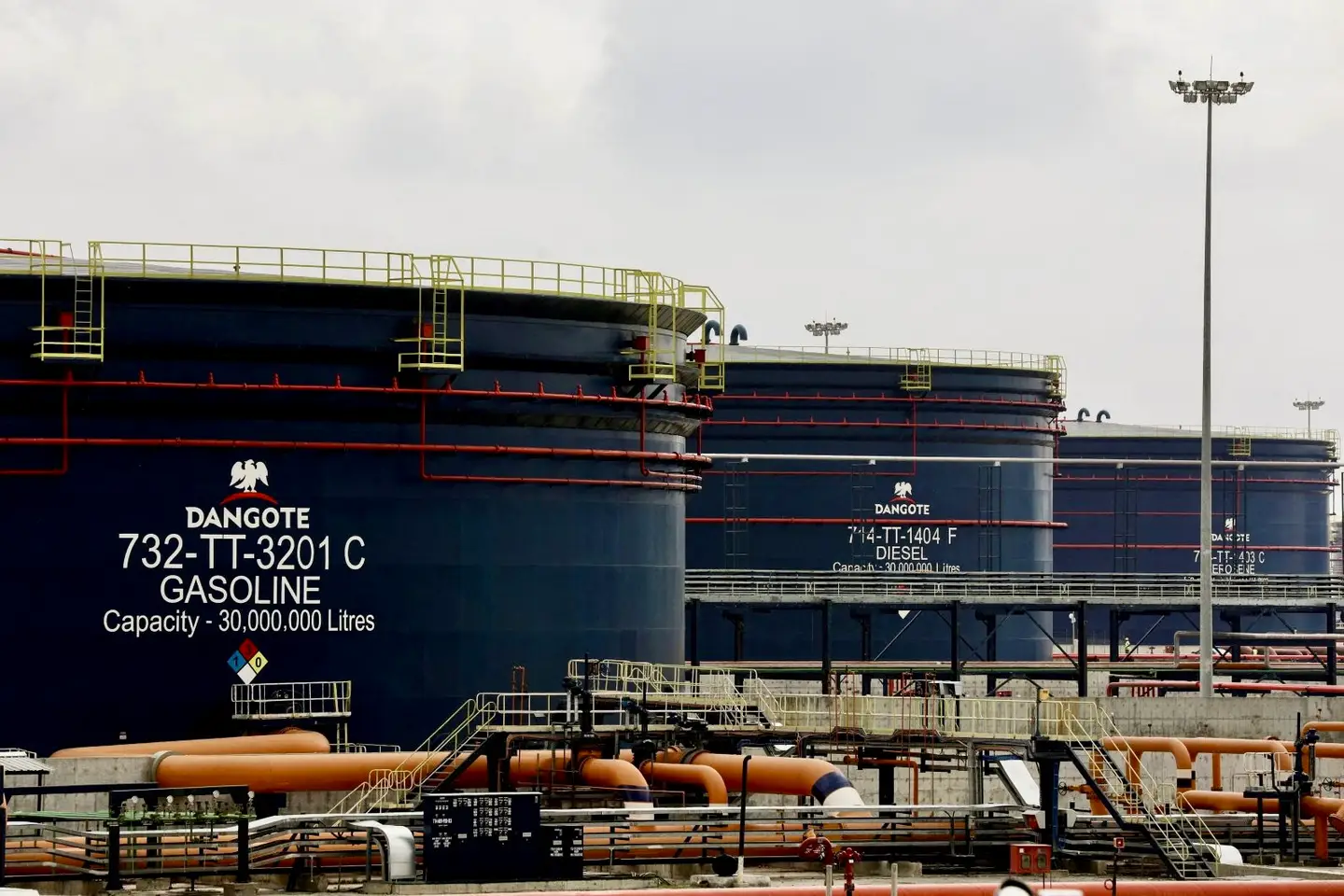
A detailed, analytical report on the N75bn monthly loss facing Nigerian fuel importers following Dangote’s PMS price cut. This in-depth review examines market disruption, deregulation, and potential monopolistic concerns in the country’s volatile petroleum sector.
LAGOS, Nigeria — In an extraordinary twist that has sent shockwaves through Nigeria’s fuel market, recent actions by the Dangote Petroleum Refinery have precipitated an estimated monthly loss of N75 billion for fuel importers. The latest reduction in the ex-depot price of Premium Motor Spirit (PMS) has ignited a fierce debate among industry players, regulators, and economic analysts alike.
This report critically examines the multifaceted impacts of the price cut, interrogates the broader implications for market competition and deregulation, and explores the contentious prospects of a monopolistic landscape emerging in Nigeria’s petroleum sector.
A Strategic Price Reduction: Double-Edged Impact
On Wednesday, February 27, the Dangote refinery announced a significant price reduction in its PMS product, lowering the ex-depot (gantry) price by N65—from N890 to N825 per litre.
While this move ostensibly aims to deliver more affordable, high-quality petrol to Nigerian consumers, industry insiders are quick to warn that the measure could have adverse repercussions for those who have built their business models on importing the product.
The pricing strategy, which marks the second reduction of the new year and the third within a two-month period, is more than a mere adjustment in cost—it represents a deliberate, strategic effort to reshape the competitive landscape.
With new retail prices now set across the country through key partners such as MRS Holdings, Heyden, and Ardova, the Dangote refinery appears determined to harness the benefits of deregulation.
However, critics argue that this relentless downward pricing trend is not without its collateral damage.
The Financial Toll on Fuel Importers
Central to the controversy is the assertion that fuel importers stand to lose an average of N2.5 billion daily, culminating in a staggering N75 billion loss each month.
This grim forecast stems from the fact that the average landing cost of imported PMS, as reported by industry players, hovers around N927 per litre—over N100 higher than the new ex-depot price from Dangote.
Given that Nigeria’s daily consumption of PMS is approximately 50 million litres, and with less than half of this demand being met by domestic refineries, the importation market is under intense pressure.
Industry voices have warned that this widening cost gap could force importers into a situation where they must sell their products at a loss, unable to compete with the heavily subsidised local alternative. A confidential dealer remarked:
“Some of us who have imported PMS are feeling the heat of Dangote’s decision to slash prices. Though it is a good thing to reduce petrol price, it is taking a toll on our business.”
This sentiment is echoed by many who fear that the competitive playing field is being unfairly skewed in favour of Dangote, leaving importers to grapple with untenable margins and mounting losses.
Market Reactions: A Mixture of Relief and Disquiet
While the immediate benefit for the Nigerian consumer is clear—a reduction in the cost of petrol—the reaction from the market is decidedly mixed.
For independent marketers and retailers, the lower prices translate into increased consumer purchasing power and the prospect of a more vibrant, competitive market.
National Vice President of the Independent Petroleum Marketers Association of Nigeria (IPMAN), Hammed Fashola, noted that while the price reduction does offer relief, it comes at a steep cost.
“Some of us just bought products, either from MRS or other sources, and all of a sudden, the price was reduced. It comes with a cost. It is going to be a big loss to everybody,” he warned.
This complex scenario presents a paradox: on one hand, consumers benefit from the lower retail price, but on the other, the very sustainability of the market is threatened by a systemic imbalance.
The aggressive pricing strategy may dissuade potential importers from operating in the market, while existing players face eroding margins and the looming spectre of unsustainable losses.
This duality underlines a broader economic debate about the merits of deregulation versus the need for a competitive, multi-player marketplace that can safeguard the interests of all stakeholders.
The Role of Deregulation: A Catalyst for Change?
The broader context of Nigeria’s fuel market deregulation is essential in understanding the current crisis. The policy shift, marked by the withdrawal of subsidies on May 29, 2023, was intended to liberalise the sector, increase efficiency, and ultimately lead to lower prices through enhanced competition.
Dangote’s recent price cut can be seen as a manifestation of this new order, where market forces, rather than government subsidies, determine prices.
However, the unintended consequences of this deregulation are now coming into focus. As more players enter the market, the dynamics of supply and demand are being reshaped, sometimes to the detriment of established importers.
The situation raises a critical question: has deregulation, in its current form, inadvertently favoured local refineries to the extent that they can undercut importers, thereby reducing the diversity of suppliers?
Professor Adeola Adenikinju of the University of Ibadan provided a sobering perspective on the matter. He argued that while Dangote’s assertion of domestic sufficiency might theoretically reduce the need for imports, the reality is far more complex.
“Dangote and other refineries in the country should be able to satisfy local needs without recourse to importation,” he observed, adding that importers must internalise the risks inherent in dealing with such volatile products.
His remarks underscore a central dilemma: the benefits of deregulation must be weighed against the risks of market consolidation and the eventual emergence of a de facto monopoly.
Monopolistic Concerns and the Call for Government Intervention
Perhaps the most alarming implication of the current trajectory is the potential for a monopolistic structure to take root. With Dangote’s aggressive pricing strategy, critics have raised the spectre of a single player dominating the market, effectively ‘killing’ off the competition.
National Publicity Secretary of IPMAN, Chinedu Ukadike, starkly warned that “Dangote may ‘kill’ fuel importers by this continued lowering of prices.”
This scenario, if allowed to persist, could lead to a market where consumer choice is diminished, and the price-setting power becomes concentrated in the hands of a single entity.
The risk of monopolistic practices has not gone unnoticed by industry analysts. There is a growing chorus urging the Nigerian National Petroleum Company Limited (NNPC) and other regulatory bodies to intervene, ensuring that the market remains diverse and competitive.
Such measures would help to prevent any single player from gaining an overwhelming advantage and would foster an environment where multiple sources can coexist, thereby safeguarding the interests of consumers and importers alike.
Economic Implications: A Delicate Balancing Act
The economic ramifications of the Dangote price cut extend beyond the immediate losses incurred by fuel importers. The broader market dynamics, including supply chain considerations and consumer spending patterns, are also set to be affected.
With an estimated daily loss of N2.5 billion translating into an annual loss approaching N918 billion if current trends persist, the financial stakes are enormously high.
Moreover, the situation highlights the inherent volatility of the fuel market. As importers grapple with the unpredictable pricing landscape, the risk associated with managing volatile products becomes ever more pronounced.
This volatility is not merely a matter of balancing supply and demand—it reflects deeper structural issues within Nigeria’s energy sector, including the long-standing challenges of infrastructure, regulatory oversight, and market transparency.
Strategic Alternatives and the Future of the Nigerian Fuel Market
In light of the current crisis, industry experts are calling for a re-evaluation of the strategic approaches employed by both local refiners and fuel importers. One proposed solution is for the NNPC to step up and provide a viable alternative to Dangote’s dominant market position.
By bolstering its operations and asserting a stronger presence in the market, the NNPC could help to level the playing field and prevent the monopolistic tendencies that many fear are on the horizon.
Furthermore, there is a pressing need for a coordinated policy response that takes into account the interests of all stakeholders. Such a response would involve not only regulatory measures to ensure fair competition but also support mechanisms for importers who are currently facing untenable losses.
In an environment where market conditions can change as rapidly as they have in recent months, a proactive approach from the government could help to stabilise the sector and restore confidence among investors and consumers alike.
A Critical Crossroads for Nigeria’s Energy Sector
As the fuel importers of Nigeria face unprecedented financial challenges, the industry stands at a critical crossroads. The aggressive pricing tactics employed by the Dangote refinery are emblematic of a broader trend towards deregulation—a trend that, while aimed at promoting efficiency and lowering consumer costs, carries with it significant risks.
The delicate balance between fostering competition and preventing monopolistic dominance is one that must be carefully managed if Nigeria is to realise the full benefits of a liberalised fuel market.
The current situation serves as a stark reminder of the complexities inherent in managing a critical economic sector. On one hand, the lower prices benefit the masses, easing the financial burden on ordinary Nigerians.
On the other, the same pricing strategy undermines the viability of established market players, potentially leading to a market dominated by a single entity with little room for dissent or competition.
Conclusion: Navigating a Volatile Future
In conclusion, the recent price cut by the Dangote Petroleum Refinery has ignited a firestorm of controversy and concern in Nigeria’s fuel market. With importers facing potential losses of up to N75 billion per month, the industry is grappling with the dual challenges of market volatility and regulatory uncertainty.
While consumers may enjoy the immediate benefit of lower prices, the long-term implications for market diversity, competition, and economic stability are far more troubling.
It remains to be seen whether the government and regulatory bodies will intervene to prevent the consolidation of market power or whether the forces of deregulation will continue unabated, leading to a less competitive and more volatile energy sector.
As stakeholders from all sides brace for the potential fallout, one thing is clear: Nigeria’s fuel market is undergoing a profound transformation, one that will have lasting repercussions for the country’s economy and the livelihood of millions.
This critical juncture demands a balanced, well-considered response that addresses both the short-term relief offered to consumers and the long-term health of the market. Such a response should include the fuel importers to prioritise the setting up of new local refineries to compete nationally with Dangote.
For now, fuel importers, local refiners, and regulators alike must navigate these turbulent waters with caution, lest the promise of deregulation give way to a monopolistic nightmare that could undermine the very foundations of Nigeria’s energy sector.
Atlantic Post – Bringing you expert analysis and critical insights from the heart of Nigeria’s business landscape.
- Additional reports by Taiwo Adebowale, Senior Business Correspondent and Peter Jene, Senior National Correspondent.