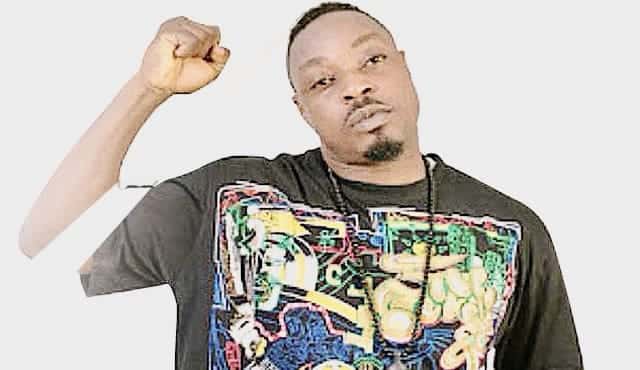
NBC bans Eedris Abdulkareem’s protest hit “Tell Your Papa”, sparking fierce debate on censorship and free speech in Nigeria.
In a move that has ignited fierce debate across Nigeria, the National Broadcasting Commission (NBC) has banned veteran rapper Eedris Abdulkareem’s incendiary protest song “Tell Your Papa” from radio and television airwaves.
The decision, communicated in a memo dated 9 April 2025 by Susan Obi, the Coordinating Director of Broadcast Monitoring, cited the track’s “objectionable nature” under Section 3.1.8 of the Nigeria Broadcasting Code.
This incident, far from being an isolated act, serves as a clarion call regarding the state’s tightening grip on artistic expression in a nation already beleaguered by socio-economic turmoil.
The banned track, which has swiftly gained momentum across social media platforms, is a scathing critique of Nigeria’s political elite.
In his provocative verses, Abdulkareem directs his message at Seyi Tinubu, the son of President Bola Tinubu, urging him to confront his father over the nation’s deteriorating living conditions.
The lyrics—sharp, unapologetic, and replete with social commentary—resonate deeply with a populace disillusioned by rampant corruption, pervasive insecurity, and unfulfilled promises of economic reform.
Yet, rather than engaging with the song’s potent message, the NBC has opted for censorship, branding the track as unfit for public broadcast.
Critics argue that the ban is not merely an administrative enforcement of broadcast regulations but a deliberate political manoeuvre aimed at stifling dissent.
The NBC’s assertion that the song is “inappropriate” and “offensive” raises fundamental questions about the boundaries of free speech in Nigeria.
With protest music historically serving as a powerful tool for political mobilisation and social critique, the suppression of “Tell Your Papa” is viewed by many as symptomatic of a broader crackdown on voices that dare to challenge the status quo.
The regulatory action, under the guise of upholding public decency, starkly contrasts with the democratic ideals of free expression and accountability.
The timing of this ban is particularly charged. It comes on the heels of inflammatory comments made by Seyi Tinubu in Adamawa State, where he proclaimed his father as “the greatest president in Nigeria’s history.”
This self-aggrandising rhetoric, juxtaposed against the backdrop of widespread economic hardship and insecurity, has only amplified public anger.
Abdulkareem’s track, with its rallying call to “tell your papa country hard,” has struck a chord with many Nigerians who feel abandoned by a political class more concerned with preserving power than addressing the everyday struggles of the populace.
For broadcasters across the nation, the NBC’s directive is a sobering reminder of the fine line between responsible broadcasting and self-censorship. The agency’s insistence on upholding Section 3.1.8 is seen by many as a thinly veiled attempt to quell dissent, thus ensuring that politically charged messages remain off the airwaves.
This episode is a stark illustration of the lengths to which authorities may go to silence criticism and maintain a veneer of controlled public discourse.
Ultimately, the banning of “Tell Your Papa” is a sensational manifestation of Nigeria’s deep-rooted political and social fissures. As the nation grapples with escalating crises, the suppression of dissenting voices—especially those as resonant as Abdulkareem’s—can only serve to deepen the divide between the government and its citizens.
The battle over free expression in Nigeria is far from over, and this latest act of censorship is likely to spark further debate about the true cost of silence in a society on the brink of transformation.