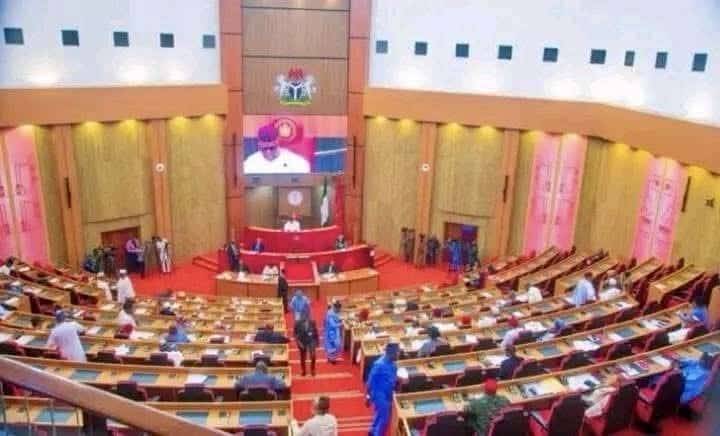
The Nigerian Senate approved President Bola Tinubu’s state of emergency for Rivers State, aimed at addressing rising lawlessness and oil pipeline vandalism. This decision suspends key officials and reflects an urgent need for stability. While some express concern about democracy’s future, many lawmakers prioritize national security and institutional integrity.
ABUJA, Nigeria — In a dramatic escalation of Nigeria’s political unrest, the Senate on Thursday approved President Bola Tinubu’s contentious state of emergency imposed on Rivers State on Tuesday.
The landmark resolution was adopted during a closed-door session, marking a decisive moment in the nation’s struggle to restore order in one of its most volatile regions.
Senate President Godswill Akpabio set the tone for the session by reading a letter from the president, outlining the emergency measures and the rationale behind them.
The directive, which suspends Governor Siminalayi Fubara, his deputy Ngozi Odu, and other elected officials for six months, comes amid mounting concerns over widespread lawlessness and the rampant vandalism of vital oil pipelines.
These incidents, critics argue, have not only endangered lives but also jeopardised the economic stability of Nigeria.
Senate leader Opeyemi Bamidele then moved a motion for a closed session, citing Order 135 of the Senate rules.
His motion, seconded by Senate Minority Leader Abba Moro, reflected an urgent consensus among lawmakers that extraordinary times demand equally extraordinary measures.
This legislative move underscores the severity of the crisis in Rivers State and highlights the determination of the Senate to support the executive’s intervention.
Political analysts suggest that the approval of the emergency rule is a bold assertion of federal authority, intended to stabilise a region that has long been a hotbed of conflict and economic disruption.
While some lawmakers and political observers have raised concerns about the long-term implications for democracy and governance, the prevailing sentiment in the chamber is that safeguarding national security and the integrity of state institutions must take precedence.
As the Senate’s resolution now paves the way for immediate implementation, all eyes will remain fixed on Rivers State.
The coming weeks will be critical in determining whether these measures can restore order and renew confidence in Nigeria’s fragile democratic framework.