By Editor

PORT HARCOURT, Rivers State — In a monumental ruling that underscores the triumph of legal principles and reinforces the independence of Nigeria’s judiciary, the Federal High Court in Abuja has thrown out the Action People’s Party’s (APP) lawsuit against the Rivers State House of Assembly (RSHA), the Independent National Electoral Commission (INEC), and the People’s Democratic Party (PDP). This verdict, delivered with striking clarity, has cemented the legitimacy of the 27 members of the RSHA and brought to a conclusive end the contentious legal battle that has held the Rivers political landscape in limbo for months.
The Battle Begins: APP’s Defection Lawsuit and the Political Earthquake
The lawsuit filed by the APP represented a significant challenge to the political stability of Rivers State. The APP, in its desperation to reclaim relevance in the fiercely contested political arena of Nigeria, aimed to delegitimize 27 members of the RSHA who were accused of political defection. These members had purportedly shifted their allegiance from the ruling PDP to the All Progressives Congress (APC), sparking allegations of political opportunism, disloyalty, and violation of electoral mandates.
The APP sought a legal review of earlier court rulings that upheld the status and legitimacy of these lawmakers. However, the Federal High Court’s decision to dismiss the APP’s case not only reaffirms the previous judgment but also sends a resounding message: the Nigerian judiciary will not serve as a tool for frivolous political vendettas.
A Crushing Defeat for APP: No Jurisdiction, No Appeal
In a succinct but powerful ruling, the presiding judge declared that the Federal High Court had no jurisdiction to act as an appellate body over a decision rendered by another competent court. The judge’s words, “This court cannot in no doubt sit on appeal in a declaration of its brother judgement,” left no room for interpretation. This statement not only signifies the finality of the case but also highlights the vital role of judicial hierarchy and respect for settled legal principles in Nigeria’s democracy.
The APP’s attempt to revisit a judgment that had already been thoroughly deliberated and settled by a previous court was viewed as a blatant disregard for the judiciary’s processes and an act of political grandstanding. The court’s ruling effectively neutralised the APP’s legal manoeuvres and emphasised that Nigeria’s courts cannot be used as battlegrounds for political score-settling.
Legal Precedents and the Sanctity of the Judiciary: A Stern Warning to Political Actors
The dismissal of the APP’s case sets an important legal precedent in Nigeria’s political landscape. It serves as a stern warning to political actors seeking to exploit the judiciary for partisan gains. The judiciary, as a key pillar of democracy, must remain independent and insulated from the whims of political opportunists. The court’s refusal to entertain the APP’s frivolous petition sends a strong signal that political defection, while controversial, is not grounds for unending legal warfare.
Nigeria’s political scene has long been plagued by party defections, a phenomenon often driven by shifting political alliances, power dynamics, and personal ambition. Defections are typically met with public outrage, with many accusing defectors of abandoning their constituencies for political gain. However, the Federal High Court’s ruling reaffirms that such political actions, unless clearly in violation of the law, are matters for the electorate to judge, not the courts.
The judiciary’s role is not to police political morality but to uphold the rule of law. In this case, the court’s judgment reinforces that stance, ensuring that politicians cannot use legal loopholes to disrupt democratic governance or undo electoral mandates. The independence of the judiciary is critical for maintaining checks and balances in Nigeria’s democratic system, and this ruling serves as a testament to its resilience.
Speaker Rt. Hon. Martin Amaewhule and His Colleagues Vindicated
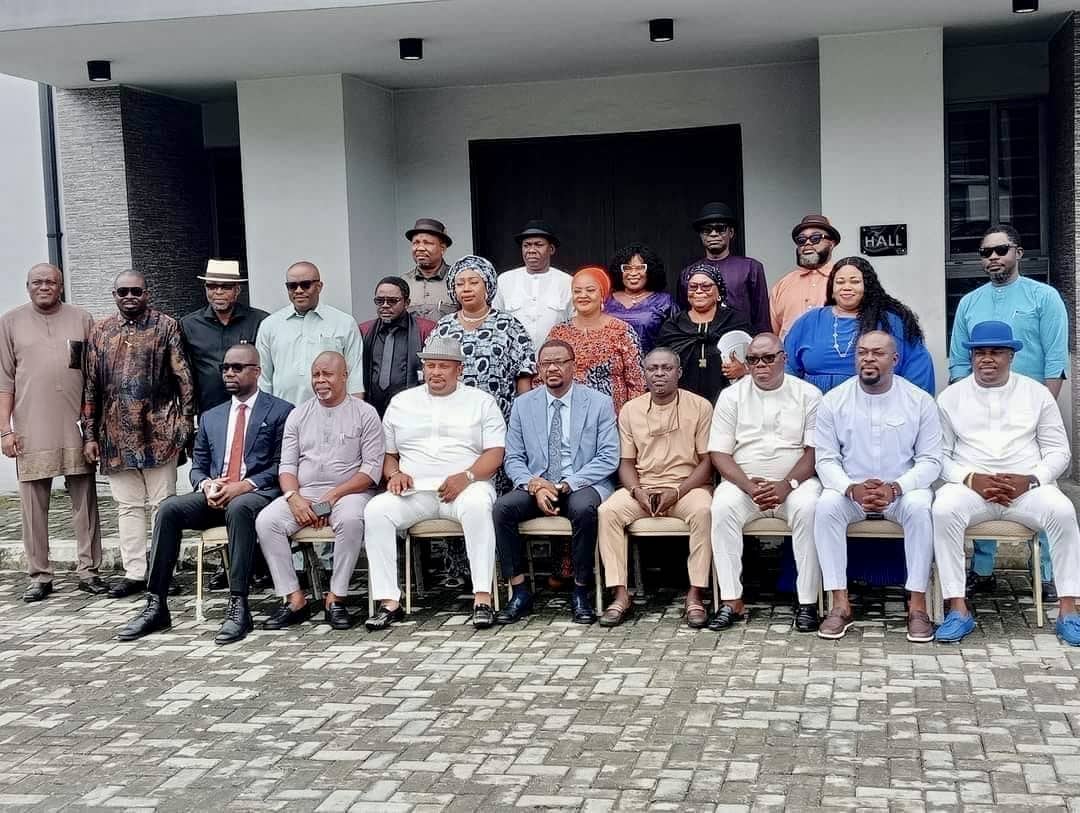
For Rt. Hon. Martin Amaewhule, the Speaker of the Rivers State House of Assembly, and his 26 colleagues, this ruling is a moment of vindication. The legal cloud that had hung over their political careers has now been decisively cleared, and it is unlikely that the apex court would decides otherwise. The Speaker, a key figure in Rivers State politics, had faced intense scrutiny and political pressure throughout the duration of the lawsuit. However, with the Federal High Court’s ruling, the legitimacy of his speakership, as well as the legislative agenda of the RSHA, is no longer in question.
Amaewhule’s leadership in the Assembly has been instrumental in pushing forward key legislative reforms aimed at addressing the myriad challenges facing Rivers State, from infrastructural development to improving governance. The prolonged legal battle had threatened to derail these efforts, as it cast doubt on the stability and legitimacy of the Assembly itself.
Now, with the court’s ruling in their favour, Amaewhule and his colleagues can move forward with their legislative duties, free from the distraction of legal challenges. The political landscape in Rivers State will undoubtedly be affected by this ruling, as it restores a sense of order and authority to the Assembly, which had been undermined by the legal actions by APP and other forces loyal to Governor Siminalayi Fubara.
Implications for Rivers Politics: A Deep Dive into the Post-Judgment Landscape
The Federal High Court’s dismissal of the Action People’s Party’s (APP) lawsuit against the Rivers State House of Assembly (RSHA), the Independent National Electoral Commission (INEC), and the People’s Democratic Party (PDP) is not just a legal victory for the Assembly members and the PDP. It also has far-reaching political implications that will shape the dynamics of Rivers politics for years to come.
Rivers State, a critical player in Nigeria’s political and economic structure due to its oil-rich status, has always been a battleground for intense political rivalries. The legal tussle over the status of the 27 members of the House had sparked fierce political debates and tensions in the state. Now that the court has settled the matter, here are some key implications for Rivers politics:
Stability in the Rivers State House of Assembly
The prolonged legal battle had created uncertainty within the RSHA, casting a shadow over the Assembly’s ability to legislate effectively. With the court’s ruling now in place, the RSHA can function without the distractions of a looming legal dispute. This restored stability will allow the Assembly to focus on governance and passing legislation that addresses the needs of the people of Rivers State.
Rt. Hon. Martin Amaewhule, the Speaker of the RSHA, can now lead the Assembly with renewed confidence, knowing that his position and those of his colleagues are legally secure. This sense of legitimacy will be critical as the RSHA moves forward with its legislative agenda, particularly in areas such as infrastructural development, public service delivery, and state governance reforms.
The ruling also allows the RSHA to return to normalcy without fear of being dragged back into the courtroom. For the lawmakers, this means they can now dedicate their time and resources to legislative responsibilities, rather than fighting legal battles over their political futures.
Broader Impact on National Politics and Judiciary
While this case is primarily focused on Rivers State, its implications may reverberate through Nigeria’s broader political and legal landscape. The Federal High Court’s ruling reinforces the independence of the judiciary and serves as a reminder that courts should not be used as tools for political manoeuvring. This is especially important in a country where the judiciary is often perceived as being susceptible to political influence.
The ruling could also set a precedent for how future cases of political defections and intra-party disputes are handled in Nigerian courts. It is likely to discourage politicians and political parties from relying on legal battles to settle political disagreements, pushing them instead to seek resolution through political means or at the ballot box.
Additionally, the court’s ruling may influence how the Nigerian judiciary approaches other politically charged cases in the future. The clear assertion that courts should not act as appellate bodies over decisions rendered by competent courts is a strong affirmation of the hierarchy of the judiciary and its respect for due process.
A New Chapter in Rivers State Politics
The Federal High Court’s dismissal of the APP’s suit against the Rivers State House of Assembly, INEC, and PDP marks a turning point in Rivers State politics. For the PDP, it solidifies their political control over the state and the legislature. For the RSHA, it restores legitimacy and stability, allowing the Assembly to refocus on governance. And for the APP, it is a sobering defeat that calls for a strategic reassessment.
For the people of Rivers State, the hope now is that their elected representatives can turn their attention away from legal distractions and focus on the real work of governance—delivering the services and reforms that are so desperately needed in the state.
The Federal High Court’s dismissal of the APP’s lawsuit against the Rivers State House of Assembly, INEC, and PDP is a landmark moment in Nigerian politics. It reaffirms the independence of the judiciary and the rule of law, while also providing much-needed political stability in Rivers State. For Speaker Rt. Hon. Martin Amaewhule and his colleagues, this ruling marks a significant victory, allowing them to continue their legislative work without the distraction of legal challenges. As the political landscape in Nigeria continues to evolve, this ruling serves as a reminder that the courts are not tools for political gamesmanship, but guardians of justice.