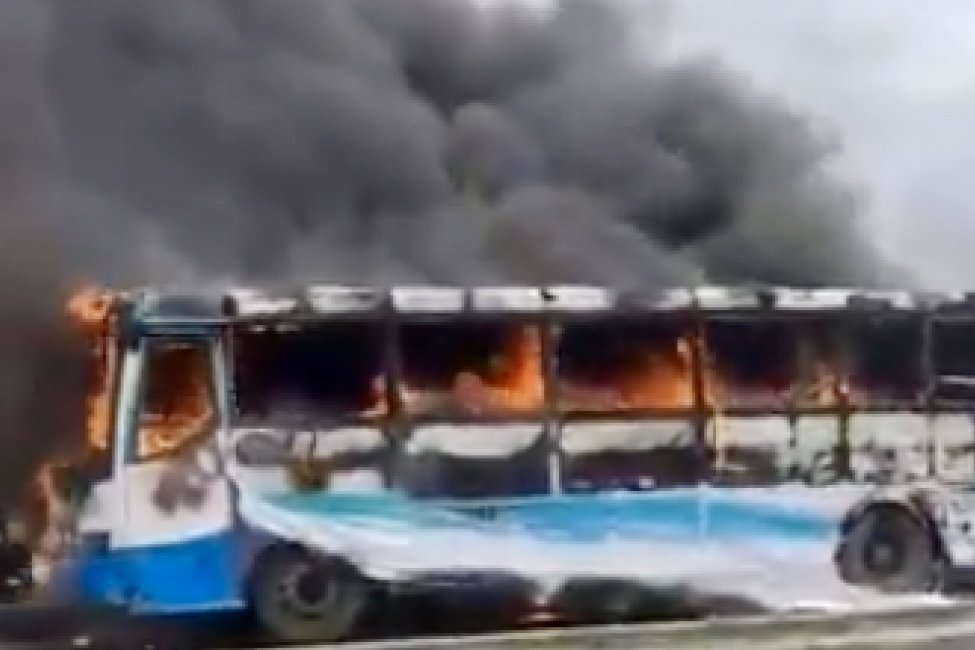
The Federal Government’s latest Field Assessment revealed a shocking human toll: 3,106 men, women and children uprooted in the latest wave of violence to engulf Benue State, and 48 homes, shops and local businesses reduced to rubble.
810 of the displaced are school‑age children, now vulnerable to the twin scourges of illiteracy and exploitation.
Minister of Humanitarian Affairs Professor Goshwe Yilwatda confirmed that a N6.7 billion recovery plan has been tabled – but in a nation rocked by overlapping crises, can Abuja really deliver?
Benue’s plight is merely the tip of a humanitarian iceberg. 2025 has already seen at least 7.8 million Nigerians needing some form of assistance, of whom 3.6 million are deemed the most vulnerable.
Internally displaced persons (IDPs) across the federation now number approximately 2.3 million – double the population of Kano’s ancient Emirate.
These figures dwarf the 3,106 reported in Benue, underscoring both the scale of national dysfunction and the risk that small pockets of suffering slip through the cracks.
The historical pattern is bleak. In September 2017, devastating floods washed away over 2,000 homes in Benue, driving more than 100,000 people from their communities.
The Federal Government’s response then was criticised for tardiness and under‑resourcing. Only one year later, a 2018 surge in foreign Fulani militia attacks across the Middle Belt displaced some 300,000 people from Benue alone, as armed militiamen waged a campaign of terror against farming villages.
Today’s 3,106 displaced may seem modest in comparison, but with every fresh atrocity, public confidence in Abuja’s capacity to protect its citizens erodes further.
Budgetary pledges for the current crisis stand at N6.7 billion – a figure that, on paper, should furnish emergency shelter, food, medical care and long‑term reconstruction.
The European Union has already pledged €1.5 million (roughly N2.7 billion), accounting for over 40 per cent of the overall plan.
Additional funding is expected from international NGOs and the Benue State Government itself, though precise commitments remain murky.
If these sums are marshalled effectively, they could catalyse a template of recovery replicable in Bauchi’s flood plains, Borno’s insurgency‑ravaged zones and Plateau’s smouldering communal flashpoints.
Central to the plan is education support for the 810 displaced school‑age children.
According to Yilwatda, “We must ensure these young minds are not consigned to a lost generation of violence and illiteracy.”
But past experience suggests that bridging the gap between promise and delivery in Nigeria’s IDP camps is fraught with bureaucracy, corruption and donor fatigue.
In Borno State alone, years of insurgency have left tens of thousands of children out of school – a damning lesson for those charged with Benue’s rehabilitation.
NGOs, however, paint a far bleaker picture. Amnesty International warns that Benue is already home to over 510,000 internally displaced souls languishing in squalid camps without adequate water, sanitation or healthcare.
According to the International Crisis Group, the Fulani ethnic militia attacks could rival Boko Haram in lethality if unaddressed.
Such warnings, coming from globalist advocacy outfits, feed neatly into conservative critiques of foreign aid inefficiencies – yet they also spotlight the urgent need for data‑driven, transparent interventions that deliver real results on the ground.
The Ministry’s multi‑agency strategy combines on‑site assessments, community meetings and coordination with state governments, UN agencies and NGOs.
Yilwatda insists, “This is not an issue the Federal Government can solve alone. Only a formidable, united coalition can restore stability.”
For now, the fate of those 3,106 displaced Benue residents – and the countless other Nigerians uprooted by floods, extremism and tribal violence – hangs in the balance.
If Abuja fails to convert pledges into palpable progress, the next chapter of Nigeria’s humanitarian saga will be written in even starker terms.