Nigerian Army operations in the Niger Delta have led to the arrest of 29 oil thieves, dismantling of 31 illegal refineries, and recovery of 212,000 litres of stolen oil. This aggressive campaign aims to curb illegal oil trade, restore economic integrity, and protect the environment, asserting the government’s authority over its resources.
PORT HARCOURT, Nigeria — In a series of highly coordinated operations across the Niger Delta, troops of the 6 Division, Nigerian Army, have dealt a monumental blow to the nation’s illegal oil trade.
Over the past week, the military has arrested 29 suspected oil thieves, dismantled 31 illicit refineries, and recovered an estimated 212,000 litres of stolen petroleum products.
This aggressive campaign against oil theft – a scourge that has long crippled Nigeria’s economy and destabilised the region – marks a turning point in the government’s unwavering commitment to safeguarding its vital oil resources.
The operation, conducted from February 3rd to 9th, 2025, spanned multiple hotspots in Rivers, Delta, Bayelsa, and Akwa Ibom States.
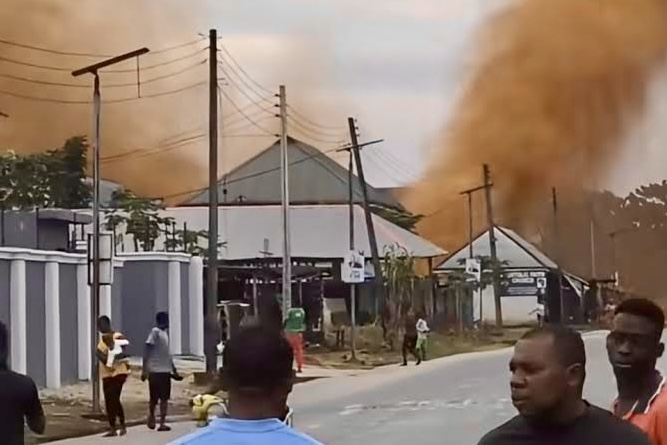
In a dramatic raid at Ogbonga Forest in Bonny Island Local Government Area, troops destroyed 10 illegal refining sites concealed deep within the forest canopy.
Among the spoils were 15 cooking pots used for crude processing, two massive reservoirs stocked with over 70,000 litres of stolen crude, a heavy-duty generator, and three fuel tanks holding more than 10,000 litres of illicit products.
Notably, a 200-metre-long hose, crucial for siphoning crude, was also seized—highlighting the sophisticated methods employed by these criminal networks.
Such high-stakes operations are not merely about recovering stolen oil; they strike at the very heart of an economic and environmental catastrophe.
Illegal oil bunkering and crude refining have for decades devastated local ecosystems, polluted waterways, and depleted government revenue streams by siphoning off billions of dollars annually.
The military’s latest campaign sends a powerful message to both the criminal elements and those complicit in these operations: the days of unchecked oil theft are over.
In another strategic move, security forces intercepted operations in the Oloma general area on Bonny Island, where three oil thieves were caught red-handed with a wooden boat laden with over 10,000 litres of stolen products.
Elsewhere, at Karakarma, troops dismantled four illegal refineries and seized nearly 9,600 litres of stolen crude—a clear indication that the military is leaving no stone unturned in its pursuit of justice and economic integrity.
The crackdown continued unabated in urban and remote areas alike. In Rumuokwurusi – Elelenwo, within Obio Akpor Local Government Area, an ingenious ploy was uncovered when four GP tanks disguised as a bakery were found to be loaded with over 9,500 litres of stolen crude.
Operations extended to the creeks of Bille and Kumbufari in Degema Local Government Area, where multiple refining sites were systematically shut down and over 9,000 litres of stolen products confiscated.
In Ebocha, located in the Ogba/Egbema/Ndoni LGA, troops dismantled an active illegal refinery, seizing critical components such as a large metal oven drum and several hoses, along with a reservoir containing over 6,000 litres of stolen products.
Even in the face of determined resistance – notably in Bayelsa State, where security forces had to overcome fierce opposition – the troops succeeded in recovering more than 12,000 litres of crude and an additional 9,000 litres of illegally refined Automotive Gasoline Oil (AGO).
At Biseni in Yenagoa Local Government Area, four illegal refining sites were dismantled, with the military seizing 18 metal oven tanks and equipment that together contained nearly 5,800 litres of crude and a modest 200 litres of AGO.
In a striking display of operational dexterity, a Toyota Sequoia Jeep loaded with over 1,750 litres of refined AGO was recovered after its occupants fled in panic.
The campaign did not stop on land. In Akwa Ibom State, troops intercepted over 5,600 litres of illegally refined Premium Motor Spirit (PMS) concealed in 20 jerricans, suspected to be destined for smuggling across the waterways into neighbouring countries.
Such decisive interventions are critical as Nigeria strives to stabilise its oil production, which has been persistently undermined by illegal activities.
Major General Emmanuel Emekah, General Officer Commanding the 6 Division, lauded the relentless efforts of his troops.
In a stern warning to those involved in oil theft, he urged: “Turn a new leaf and embrace legitimate means of livelihood, or be ready to face the full wrath of the law.”
His comments underscore not only the military’s commitment to curbing economic sabotage but also the broader government drive to restore Nigeria’s status as a leading oil producer in Africa.
This aggressive stance comes at a crucial time. With President Bola Tinubu’s administration setting ambitious targets to boost national oil production, the elimination of illegal bunkering is vital to ensuring stable revenue flows and reducing fuel price volatility.
Moreover, the environmental benefits of these operations cannot be overstated; by dismantling clandestine refineries, the military is also taking a significant step toward protecting fragile ecosystems in the Niger Delta.
In summary, the Nigerian Army’s recent operations have not only disrupted the entrenched networks of oil thieves and illegal refiners but have also reasserted the state’s authority over its natural resources.
By combining cutting-edge tactics with sustained operational pressure, the military is effectively turning the tide in the battle against oil theft—delivering a resounding message that economic sabotage, environmental degradation, and criminality in the Niger Delta will no longer be tolerated.
As Nigeria charts a new course towards sustainable oil production and national prosperity, these decisive measures are set to become the cornerstone of a renewed, secure, and prosperous energy sector.
— Atlantic Post, Port Harcourt