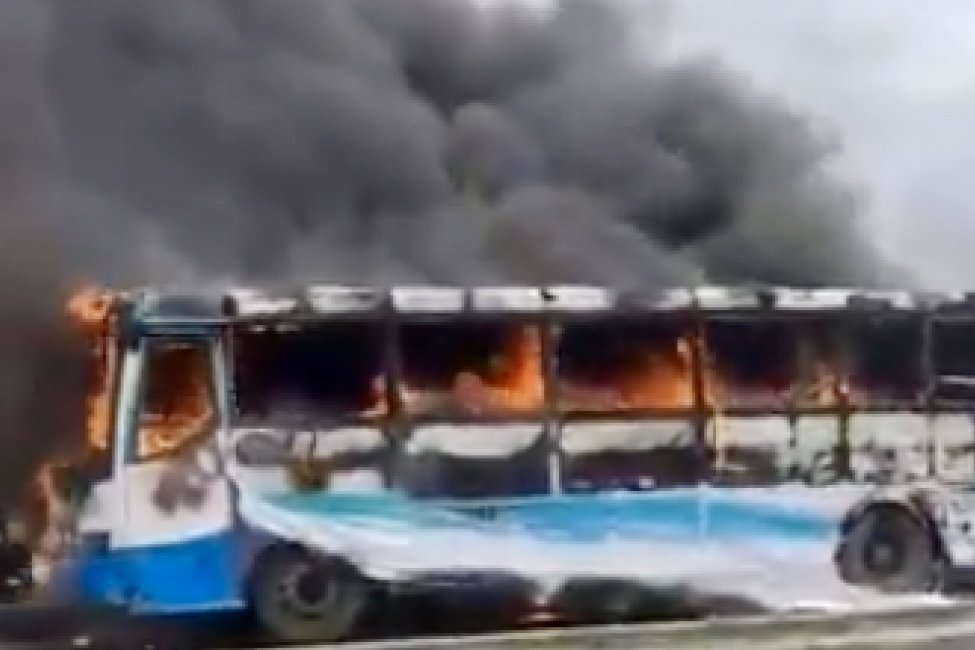
Amnesty International says Nigeria is sliding into a full-blown abduction emergency as mass kidnappings, village raids and terror attacks spread across the North with brutal speed.
Amnesty International has detonated a fresh political and security storm against President Bola Ahmed Tinubu’s government, saying at least 1,100 Nigerians were abducted in just three months, from January to April 2026, in what it described as a horrifying wave of terror against rural communities and internally displaced persons.
The charge is as damning as it is devastating. It lands at a time when families across the North are burying the dead, paying ransom they cannot afford, and waiting for loved ones who may never come home.
In a searing statement shared on its official X handle, the global rights body said Nigeria’s worsening insecurity has turned villages, IDP settlements, highways and border communities into soft targets for armed groups, Boko Haram factions and bandit gangs that appear to move with impunity.
The figures are staggering. According to Amnesty, one of the worst incidents came on 3 March 2026, when Boko Haram fighters attacked Ngoshe town in Gwoza Local Government Area of Borno State, abducted more than 400 people and laid siege to the settlement.
Another blood-soaked episode reportedly struck on 3 February 2026 in Woro village, Kaiama Local Government Area of Kwara State, where an armed group was said to have killed 200 people and abducted 176 others.
Then came the first week of April. Amnesty said gunmen stormed Kurfa Danya and Kurfan Magaji villages in Bukkuyum Local Government Area of Zamfara State and seized 150 people in one sweep.
That is not a crime wave. That is a national emergency.
The group said the violence is not random. It is systematic, expanding, and increasingly profitable, with kidnappers targeting the most exposed and least protected Nigerians. Rural families, displaced people and schoolchildren are now living under permanent threat, while local economies collapse under the weight of fear.
For Tinubu, the political damage is severe. His administration came into office promising renewed confidence, stronger intelligence and firmer control of the security architecture. Instead, critics say the state has kept issuing reassurances while violent groups continue to outgun communities, outrun response teams and empty villages at will.
The pattern is especially alarming in the North-East, North-West and North-Central, where Zamfara, Borno, Kwara, Kaduna, Niger and Benue have all been repeatedly shaken by attacks. Roads have become traps. Farms have become battlegrounds. Schools have become targets. Worship places have become places of fear.
Amnesty says the consequences go far beyond kidnapping alone. Families are being pushed into financial ruin by ransom demands. Children are being kept out of school. Some girls are being withdrawn from education altogether and pushed into early marriage as desperate parents seek to shield them from abduction. In the worst cases, victims face torture, starvation, rape and forced participation in atrocities.
That is the human face of a state under siege.
Yet the Federal Government is resisting the figure. The Nigeria Police Force has dismissed Amnesty’s 1,100 estimate as unverified, insisting that the organisation did not cross-check with security agencies before going public. Police spokesperson Anthony Placid has asked what source Amnesty relied on.
But the argument over statistics is unlikely to calm public anger. Nigerians do not need a spreadsheet to know the country is bleeding. They see it in the funerals, the empty classrooms, the burned villages, the abandoned roads and the endless ransom calls that have become part of daily life.
Even with official promises of reform, the violence keeps mutating. Armed groups continue to exploit weak intelligence, poor coordination, porous frontiers and large ungoverned spaces. Security responses often arrive late, if at all. Communities are left to survive on vigilantes, prayers and luck.
That is why Amnesty’s warning matters. It is not merely an accusation. It is a blunt reminder that Nigeria’s security crisis is no longer confined to headlines or official briefings. It is embedded in the country’s daily reality.
If the Tinubu administration cannot stop mass abductions, protect rural Nigerians and restore confidence in the state’s monopoly of force, then every fresh assurance from Abuja will sound thinner and weaker than the last.
The question now is not whether Nigeria has a security problem. It is whether the government still has the capacity, and the political will, to stop it from consuming the republic.
Follow us on our broadcast channels today!
- WhatsApp: https://whatsapp.com/channel/0029VawZ8TbDDmFT1a1Syg46
- Telegram: https://t.me/atlanticpostchannel
- Facebook: https://www.messenger.com/channel/atlanticpostng