Protest at NASS Reopens an Old Question
Can faster result transmission actually stop people from dying for votes?
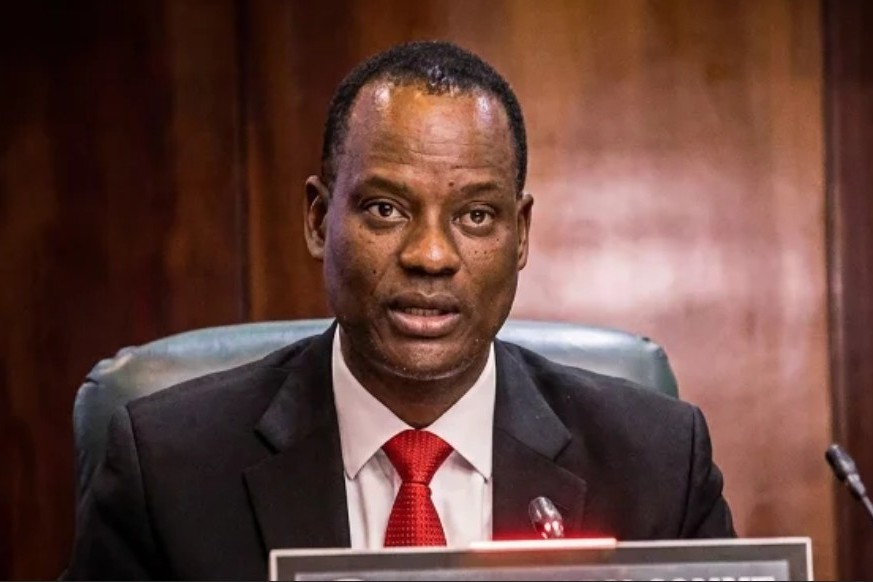
Rotimi Amaechi’s decision to join the “Occupy National Assembly” protest in Abuja on Tuesday has pushed a familiar reform battle back to the centre of Nigeria’s 2027 election conversation.
Standing with activists at the National Assembly gate, the former Rivers governor and ex-transport minister made an argument. He stated that mandatory, real-time electronic transmission of polling unit results would reduce election-day deaths. This approach would shrink the incentive and opportunity to rig results through violence, disruption, and intimidation.
It is a powerful claim. It is also politically loaded. This comes as the Senate reconvened for an emergency sitting on Tuesday.
There was public outrage over amendments to the Electoral Act and the contentious removal of the words “real-time” from the result transmission clause.
Protesters say that wording matters because discretion is where manipulation lives. The Senate leadership insists the technology is not banned, only the rigid timing language.
Amaechi’s intervention directly accuses Nigeria’s electoral system of being engineered to reward coercion. It also insulates decision-makers behind security details and legal ambiguity. It is not just another soundbite in a reform season..
But does the evidence support his “save lives” argument, and what exactly would “real time” change in the machinery of violence on election day
What Amaechi Is Really Arguing
Amaechi’s core proposition is simple:
1. Elections in Nigeria are routinely accompanied by killings and serious violence.
2. A meaningful share of that violence is triggered by disputes over results. Manipulation during collation also contributes. Furthermore, there are attempts to steal outcomes after votes are cast.
3. Real-time electronic transmission from polling units reduces the space for tampering between the vote and the final declared result.
4. Removing the space for tampering eliminates the motive for many attacks. These attacks include ballot snatching, intimidation of presiding officers, and assaults aimed at disrupting collation centres.
5. Fewer incentives, fewer flashpoints, fewer deaths.
In his framing, the state’s failure is not only technical. It is moral.
He portrays the country’s political class as treating elections like warfare while ordinary voters pay the price, and he hints that senior officials could face future accountability if security forces are ordered to apply lethal force against citizens.
There is also a tactical message in his remarks. Amaechi is telling protesters that transparency reforms will not be handed down by benevolent institutions.
They must be compelled by public mobilisation large enough to overwhelm intimidation and force compliance.
The Senate’s Case Against “Real Time”
The counter-argument from lawmakers who prefer discretionary language is not always presented honestly, but it has three serious components:
Network reality
Nigeria still has uneven mobile coverage, unstable bandwidth, and large rural dead zones. A strict “real-time” obligation, critics argue, could become a litigation trap. If a presiding officer transmits late because the network fails, opponents could challenge the result. The issue is not that the vote was wrong, but because the upload timestamp was imperfect.
Operational risk
Mandating a single method can create single points of failure. If transmission becomes compulsory everywhere at the same moment, system overload, outages, cyber incidents, or sabotage could cause cascading breakdowns.
Security risk
Some security voices argue that technology can shift, not eliminate, violence. If parties believe devices or uploads decide outcomes, they may target devices, presiding officers, or telecom infrastructure more aggressively.
Those arguments are not frivolous. But they are incomplete. The real policy question considers if the benefits of mandatory polling-unit transmission outweigh the risks. Another question is whether the law can mandate transmission while accommodating connectivity challenges without opening new loopholes.
The Evidence on Election-Day Deaths
Amaechi’s claim is directionally plausible, but it needs careful framing:
Nigeria has a documented history of election-related deaths across multiple cycles. The bloodiest modern spike came after the 2011 presidential election. Post-election riots and reprisals left at least 800 people dead. This occurred over several days in parts of the north.
Later cycles improved compared with 2011, but violence persisted, including during voting periods and around collation and announcements.
For 2019, major observer reporting estimated roughly 145 election-related deaths across the observed election days. Contemporaneous monitoring during the voting period reported dozens killed in violence as results were awaited.
In 2023, a civil society election violence monitoring report cited 238 violent incidents. It also reported two dozen-plus deaths across the election period. The presidential poll day accounted for a large share of recorded incidents.
The pattern is not that elections always equal mass death everywhere. The pattern is that Nigeria’s elections create predictable, localised risk clusters. These often occur where political competition is high. They are also found where local strongmen are entrenched. Additionally, enforcement is weak or partisan in these areas.
So Amaechi is right that people die because of elections. The more delicate question is whether “real time transmission” reduces violence. Or is it merely a transparency tool that could indirectly help?
How Transmission Could Reduce Violence
There are at least four credible pathways through which mandatory polling-unit transmission can reduce fatalities:
Less incentive to seize physical result sheets
If the result is digitally logged from the polling unit in a way that is publicly auditable, stealing or destroying paper forms becomes less useful. This reduces confrontations that often turn violent.
Less leverage at collation points
A key driver of election tension is the journey from polling unit to ward, to LGA, to state collation. That journey creates opportunity. When opportunity shrinks, so does the perceived need to deploy thugs to “protect” or hijack results.
Faster certainty, fewer rumours
Delays fuel misinformation, panic, and revenge attacks. Faster publication of verifiable polling-unit results can reduce the space for incendiary narratives.
Higher trust, lower mobilisation for violence
When voters believe that results reflect votes, parties have difficulty recruiting foot soldiers for “do or die” operations. This happens because the public mood is less combustible.
This is the strongest case for Amaechi’s argument. It does not claim technology ends violence. It argues that transparency reduces the political profitability of violence.
Why Transmission Alone Will Not Stop Killings
Even if real-time transmission works perfectly, it does not neutralise several major sources of election-day violence:
Candidate and party thuggery unrelated to collation
In some areas, violence is used to suppress turnout, scare rival strongholds, or punish communities. That can happen even if results are transmitted flawlessly.
Local grievances and identity mobilisation
In certain hotspots, political conflict rides on ethnic, religious, or communal disputes. Elections become triggers for wider violence that technology can’t patch.
Security force conduct
A portion of election fatalities historically involve overreaction, poor rules of engagement, or partisan enforcement. Transmission does not fix accountability.
Weapon proliferation and impunity
Where firearms are common and prosecutions are rare, violence remains a rational tool regardless of the voting method.
This is where Amaechi’s rhetoric risks oversimplification. Real-time transmission can plausibly reduce certain types of election violence, especially those tied to result manipulation and collation battles. But it is not, by itself, a national anti-violence strategy.
What the 2023 Experience Suggests
The 2023 elections are the closest Nigeria has to a live test of the “technology reduces violence” theory, but the verdict is mixed:
Technology expanded, but disputes persisted
BVAS and digital processes improved accreditation integrity in many places. Yet major controversies erupted over result upload delays, inconsistency, and public trust in the result viewing portal.
Violence did not disappear
Even with expanded tech, civil society monitoring still recorded significant incidents and deaths across the election period.
Trust became a battleground
Where citizens believed technology was bypassed or inconsistently applied, anger intensified. In that sense, partial or discretionary technology can be worse than none, because it raises expectations and then collapses them.
This is the point protesters are making at NASS. They are not only demanding technology. They are demanding certainty and enforceability.
Their fear is that discretion enables selective compliance, and selective compliance is indistinguishable from rigging in the public mind.
Drafting a Law That Works in Nigeria
If lawmakers genuinely want to reduce election-day deaths, they must avoid a litigation minefield. The solution is not to avoid “real time.” Instead, it requires proper drafting.
A workable legal model would:
1. Mandate polling-unit electronic transmission as the default rule.
2. Require immediate upload where network is available.
3. Create a narrow exception for connectivity failure.
4. Allow delayed upload only when network failure is documented, time-stamped, and independently verifiable.
5. Enforce transparency around exceptions.
6. Require presiding officers to record the reason for delay and upload as soon as connectivity is restored.
7. Preserve the primacy of polling-unit results.
8. Make sure collation can’t override polling-unit data without a clear, auditable process
9. Criminalise interference with devices and officials.
10. Treat attacks on presiding officers, devices, and result transmission as serious electoral offences with fast-track prosecution.
11. Above all, deploy satellite internet services like SpaceX’s Starlinks to areas with weak or low internet penetration.
In other words, “real time” should be the standard. This includes controlled flexibility. It must not become a back door for manipulation.
The Real Story Behind Amaechi’s Claim
Amaechi is not only speaking as a citizen advocate. He is also speaking as a veteran of Nigeria’s power system who understands what fuels violence:
Violence thrives where outcomes can be altered after voting.
Violence declines where altering outcomes becomes difficult, expensive, and legally risky.
That is why the protest has become politically dangerous. It is challenging the hidden economy of elections, where candidates invest in disruption because the structure rewards it. If the law makes disruption useless, the investment collapses.
So can real-time transmission reduce deaths on election day?
Yes, it can reduce some of them. It is particularly effective for issues tied to result snatching, collation manipulation, and post-vote fights over altered figures. But it will not end electoral killings unless Nigeria also tackles impunity, security force accountability, arms proliferation, and party enforcement.
Amaechi is essentially arguing for a reform chain reaction.
Lock down the vote count, and you starve the violence of its payday.
That is a case the National Assembly will struggle to rebut convincingly. The alternative is to defend discretion in a country where discretion has too often meant betrayal.
Follow us on our broadcast channels today!
- WhatsApp: https://whatsapp.com/channel/0029VawZ8TbDDmFT1a1Syg46
- Telegram: https://t.me/atlanticpostchannel
- Facebook: https://www.messenger.com/channel/atlanticpostng