By Editor
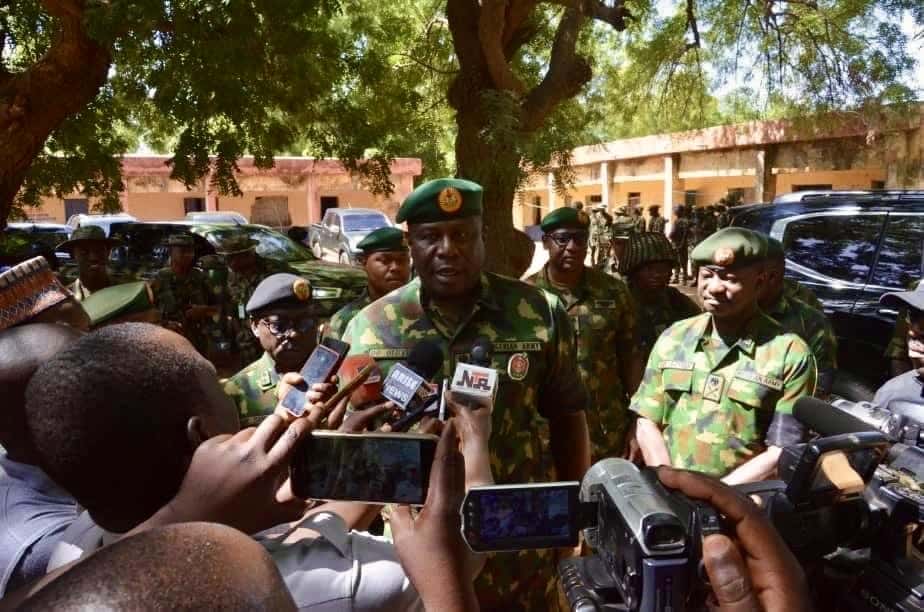
SOKOTO, Nigeria — On November 10, 2024, the Acting Chief of Army Staff (COAS), Lieutenant General Olufemi Oluyede, marked a significant milestone with his maiden operational tour to Sokoto State. This tour signifies more than just a customary visit; it reveals a high-stakes inspection of one of Nigeria’s most volatile regions, plagued by insurgency, terrorism, and increasing threats to national security. By choosing Sokoto State as his inaugural destination, Lt. Gen. Oluyede demonstrates an acute awareness of Nigeria’s security challenges in the North West zone and emphasizes his commitment to hands-on leadership in the Nigerian Army’s operational tactics.


A Strategic Move in a Critical Region
Lt. Gen. Oluyede’s arrival in Sokoto, a state situated near Nigeria’s border with Niger, holds strategic significance, especially as the North West grapples with violent extremist groups, including notorious insurgent factions and cross-border banditry. His first points of contact—Forward Operations Base Tangaza and 248 Battalion in Illela—serve as frontline defense posts tasked with critical anti-terrorism and counterinsurgency efforts in the region. There, he received pivotal updates from Brigadier General Ibikunle Ajose, the General Officer Commanding (GOC) 8 Division, which reflects his immediate dive into the core issues confronting the Nigerian Army’s operations in this theatre of conflict.
Lt. Gen. Oluyede’s Immediate Mission and Message to the Troops
The Acting COAS’s maiden tour was not merely ceremonial. His address to the troops underscored the serious nature of his visit, as he praised their resilience and sacrifices in combating terrorism, reinforcing their pivotal role in securing Nigeria’s territorial integrity. The troops stationed in Tangaza and Illela are well-acquainted with the stark realities of facing armed insurgent groups who exploit the border’s porous nature. Lt. Gen. Oluyede’s words carried the weight of a leader familiar with the gravity of their sacrifices and committed to supporting their operations on the ground.
While his speech praised the troops’ sacrifices, it also called for an end to complacency. His insistence on constant vigilance serves as a crucial reminder of the Nigerian Army’s core mandate—neutralising threats before they metastasise into large-scale attacks. The Acting COAS’s address implied that while successes have been achieved, the war on terror in Nigeria’s North West is far from over. This reminder to remain alert and avoid operational complacency comes as a timely admonition, especially in light of recent surges in insurgent activities across Nigeria’s northern region.
Beyond Praises: A Demand for Firsthand Information
One of the hallmarks of Lt. Gen. Oluyede’s leadership appears to be his drive for firsthand information. Instead of relying solely on secondhand reports, his direct engagement with soldiers and officers on the ground reflects a commitment to gaining an unfiltered understanding of the challenges they face. This approach suggests a shift in leadership style—an acknowledgment that only those who directly engage in combat and operational tactics can provide insights into the complex nature of insurgency that Nigeria battles daily.
A Battle Not Only Against Insurgents but Also for Community Trust
Perhaps one of the most profound aspects of Lt. Gen. Oluyede’s speech was his emphasis on the collaboration between the Nigerian Army and local communities. Aware of the trust deficit that often exists between military operations and local populations, he passionately advocated for a united front against insurgents. By urging locals to provide reliable information, he stressed that the military’s effectiveness is intrinsically linked to community support—a strategic call for grassroots cooperation that, if achieved, could change the landscape of Nigeria’s fight against terrorism.
Lt. Gen. Oluyede’s reminder to the troops that “The Nigerian Army belongs to the people” is not merely rhetoric. It signifies a deep understanding of the long-standing conflict dynamics in Nigeria’s North West. This phrase, laden with meaning, reinforces the Nigerian Army’s role as not just a combat force but as protectors and allies of the people they serve. His emphasis on military-community synergy reflects the realities of counterinsurgency operations, where intelligence from local communities can mean the difference between success and failure.
Contextualising the Visit: The Security Landscape of Nigeria’s North West
Lt. Gen. Oluyede’s tour of Sokoto State arrives at a time when Nigeria’s North West region is under intense scrutiny. The area has transformed into a hotbed of insurgency, becoming host to a myriad of terrorist activities that undermine Nigeria’s national security and threaten regional stability. With groups such as Boko Haram, the Islamic State West Africa Province (ISWAP), and various armed militias operating with sophisticated networks, the challenges faced by the Nigerian Army are multifaceted.
Local conflicts over resources, border insecurity, and the presence of an expanding arms trade create a breeding ground for these insurgent activities. As a result, military forces stationed here often find themselves stretched thin, combating threats on multiple fronts. Lt. Gen. Oluyede’s visit underscores the importance of the Nigerian Army’s sustained and strategic presence in this area. However, his tour also highlights the daunting task at hand—a task compounded by the need for increased inter-agency collaboration, logistical support, and innovative tactical approaches to manage the region’s complex security challenges.
A New Approach? Oluyede’s Call for Collective Action and Local Engagement
In his interactions with Honorable Bashir Salihu, the Chairman of Tangaza Local Government Area, alongside traditional leaders and other local security authorities, Lt. Gen. Oluyede underscored the importance of collective action. His conversations with these local stakeholders reflect a concerted attempt to bridge the gap between military operations and civilian authorities, ensuring that security strategies are aligned with local dynamics. Lt. Gen. Oluyede’s engagement with local leaders represents a step towards fostering mutual understanding and creating a unified front against insurgent threats.
Local leaders play a crucial role as intermediaries between the Army and the populace. By engaging with them, the Acting COAS is actively fostering a sense of shared responsibility in combating insurgency. This gesture is symbolic, showcasing the military’s acknowledgment of the vital role local governance and leadership play in securing peace.
However, this approach is not without its challenges. Distrust and fear often prevent locals from sharing information with the military, especially in areas where insurgent groups maintain significant influence. Addressing this trust deficit will require sustained engagement beyond single visits and symbolic gestures. It will necessitate tangible actions that demonstrate the military’s commitment to protecting and empowering local communities.
Reinforcing Counterinsurgency Tactics: A New Focus on Ground-Level Realities
Lt. Gen. Oluyede’s decision to gain firsthand insights into the Nigerian Army’s operational challenges reflects a proactive shift in counterinsurgency tactics. His choice to begin with Sokoto, a state frequently targeted by extremist factions, demonstrates a willingness to delve into the heart of Nigeria’s counter-terrorism struggle. For years, Nigeria’s military strategy in the North West has largely relied on broad operational plans aimed at repelling insurgent groups, but Lt. Gen. Oluyede’s tour signals a potential change—one that emphasises a nuanced understanding of local dynamics and specific troop needs.
This new approach could pave the way for a more adaptive counterinsurgency strategy, one that integrates insights directly from the field. Such an approach may result in adjustments to tactics, logistics, and communication channels within the Nigerian Army. By prioritising feedback from soldiers and officers on the ground, Lt. Gen. Oluyede appears to be aligning the military’s operations more closely with real-time challenges rather than relying solely on bureaucratic assessments from Abuja. This hands-on model could serve as a blueprint for enhanced security operations, potentially yielding a more agile, responsive Nigerian Army better equipped to tackle Nigeria’s rapidly evolving security landscape.
Policy Implications: Strengthening Military and Civilian Cooperation
A striking aspect of Lt. Gen. Oluyede’s visit is his policy emphasis on civilian collaboration. His interactions with local leaders, including Honorable Bashir Salihu, underscore his belief in a joint civilian-military approach to security. This strategy reflects a broader shift in military policy that recognises the limitations of isolated military efforts and highlights the importance of fostering local alliances in counterinsurgency.
Historically, the Nigerian Army has faced challenges in gaining the trust and cooperation of local communities, particularly in the North West, where insurgent groups have exploited communities’ mistrust to secure local support. By emphasising local involvement in intelligence gathering and counterinsurgency initiatives, Lt. Gen. Oluyede appears committed to breaking this cycle. If successful, this policy shift could transform the Nigerian Army’s reputation from that of a distant, authoritarian presence into a protective and cooperative force genuinely invested in the welfare of Nigerian citizens.
However, implementing this policy is not without challenges. Historically, military and civilian cooperation efforts have struggled due to bureaucratic obstacles, cultural differences, and at times, political interference. Lt. Gen. Oluyede’s approach will require robust community relations programs and sustained outreach to counteract longstanding apprehensions. Community leaders will need to be assured that their cooperation will lead to tangible security improvements and that their involvement in intelligence-sharing and community policing will not expose them to retaliatory violence from insurgents.
Examining the Role of Intelligence and Community-Driven Security
Lt. Gen. Oluyede’s emphasis on intelligence gathering and vigilance serves as a reminder of the complex nature of insurgency in Nigeria’s North West. His directive for communities to support military efforts by providing reliable information signals a move towards community-driven security initiatives. This strategy, however, hinges on the ability to foster a cooperative relationship where locals feel empowered and protected.
In practice, this approach calls for the establishment of trusted liaison channels between the military and local populations. Community-driven intelligence has long been recognised as an essential component of effective counterinsurgency, yet it often falters due to insufficient trust and accountability. To truly operationalize Lt. Gen. Oluyede’s vision, the Nigerian Army will need to develop infrastructure and policies that protect the identities of informants, ensuring their safety and minimising the risk of retaliation from insurgent factions.
Moreover, Lt. Gen. Oluyede’s approach could necessitate increased investment in local intelligence infrastructure, such as community patrol units, neighbourhood watch programmes, and grassroots engagement initiatives that position the military as a partner rather than an external force. However, the practical application of these ideas may require navigating complex socio-political landscapes where local power dynamics can either facilitate or hinder cooperation with the military.
Addressing Resource Constraints: A Key Hurdle in North West Operations
One of the most pressing challenges facing Lt. Gen. Oluyede’s vision for a more community-centred military presence is the issue of resource constraints. The Nigerian Army has long struggled with budgetary limitations, which affect everything from equipment and personnel to logistics and infrastructure development. His tour of Sokoto’s Forward Operations Base Tangaza and 248 Battalion in Illela likely offered him a sobering view of these constraints, as soldiers on the front lines often contend with outdated equipment, limited medical facilities, and insufficient reinforcement.
Addressing these resource constraints will require high-level advocacy and a shift in budgetary priorities. Lt. Gen. Oluyede may need to press for increased funding to adequately support his vision, as effective counterinsurgency operations rely not only on manpower but also on technology, mobility, and intelligence capabilities. For instance, the integration of surveillance drones, improved communication tools, and updated transport vehicles would enhance the Army’s operational capacity. Yet, achieving this would demand a considerable commitment from Nigeria’s political leadership to allocate the necessary resources, especially in an economy grappling with other pressing challenges.
Additionally, Lt. Gen. Oluyede’s focus on Sokoto may signal a call for the Nigerian Army to prioritise logistical support in regions of strategic importance. He could potentially advocate for a reallocation of military resources, concentrating on areas most affected by insurgency and terrorism. However, such a shift would likely face bureaucratic and political obstacles, as different regions across Nigeria contend with various security challenges. Balancing these demands will be a critical task for Lt. Gen. Oluyede as he seeks to make his mark on Nigeria’s defense strategy.
Community Engagement: A Crucial Element in Counterinsurgency Success
In his address, Lt. Gen. Oluyede emphasised that “the Nigerian Army belongs to the people,” a powerful statement that underscores his commitment to fostering a genuine partnership with the Nigerian populace. However, this vision of an Army integrated with local communities will require careful, deliberate actions to overcome historical barriers and establish sustainable, trust-based relationships.
The Acting COAS’s tour represents a significant effort in this direction, as he personally engaged with traditional leaders, community heads, and local government officials. This engagement could serve as a template for future military-community relations, positioning the Army as both a protector and an ally. If these relationships are successfully cultivated, they could lead to enhanced intelligence-sharing, stronger defences against insurgent recruitment, and a more united front against terrorism.
However, for these engagements to be truly impactful, the Nigerian Army must go beyond periodic visits and gestures. Community engagement must be woven into the fabric of the Army’s operational strategy. This includes regular dialogue with local leaders, responsiveness to community concerns, and clear communication on the goals and methods of military operations. Lt. Gen. Oluyede’s leadership style suggests an awareness of these needs, but his success will hinge on his ability to institutionalise these practices within a traditionally hierarchical military structure.
The Risk of Complacency: A Looming Threat in Counterinsurgency Operations
Lt. Gen. Oluyede’s reminder to troops to avoid complacency reflects an acute awareness of a persistent challenge in counterinsurgency—maintaining morale and vigilance over extended periods. Soldiers stationed in high-conflict zones face physical and psychological tolls that can diminish their effectiveness if not properly managed. The Acting COAS’s call for constant vigilance is a timely reminder, particularly as insurgent groups adapt and evolve, exploiting lapses in military attention to launch attacks.
Complacency in the military often arises when operational fatigue sets in, and troops become accustomed to a routine without perceiving imminent threats. For the Nigerian Army, which faces a multi-dimensional conflict in the North West, complacency could have devastating consequences. Lt. Gen. Oluyede’s message highlights the need for continuous training, psychological support, and leadership accountability to ensure that troops remain sharp and prepared.
In the long run, mitigating complacency will require a focus on troop welfare, rotations, and mental health programs. Combatting insurgency is not only a matter of tactics but also of sustained morale, and the Nigerian Army must be willing to invest in resources that support the physical and psychological well-being of its soldiers.
Toward a Lasting Counterinsurgency Model: Beyond the Immediate Challenges
Lt. Gen. Oluyede’s operational tour signals not only an awareness of immediate security needs but also a larger vision for developing a sustainable counterinsurgency model in Nigeria’s North West. His approach underscores the need to create a system that adapts to changing insurgent tactics and builds community resilience against extremist ideologies. However, the success of this approach will depend on his ability to galvanise support from local communities and Nigeria’s political leadership, aligning them with the Army’s mission.
One critical aspect of Lt. Gen. Oluyede’s plan is his apparent focus on fostering a culture of adaptability within the Nigerian Army. As insurgent tactics shift, the Army must be equipped to respond with flexibility, incorporating insights from local intelligence, advanced technologies, and real-time operational feedback. This requires a reimagined training regimen for troops, emphasising skills in surveillance, intelligence analysis, and culturally sensitive engagement with communities. A lasting counterinsurgency model would entail not just reactive measures but proactive initiatives that anticipate insurgent movements and disrupt their strategies before they manifest into larger threats.
Moreover, Lt. Gen. Oluyede’s emphasis on community involvement presents an opportunity to deepen trust between the Nigerian Army and civilian populations. With the right framework, this could evolve into a long-term, community-driven intelligence network that not only aids in counterinsurgency efforts but also serves as a deterrent against future extremist influence. Such a system, however, requires transparency and accountability from the military, fostering a relationship where local communities see themselves as integral to national security efforts.
Bridging the Gap between Military and Civilian Leadership
The Acting COAS’s tour also emphasises the need for a united front between Nigeria’s military and civilian leaders. Lt. Gen. Oluyede’s meetings with traditional leaders and local government officials, such as Honorable Bashir Salihu, reflect an understanding of the role that governance and civil leadership play in supporting military efforts. Bridging the gap between these two spheres could enhance the legitimacy of military actions in the eyes of the public, ensuring that counterinsurgency operations are seen as a collective effort rather than isolated military campaigns.
This collaboration has implications for policy development as well. The Nigerian Army’s operational success depends in part on the support of local governance structures, which must be strengthened to resist insurgent influence and address the socio-economic conditions that often enable insurgency. A joint military-civilian governance framework would allow for a holistic response to security challenges, with military operations targeting immediate threats while civil leadership addresses underlying issues such as poverty, lack of education, and limited economic opportunities—factors that insurgents often exploit.
For Lt. Gen. Oluyede, achieving this integration will require significant diplomatic skill, as well as the willingness to engage in long-term, multi-faceted partnerships with civilian leaders. Overcoming bureaucratic inertia and fostering these collaborations could become a defining feature of his tenure, with potential implications for future Nigerian Army leaders who may continue this approach.
Transforming the Nigerian Army’s Operational Culture
Lt. Gen. Oluyede’s focus on frontline feedback, resource allocation, and community involvement reflects a desire to transform the operational culture within the Nigerian Army. By prioritising troop welfare, emphasising adaptability, and urging vigilance against complacency, he advocates a shift away from the top-down, rigid command structures that have historically characterised Nigeria’s military. Instead, his tour promotes an Army culture that values grassroots insights and decentralised decision-making.
This transformation may have far-reaching implications for the Army’s operational efficiency, morale, and public image. A culture that encourages innovation and frontline feedback could lead to more effective strategies, while soldiers who feel valued and supported may demonstrate greater commitment and resilience. Furthermore, by aligning with local communities, the Army could dispel some of the mistrust that has historically plagued civil-military relations in Nigeria, positioning itself as a true protector of the people.
However, achieving this cultural shift will require comprehensive reforms, including changes to training programs, leadership expectations, and accountability measures within the Army. Lt. Gen. Oluyede’s tenure could serve as a pilot phase for these changes, with the potential to inspire future military leaders to continue down this path.
The Economic and Societal Impact of Enhanced Security in the North West
Improved security in Nigeria’s North West could yield significant economic and social benefits for the region and the nation as a whole. The frequent attacks, kidnappings, and disruptions in this region have stifled local economies, disrupted trade routes, and displaced countless families, deepening poverty and hardship. Lt. Gen. Oluyede’s approach to security, which emphasises both military presence and community collaboration, could stabilise the region, facilitating economic recovery and social development.
A more secure North West would likely lead to increased investor confidence, especially in the region’s agricultural and manufacturing sectors, which have suffered due to instability. With effective counterinsurgency measures in place, farmers and small business owners could operate without fear of attack, markets could reopen, and infrastructure projects could proceed, potentially attracting investment. This economic revitalisation could also counteract some of the socio-economic factors that drive young people into extremist groups, creating a positive feedback loop of stability and growth.
In the long term, if Lt. Gen. Oluyede’s policies prove effective, they could set a precedent for other regions facing similar challenges. The North West could become a model for how coordinated military and civilian efforts can transform a conflict-ridden area into a thriving community, demonstrating the positive ripple effects that security and stability can have on economic and social conditions.
Challenges and Future Outlook for Lt. Gen. Oluyede’s Tenure
While Lt. Gen. Oluyede’s approach shows promise, his vision is not without its challenges. Implementing these changes within a bureaucratic and sometimes resource-constrained military structure will require overcoming significant resistance. His reliance on local communities for intelligence and support may also face opposition, as insurgent groups often retaliate against civilians who cooperate with the military. Ensuring the safety of local informants and securing their trust will be a crucial test for his community engagement strategy.
Furthermore, sustaining these reforms will demand unwavering support from Nigeria’s political leadership, as well as continued funding to ensure that resources reach the front lines. Lt. Gen. Oluyede’s vision will also require him to carefully navigate the political landscape, balancing his role as a military leader with the need to work alongside civilian authorities and policymakers who may have competing priorities.
Looking forward, Lt. Gen. Oluyede’s tenure as Acting Chief of Army Staff could serve as a watershed moment for the Nigerian Army if his policies take root and are institutionalised. Should his approach succeed, it could serve as a new standard for military strategy in Nigeria, especially in regions plagued by insurgency and insecurity. The current security challenges in the North West could thus become a proving ground for reforms that might later be applied in other conflict zones across the country, including the North East, the Niger Delta, and even urban centres experiencing organised crime and violence.
The Role of Civil-Military Relations in Sustaining National Security
One of the cornerstone principles highlighted by Lt. Gen. Oluyede during his tour is the need for strong civil-military relations. This emphasis on cooperation between the Army and civilians reflects a broader strategy aimed at demystifying the military and embedding it within the fabric of Nigerian society. The acting Chief of Army Staff’s call for community support and intelligence-sharing signals a push toward an Army that serves not only as a defensive force but as an integral part of the national community.
Strengthening civil-military relations could have several long-term benefits. By fostering mutual trust and understanding, the military might overcome historical stigmas and reservations held by communities wary of past abuses or injustices. Lt. Gen. Oluyede’s outreach efforts, particularly through open dialogues with local leaders, signal his commitment to addressing these concerns. The Nigerian Army, if seen as a partner rather than a distant or foreign force, could encourage communities to play a proactive role in national security initiatives.
This approach would also create a framework for more responsive governance. Civilian leaders, collaborating with military personnel, can help identify areas where security intersects with social issues such as unemployment, education, and healthcare. If Lt. Gen. Oluyede succeeds in establishing these partnerships, the North West could see a reduction in insurgent recruitment as young people gain alternative paths for their futures, while communities gain a greater sense of agency in their own security and well-being.
Examining the Military’s Accountability and Human Rights Record
Lt. Gen. Oluyede’s tour and public address also offer a chance to assess the Army’s commitment to accountability and human rights. While the Acting COAS has underscored the importance of community relations and cooperation, the Nigerian Army has faced criticisms in the past for alleged human rights abuses and heavy-handed tactics, which have at times alienated the very communities it seeks to protect. This history of strained relations is a significant obstacle that Lt. Gen. Oluyede must overcome to make lasting progress.
For his community engagement strategy to succeed, Lt. Gen. Oluyede will need to institute mechanisms for accountability within the Army, ensuring that troops are held to high standards of conduct in their interactions with civilians. Transparency and responsiveness to civilian concerns would not only improve the Army’s image but could also foster deeper trust with local populations. The Acting COAS’s actions during this tour—such as his direct discussions with local leaders—suggest that he recognises the importance of this issue. The challenge, however, will be to institutionalise these practices across all ranks and commands within the Nigerian Army.
Lt. Gen. Oluyede’s tenure may, therefore, be an opportunity for a cultural shift in how the Nigerian Army conducts itself, focusing on professional discipline, respect for human rights, and accountability. If he succeeds in setting this precedent, future leaders may be more inclined to adopt similar policies, creating a ripple effect that could change how the military is perceived both domestically and internationally.
A Broader Perspective on Security: The Need for Holistic Solutions
As Lt. Gen. Oluyede’s tour progresses, it becomes increasingly clear that Nigeria’s security issues cannot be addressed by military means alone. The acting COAS’s statements suggest that he understands the need for a holistic approach, one that involves not only security measures but also investments in economic development, social welfare, and infrastructure. Addressing the root causes of insurgency, such as poverty and lack of opportunity, will require coordinated efforts between the Army, government agencies, NGOs, and the private sector.
This broader perspective on security reflects a growing recognition within Nigeria’s leadership that military force alone cannot bring about long-term stability. A comprehensive national security policy would combine counterinsurgency operations with social initiatives, aiming to provide opportunities for young people and reducing the appeal of extremist groups. Lt. Gen. Oluyede’s emphasis on community collaboration and his interactions with local government officials hint at the potential for a unified approach that addresses both the symptoms and the root causes of insecurity.
To realize this vision, however, the Nigerian government will need to make substantial investments in the North West and other vulnerable regions, providing the resources necessary for sustainable development and capacity-building. International partnerships, too, could play a role, with foreign governments and organizations offering assistance in areas like economic development, education, and infrastructure. Lt. Gen. Oluyede’s advocacy for local collaboration might serve as a model for how these partnerships could be structured, ensuring that external support is effectively integrated into Nigeria’s domestic efforts.
Conclusion: Lt. Gen. Oluyede’s Legacy and the Future of Nigerian Security
As the Acting Chief of Army Staff, Lt. Gen. Oluyede’s maiden operational tour to Sokoto State represents a pivotal moment in the Nigerian Army’s fight against insurgency and terrorism. His emphasis on gathering frontline intelligence, fostering civil-military cooperation, and supporting his troops’ welfare speaks to a leadership style focused on adaptability, inclusivity, and long-term thinking. While his tour has raised hopes for a new era of counterinsurgency strategy, Lt. Gen. Oluyede’s success will depend on his ability to implement these policies across the Army and to sustain these efforts amid Nigeria’s complex political landscape.
If Lt. Gen. Oluyede’s vision is realised, his tenure could leave a lasting legacy, redefining the Nigerian Army’s role not only as a defender of national borders but as a proactive force for societal stability and growth. His policies could set a precedent for how the military and communities work together, addressing the root causes of insecurity while restoring trust and resilience in Nigeria’s conflict-prone regions.
In the end, Lt. Gen. Oluyede’s maiden tour is not just a routine military inspection but a signal of change—a step toward a more integrated, responsive, and effective security apparatus. The Acting COAS’s commitment to reform and innovation provides a glimmer of hope for a safer, more prosperous Nigeria. For the citizens of Sokoto State and the entire North West, this tour may be the beginning of a transformative journey toward enduring peace and security.