By Editor
ABUJA, FCT — In a move underscoring his ambitious leadership of the Federal Capital Territory Administration (FCTA), Nyesom Wike, the Minister of the FCT, presided over an Executive Council meeting that unveiled a flurry of decisions poised to shape the future of Abuja’s educational, agricultural, and infrastructural sectors. The council approved groundbreaking initiatives, including a ₦995 million digital education project, a relocation scheme for Apo traders, and a multi-million-naira fertiliser distribution to farmers.

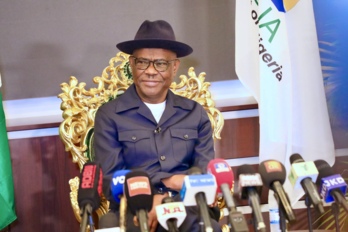
Pix 1: FCT Minister Nyesom Wike presiding over the FCT Executive Council Meeting in Abuja. November 25, 2024. 
Pix 2: FCT Minister Nyesom Wike presiding over the FCT Executive Council Meeting in Abuja. November 25, 2024. Pix 3: FCT Minister Nyesom Wike presiding over the FCT Executive Council Meeting in Abuja. November 25, 2024.


Wike, known for his dynamic leadership style, emphasised that these measures align with the administration’s commitment to modernise and address pressing socioeconomic issues in the nation’s capital. The minister’s blueprint promises to revolutionise key areas, but it also raises critical questions about implementation, funding priorities, and stakeholder engagement.
₦995 Million for Education: Revolutionary or Misplaced Priority?
In what is being described as a transformative leap for education in the FCT, the council approved ₦995 million for the procurement of over 1,000 laptops preloaded with educational and vocational content for senior secondary schools. This project, according to Wike, aims to enhance the digital learning experience and bridge the technological gap in the region’s educational sector.
“Technology is no longer optional in today’s education system,” Wike stated. “Our children must be equipped to compete globally, and this investment is a step in that direction.”
However, critics are already questioning whether this initiative addresses the core challenges facing FCT schools. With reports of underfunded classrooms, inadequate teacher training, and dilapidated school infrastructure, many wonder if the funds might have been better allocated toward basic amenities.
Moreover, questions linger about the selection process for the laptops and the companies involved in their procurement. Will the laptops be durable? Will they reach the intended beneficiaries without corruption tainting the process? The FCTA has yet to provide specific details on the project’s rollout and monitoring framework, leaving room for skepticism.
Agricultural Boost: Fertiliser for Farmers or Political Posturing?
In another significant decision, the council approved the procurement and distribution of 550 metric tonnes of fertiliser to farmers in the FCT. This package includes 250 metric tonnes of NPK fertiliser, 300 metric tonnes of Urea, 310 knapsack sprayers, and 3,500 litres of liquid fertiliser, among other inputs.
“This is not just about farming; it’s about food security and empowering our rural communities,” Wike declared.
While the gesture has been applauded by some, agricultural experts caution that the true impact of such schemes often hinges on equitable distribution. With Nigeria’s history of agricultural corruption and mismanagement, many are concerned about whether the fertiliser and equipment will actually reach the small-scale farmers who need them most.
Furthermore, the sustainability of this initiative is another point of contention. Will these inputs translate into long-term agricultural productivity, or are they merely a one-off effort aimed at garnering political goodwill?
Apo Traders Relocation: Progress or a Brewing Controversy?
The relocation of Apo Automobile Mechanics and Spare Parts Dealers has long been a contentious issue, and the council’s resolution to address “grey areas” in the relocation exercise has reignited the debate. The traders, currently operating along a busy road corridor, are set to move to a permanent site in Wasa District.
While the FCTA insists that this move is necessary to decongest traffic and ensure orderly urban development, the traders have repeatedly raised concerns about the new site’s accessibility, infrastructure, and security.
“Relocation should not mean dislocation,” said one of the traders who spoke on condition of anonymity. “We need assurances that our businesses will thrive in the new location.”
The council’s decision to address the outstanding issues is a welcome step, but the clock is ticking. Stakeholders are urging the administration to prioritize dialogue and transparency to avoid the kind of unrest that has marred similar relocation efforts in the past.
Office Complex for Body of Benchers: A Necessary Luxury?
Among the key approvals was a memorandum for the design, construction, and furnishing of an office complex for the Body of Benchers in Abuja. The council described this project as essential for providing “befitting accommodation” and enabling the body to carry out its statutory functions effectively.
While the Body of Benchers is undoubtedly a critical institution in Nigeria’s legal landscape, the decision to fund this project has raised eyebrows. In a period marked by economic hardship and widespread infrastructural deficits, critics argue that the funds might have been better used to address more urgent needs.
“Do we really need a luxurious office complex at this time?” asked a legal analyst. “This feels like an elitist project that does little to address the everyday challenges of ordinary Nigerians.”
Political Implications of Wike’s Agenda
Wike’s sweeping reforms come at a time when the FCT Minister is under intense scrutiny. His leadership style, often described as no-nonsense and confrontational, has earned him both admirers and detractors.
Some view these initiatives as a genuine effort to uplift the FCT, while others see them as political manoeuvring aimed at cementing his legacy and positioning himself for future political ambitions.
The allocation of ₦995 million for laptops, in particular, has drawn comparisons to similar projects that were riddled with allegations of inflated contracts and poor execution. Wike will need to ensure strict accountability to silence his critics and prove that his administration is different.
The Road Ahead: Challenges and Opportunities
As Wike’s FCTA embarks on these ambitious projects, the challenges are as daunting as the opportunities are promising. Transparency, stakeholder engagement, and effective execution will be critical in determining the success of these initiatives.
The relocation of Apo traders, for instance, will require careful planning to avoid the pitfalls that have plagued similar exercises. Likewise, the fertiliser distribution must be monitored to prevent diversion and ensure that it benefits the intended recipients.
For the ₦995 million digital education project, the devil will be in the details. How will the FCTA ensure that the laptops are used effectively? What measures will be put in place to maintain and update the technology?
Wike’s leadership will ultimately be judged by the outcomes of these projects. For now, his administration has laid out an ambitious vision. The question is: Can it deliver?