
President Bola Ahmed Tinubu on 23 November 2025 issued a sweeping directive to withdraw police officers assigned as personal guards to Very Important Persons (VIPs) and redeploy them to “core police duties”, the State House said in a formal press release issued by Bayo Onanuga.
The statement also said VIPs who still want state protection should now seek well-armed personnel from the Nigeria Security and Civil Defence Corps (NSCDC). Mr Tinubu simultaneously approved the recruitment of an additional 30,000 police officers and ordered collaboration with states to upgrade training facilities.
This announcement is at once administrative and political. For years a substantial tranche of the Nigeria Police Force (NPF) has been tied up with VIP protection and private guard duties, a practice successive chiefs have criticised as weakening community policing.
Recent reporting and an EU analysis put the force’s effective strength at roughly 371,800 officers while estimating that more than 100,000 were routinely diverted to protect politicians and other private clients rather than the public. Those figures put Nigeria well below the policing densities recommended by international benchmarks.
The arithmetic explains why the move matters. Using the estimated NPF strength and a national population above 236 million, Nigeria currently fields roughly 157 officers per 100,000 people — substantially below the United Nations-cited benchmark of one officer per 400 people (about 250 officers per 100,000).
By comparison, England and Wales report roughly 241 officers per 100,000. The shortfall helps to explain chronically understaffed police stations, long response times and the delegitimising perception that the force protects elites before communities.
The State House order builds on earlier initiatives. The Inspector-General of Police, Kayode Egbetokun, had issued similar directives in 2023 and again in April 2025 to withdraw Mobile Police Force units from VIP escorts and return them to tactical duties.
Those previous orders were frequently honoured in breach; entrenched patronage, political pressure and the high dollar value placed on personal security have meant the practice persisted.
What is untested is whether the presidency’s renewed, public and centralised instruction will survive implementation hurdles at state command level.
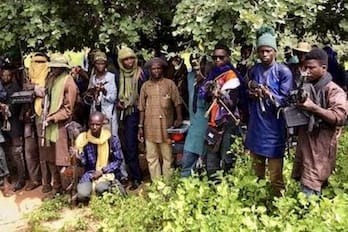
The policy arrives amid an intense spike in kidnappings, mass abductions and attacks on places of worship that have drawn international attention. In the space of days in November 2025, armed gangs abducted scores of schoolchildren from a Catholic boarding school in Niger State and attackers seized worshippers in other locations.
Monitoring groups and rights organisations have documented rising civilian fatalities and targeted assaults, and some faith groups and analysts characterise the pattern as a campaign disproportionately affecting Christian communities. Independent datasets show large numbers of conflict-related deaths since 2009, though researchers debate motive, intent and whether the legal threshold for “genocide” has been met.
The humanitarian reality is nonetheless stark: mass abductions, church attacks and rural killings are multiplying the sense of insecurity that the presidency now cites to justify redeployment.
What to look for next. Implementation will hinge on several concrete steps: rapid vetting and training of the 30,000 recruits promised by the presidency; clear transfer orders and accountability for commanders who refuse redeployment; and a verifiable timetable for the NSCDC to absorb VIP duties without creating parallel abuses.
Equally important will be metrics — crime-reporting, response times, station staffing levels and a public register of officers assigned to non-core duties — so Nigerians and international partners can judge whether the reallocation reduces egregious gaps in rural and remote policing.
The president’s directive is a politically useful signal and an operational necessity. If carried through with transparency and resources it could free up significant manpower for community protection.
If it remains a paper order, however, the chronic mismatch between security needs and policing capacity will persist, and the wave of abductions and attacks that motivated the order will continue to shape Nigeria’s national and international standing.
Follow us on our broadcast channels today!
- WhatsApp: https://whatsapp.com/channel/0029VawZ8TbDDmFT1a1Syg46
- Telegram: https://t.me/atlanticpostchannel
- Facebook: https://www.messenger.com/channel/atlanticpostng



Join the debate; let's know your opinion.