By Editor
ABUJA, Nigeria — In a startling revelation, Representative Gboyega Isiaka, the Chairman of the Nigerian House of Representatives Committee on Polytechnic and Higher Technical Education, made waves on Saturday when he disclosed the latest developments concerning Nigeria’s student loan system. According to Rep. Isiaka, as of September 2024, the Nigerian Education Loan Fund (NELFUND) has disbursed a whopping N84.2 billion to students seeking financial relief for their academic pursuits. This monumental figure, however, represents more than just financial aid—it encapsulates the ongoing political tug-of-war over education reforms in Nigeria.

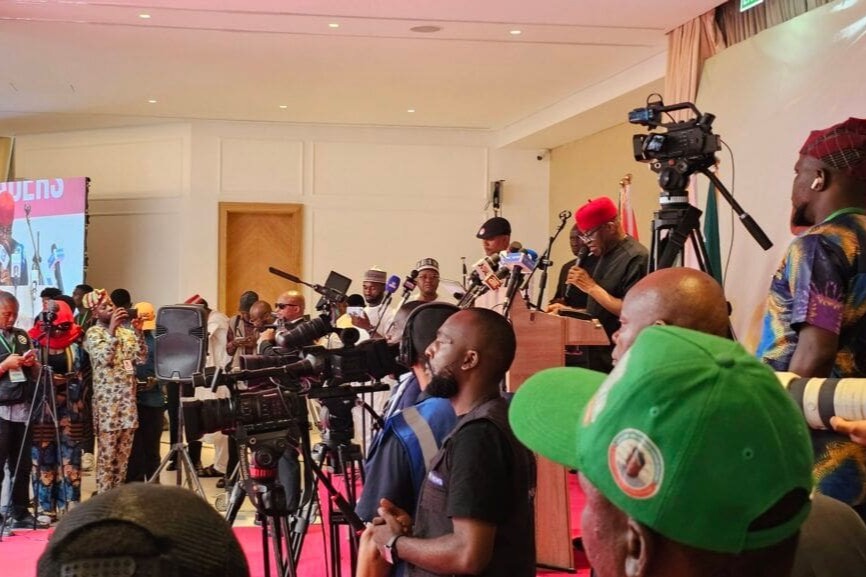
The announcement, made at the 36th annual conference of the Federal Government College, Maiduguri Old Students Association, held in Abeokuta, has been hailed by some as a lifeline to students struggling with the skyrocketing costs of higher education. For others, it is seen as nothing more than a flashy political stunt designed to distract from the endemic crises within Nigeria’s education system.
A Breakdown of the NELFUND Figures: Hope or Hype?
Isiaka’s disclosure at the conference was nothing short of impressive. According to the Ogun lawmaker, the Nigerian Education Loan Fund had registered 351,317 students on its portal. Out of this pool, 258,943 had applied for loans—whether institutional, upkeep, or both. The Fund disbursed a total of N84.2 billion, divided between institutional facilities (N27.5 billion) and upkeep loans (N56.7 billion). While these figures are substantial, the broader question remains: does this truly mark a turning point for education access in Nigeria, or are these numbers masking deeper, unresolved issues?
Isiaka, who represents Yewa North/Imeko-Afon Federal Constituency, asserted that the loan scheme is critical to Nigeria’s national development. In his speech titled Empowering the Next Generation: Education as a Catalyst for National Development, the lawmaker painted a picture of a reinvigorated education sector buoyed by a revitalised student loan initiative.
But while the statistics may appear promising, are we witnessing the dawn of a new era in Nigeria’s educational history, or is this yet another ephemeral political promise?
The Evolution of Student Loans in Nigeria: A Historical Context
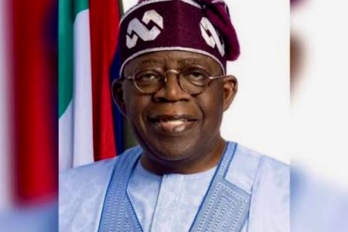
The notion of student loans in Nigeria is not new. Student loan schemes first surfaced in 1972 but were later suspended due to inefficiencies, misuse, and, perhaps most damningly, poor recovery rates. The reintroduction of student loans through the Students Loan Access to Higher Education Act, 2024, championed by President Bola Ahmed Tinubu’s administration, aims to correct the failures of previous iterations.
The 2024 bill, according to Isiaka, is a game changer. It removes several obstacles that previously rendered many students ineligible for loans. For instance, the requirement for a guarantor—long a sticking point—has been scrapped. Applicants are now required to undergo application and identity verification procedures instead of being subjected to the discriminatory scrutiny of their family’s financial history.
Additionally, the contentious family income threshold has been abolished. This move, proponents argue, democratises access to the loan, allowing all students, regardless of their family’s wealth, to apply. But while these changes are being lauded as progressive, some critics are questioning the long-term sustainability of the system. How does the government plan to ensure that these loans are repaid without further burdening future generations?
The Controversial Loan Repayment Plan: A Solution or Another Time Bomb?
Isiaka’s announcement about the repayment structure of these loans has sparked debate. According to the lawmaker, beneficiaries are expected to begin repayment two years after completing their National Youth Service Corps (NYSC) obligations. This delay gives graduates time to find stable employment before the loan repayment clock starts ticking. Moreover, should a beneficiary find themselves unemployed, they can request an extension of repayment enforcement, provided they submit an affidavit confirming their jobless status.
While this seems like a reasonable provision, the effectiveness of such measures depends heavily on Nigeria’s volatile job market. With youth unemployment rates still alarmingly high, critics argue that these provisions might only delay the inevitable financial strain on young graduates. Indeed, the clause allowing for repayment extensions—while well-intentioned—could lead to a massive backlog of loans, making repayment rates abysmally low.
And what happens when the loans aren’t repaid? Isiaka noted that in cases of death or incapacity due to acts of God, the loan would be forgiven. However, he warned that individuals found guilty of submitting false statements to the Fund would face felony charges and up to three years in prison.
This raises questions about the enforcement of these provisions. How stringent will the Nigerian Education Loan Fund be in pursuing defaulters? Will a lack of enforcement undermine the program, leading to the same pitfalls that led to the collapse of the previous student loan scheme?
The Political Angle: Tinubu’s Administration Under the Microscope
While the NELFUND initiative is being hailed as a triumph for the Tinubu administration, it is difficult to ignore the political undercurrents. Critics have been quick to point out that the timing of these reforms coincides with growing unrest among Nigeria’s youth, particularly regarding education and employment opportunities.
There are growing concerns that the NELFUND disbursement is being used to placate a frustrated populace ahead of upcoming elections. The grand figures and sweeping promises are, according to some, nothing more than a political smokescreen, obscuring the true state of Nigeria’s crumbling educational infrastructure.
Moreover, the Ogun lawmaker’s glowing praise of the initiative comes amidst broader concerns about the allocation of Nigeria’s resources. While N84.2 billion may seem like a large sum, it pales in comparison to the billions lost to corruption and mismanagement within other sectors of the economy. Are these funds truly being used for the benefit of the students, or are they part of a broader political agenda to gain favor with Nigeria’s youth?
The State of Nigeria’s Education System: A Long Way to Go
While the NELFUND disbursement is a step in the right direction, it does little to address the glaring infrastructural and human resource deficiencies plaguing Nigeria’s education sector. At the same event in Abeokuta, Mr. Chris Abu, National President of the Federal Government College, Maiduguri Old Students Association, decried the state of education in Nigeria. He highlighted the inadequacies in human resources and infrastructure, as well as the rising insecurity threatening the essence of federal unity colleges—institutions originally designed to foster national integration.
Abu’s observations cast a shadow over Isiaka’s optimistic narrative. As much as the loan fund may provide immediate relief for students, it does not solve the root issues that make education in Nigeria increasingly inaccessible. Dilapidated school buildings, a lack of qualified teachers, and security concerns—particularly in regions like the North—are issues that no amount of loan disbursement can resolve.
In fact, the very idea of disbursing funds to students for upkeep in a system that lacks basic infrastructure and security seems like putting the cart before the horse. How can students effectively utilise these loans if the schools they attend are not equipped to deliver quality education?
The Insecurity Factor: A Threat to Unity Schools and National Development
Insecurity remains one of the most significant challenges facing Nigeria’s education system, particularly in the northern regions. Abu’s lamentation of the shifting demographics in Federal Government Colleges—where the percentage of indigenous students has dramatically increased due to insecurity—speaks to a larger issue of national disunity.
Federal Government Colleges, also known as Unity Schools, were established to promote national integration by bringing together students from diverse ethnic and regional backgrounds. However, the rising insecurity in the North has led to a situation where schools like Federal Government College, Maiduguri, are now overwhelmingly populated by local students. This shift undermines the very purpose of these institutions, which were supposed to be melting pots of Nigeria’s ethnic diversity.
Eniseyin, the state chairman of the Federal Government College Old Students Association, echoed these sentiments. He emphasised the need for government intervention to address the insecurity issue, which is not only threatening the lives of students but also the future of Nigeria’s unity.
Conclusion: A Promising Step or Political Showmanship?
The NELFUND disbursement of N84.2 billion is, without a doubt, a significant development in Nigeria’s ongoing struggle to make higher education accessible to all. However, the initiative must be viewed within the broader context of Nigeria’s failing education system, rampant insecurity, and a political landscape that often prioritises short-term gains over long-term solutions.
While the student loan scheme may provide immediate relief for thousands of students, it does little to address the root causes of Nigeria’s education crisis. Until the government takes meaningful steps to reform the education infrastructure, address insecurity, and create a sustainable job market for graduates, the NELFUND initiative may be nothing more than a temporary fix to a much larger problem.
Whether this move will truly empower the next generation or merely serve as another political talking point remains to be seen. One thing is certain: the students of Nigeria deserve more than just loans—they deserve a future.
With reporting from Peter Jene, Atlantic Post Senior National Correspondent.