Fresh explosion at Soku oil facility rocks Rivers State amid political turmoil. Nigeria’s oil crisis intensifies.
Rivers State in Turmoil: Latest NLNG Explosion Fuels Fears of Sabotage and Political Instability
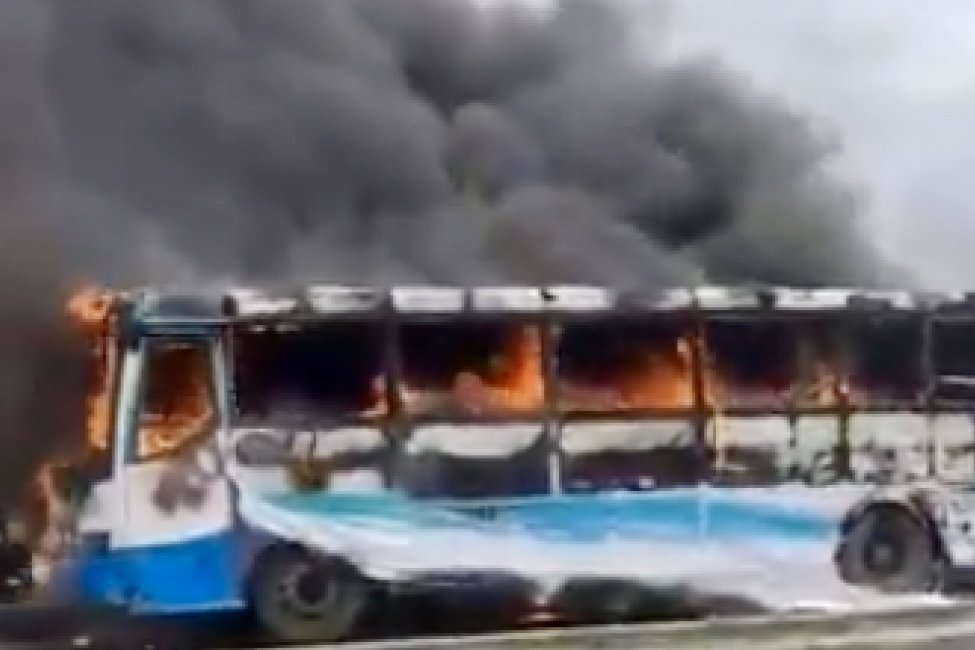
In a fresh wave of devastation that has rattled Nigeria’s oil heartland, another explosion has rocked a gas facility in Rivers State.
Barely a week after the major explosion on the Trans Niger Pipeline in Bodo, Gokana Local Government Area, reports now confirm that the Soku oil facility in Akuku Toru Local Government Area has been engulfed by a fiery blast.
The incident, unfolding in the early hours of Sunday, has once again sent shockwaves through the region’s already volatile energy sector.
According to a statement released by the Youths and Environmental Advocacy Centre (YEAC-Nigeria), whose Executive Director, Dr Fyneface Dumnamene Fyneface, provided the initial details, the explosion was marked by enormous fireballs that lit up the dawn sky.
“An explosion accompanied by fireballs was heard and seen in the sky from the facility area, which is difficult to reach. The fire is still ongoing as of the time of this report,” the statement read.
Although the exact cause of the blast remains uncertain, speculation is rife. Experts and locals alike have offered theories ranging from a catastrophic equipment failure to acts of deliberate sabotage or even a premeditated attack aimed at crippling Nigeria’s critical oil infrastructure.
This explosion marks the third such catastrophic incident in the region within a single week. Previous blasts, including one in Ogoni and another in the Oga/Egbema/Ndoni Local Government Area, have already strained the region’s infrastructure and heightened anxieties over the safety of vital oil installations.
The cumulative impact of these disasters has not only jeopardised the environmental integrity of the Niger Delta but has also thrown a spotlight on the pressing security challenges that continue to plague Nigeria’s oil-rich communities.
In a dramatic response to the escalating crisis, President Bola Tinubu, during his nationwide broadcast on March 18, declared a six-month state of emergency in Rivers State.
This decisive measure came on the back of what many have described as a systematic failure by local political authorities to protect crucial oil infrastructure.
The President’s actions did not stop there; he suspended the Rivers State House of Assembly, Deputy Governor, and even Governor Siminalayi Fubara.
Critics argue that these moves, which followed a viral video featuring youths threatening to carry out terror plots against critical oil infrastructure should the Rivers Assembly begin impeachment proceedings against the governor, underscore a deep-seated mistrust between the populace and their political custodians.
Political commentators have since been calling for urgent accountability and robust investigations. YEAC-Nigeria has already demanded that the National Oil Spill Detection and Response Agency (NOSDRA) conduct a Joint Investigation Visit (JIV) to establish the true cause of the Soku explosion.
The advocacy group insists that the perpetrators of what it terms “this crime” must be held responsible under the provisions of the Petroleum Industry Act (PIA), 2021.
The ramifications of these recurrent explosions extend far beyond the immediate loss of life and property. They have ignited debates about the state of Nigeria’s oil sector security, the readiness of emergency response protocols, and the overall stability of the region’s political landscape.
Local communities, already bearing the brunt of environmental degradation and economic instability, now face the added spectre of continual infrastructural sabotage and potential further violence.
As Rivers State braces for more uncertainty, questions abound regarding the future of Nigeria’s energy industry and the political will to safeguard it.
The latest Soku explosion not only magnifies the urgent need for comprehensive security reforms but also stands as a stark reminder of the dangers lurking within the Niger Delta’s complex interplay of politics, economics, and environmental stewardship.
Atlantic Post will continue to monitor the situation closely as investigations unfold and further details emerge.