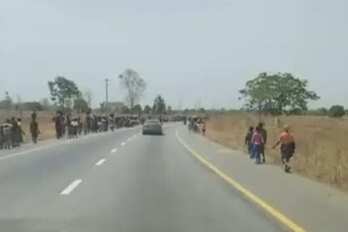
Prince Tonye T.J.T. Princewill’s 50-day coronation anniversary was anything but private. The newly crowned Da Ogo the VIth led a flamboyant procession to Elem Kalabari to join the Kalabari New Year festival and throw his weight behind HRH Mujahid Dokubo-Asari, the festival’s chief host and the recently installed Amanyanabo of the Source.
The visit fused spectacle with heavy promises — tree planting, water cleansing rites, the famous Iria pageantry and a cascade of empowerment cheques that read like a social programme in miniature.
The Kalabari New Year is not a calendar quirk. Observed on 16 November each year with the 15th evening marked as the “transition”, the date is anchored to a natural phenomenon — a tidal reversal that locals call the “turning of the tide”.
For generations Kalabari fishermen and priests have read that saline waters pushing back the fresh river is nature’s reset, a bodily symbol of renewal and collective identity.
The festival features river cleansing, tree planting, masquerades and what local ethnographers describe as multiple styles of Iria — rites that mark feminine transition and community continuity.
Princewill’s interventions were spelled out with dramatic precision. In his first 50 days as Da Ogo VI he has given 20 existing business owners ₦500,000 each, launched a medical intervention scheme with 32 urgent beneficiaries recorded, donated sanitation kits to women and youths, refurbished the Ogo memorial hall, installed solar systems and pledged ₦5,000,000 to youth skills development across five disciplines from sewing to soap making.
The Abbi youths jobs scheme will directly train and equip 160 youths — and a monitoring team chaired by Chief Daogigo Ebenezer Pepple Amachree has been appointed to report monthly on outcomes. Those figures turned the festival from nostalgia into a test of delivery.
Context sharpens the stakes. The Kalabari are an influential Ijaw subgroup in Rivers State, a riverine people whose settlements and economy depend on creeks, fisheries and oil era disruptions. Estimates place the Kalabari population in the mid hundreds of thousands and Rivers State’s population approaches millions, intensifying the political reward of visible community projects.
Revival of festivals such as the Kalabari New Year has become a regional cultural response to decades of environmental stress, urban drift and the search for identity after oil booms and busts.
A comparative look is revealing. Unlike the agrarian New Yam festivals of the Igbo which follow harvest cycles, the Kalabari calendar is hydrological. Both forms perform the same social work — ritual renewal, communal cohesion and handing a living culture to the next generation — but the Kalabari festival uniquely inscribes human life to tide and sea.
That hydra of ritual and resource politics is why Dokubo-Asari’s installation as Amanyanabo and Princewill’s public largesse matter beyond bunting and drumming.
Questions now loom. Will the cash translate to sustainable enterprises and genuine youth livelihoods or become the ephemeral largesse of a popular spectacle? The monitoring team has been named. Accountability will be public.
For a people whose ceremonies carry centuries of memory the test is plain: can modern pledges become durable cultural and economic renewal or will the tide of expectation retreat as quickly as the river at ebb? The coming monthly reports should tell us.
Follow us on our broadcast channels today!
- WhatsApp: https://whatsapp.com/channel/0029VawZ8TbDDmFT1a1Syg46
- Telegram: https://t.me/atlanticpostchannel
- Facebook: https://www.messenger.com/channel/atlanticpostng