Governor Aiyedatiwa’s ₦698 billion 2025 budget promises recovery for Ondo State. Is it a bold vision or a high-stakes gamble? Explore the full analysis.
In a decisive move aimed at steering Ondo State towards economic rejuvenation, Governor Lucky Aiyedatiwa has enacted the 2025 Appropriation Bill, authorising an unprecedented budget of ₦698.66 billion. This fiscal blueprint, aptly designated the “Budget of Recovery,” underscores the administration’s commitment to addressing the state’s pressing socio-economic challenges through substantial capital investments.
A Breakdown of the 2025 Budget
The budget delineates a strategic allocation of resources, with ₦433.62 billion (62.06%) dedicated to capital expenditures and ₦265.04 billion (37.94%) earmarked for recurrent expenditures. This distribution reflects a deliberate emphasis on infrastructural development as a catalyst for economic growth.
Governor Aiyedatiwa articulated this vision during the signing ceremony in Akure, stating, “We have deliberately allocated the higher percentage to capital development to jumpstart the economy and initiate massive infrastructural renewal across the state.” This approach is intended to lay a robust foundation for the state’s anticipated recovery.
Sectoral Allocations: Prioritising Development
A sectoral analysis of the budget reveals significant investments in key areas:
- Infrastructure: ₦238.57 billion is allocated to infrastructural development, underscoring the government’s commitment to upgrading critical infrastructure to stimulate economic activity.
- Public Finance: ₦125.46 billion is designated for public finance, aiming to ensure fiscal discipline and financial stability within the state.
- Education: ₦77.02 billion is earmarked for education, reflecting the administration’s intent to enhance educational standards and expand opportunities for students.
- Agriculture: ₦56.10 billion is allocated to agricultural development, focusing on enhancing food security and supporting local farmers.
- Healthcare: ₦46.02 billion is set aside for healthcare, aiming to improve the quality and accessibility of health services across the state.
Legislative Oversight and Budget Augmentation
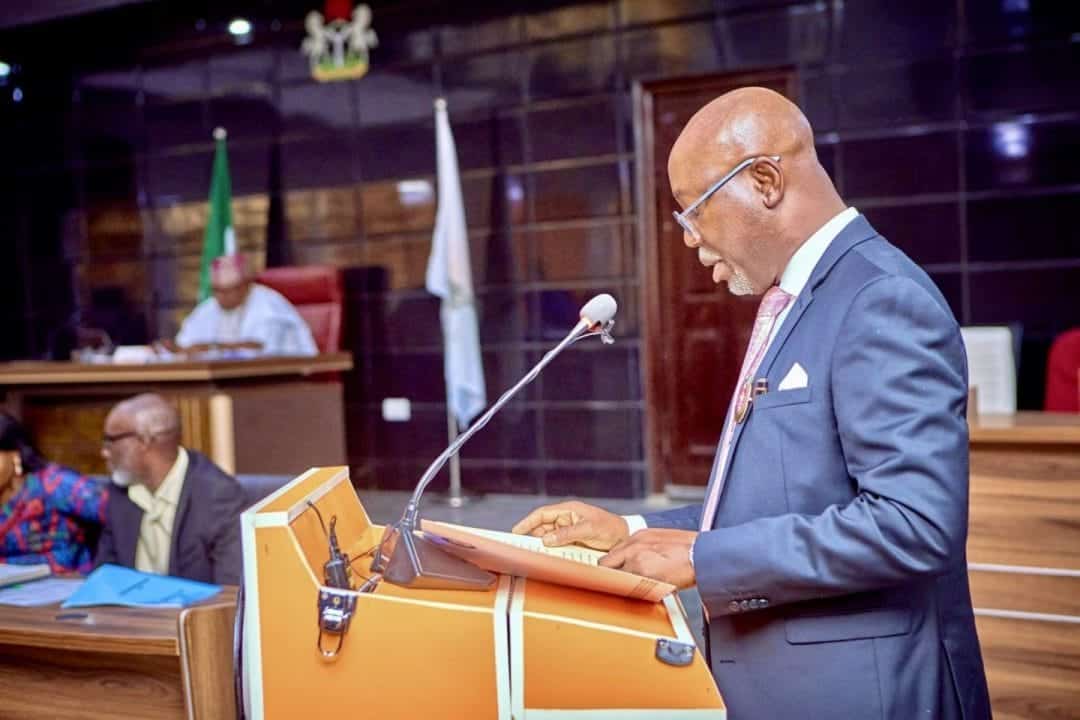
The Ondo State House of Assembly played a pivotal role in refining the budget. Initially presented by Governor Aiyedatiwa at ₦655.23 billion, the Assembly increased the budget by ₦43.43 billion, bringing it to the current ₦698.66 billion. This augmentation was deemed necessary to accommodate the hyperinflationary trends affecting cost projections and to meet the urgent needs of the populace.
Chairman of the House Committee on Finance and Appropriation, Oluwole Ogunmolasuyi, emphasised the importance of this adjustment, stating that it was essential to ensure that the budget aligns with the current economic realities and adequately addresses the needs of the people.
Implications for Ondo State’s Economic Landscape
The 2025 budget’s substantial allocation towards capital expenditure is a strategic move to stimulate economic growth through infrastructural development. By investing heavily in infrastructure, the government aims to create an enabling environment for businesses, attract investments, and generate employment opportunities.
Furthermore, the significant investments in education and healthcare are poised to enhance human capital development, which is crucial for sustainable economic growth. Improved educational facilities and healthcare services will contribute to a more productive workforce, thereby boosting the state’s economic prospects.
Public Reception and Expectations
The enactment of the “Budget of Recovery” has elicited a spectrum of reactions from various stakeholders. While many commend the government’s focus on infrastructural development and economic recovery, others express concerns regarding the implementation and potential challenges in actualising the budget’s objectives.
Citizens and civil society organisations are particularly keen on monitoring the execution of the budget to ensure transparency, accountability, and that the allocated funds are judiciously utilized to achieve the intended outcomes.
Governor Aiyedatiwa’s signing of the ₦698.66 billion “Budget of Recovery” marks a significant milestone in Ondo State’s quest for economic revitalisation. The strategic allocation of resources towards capital development, education, agriculture, and healthcare underscores the administration’s commitment to addressing the state’s socio-economic challenges.
As the 2025 fiscal year unfolds, the onus lies on the government to effectively implement the budget, ensuring that the envisioned projects and programs are actualised to improve the quality of life for the people of Ondo State.
The success of this ambitious budget will largely depend on the government’s ability to navigate the complexities of economic management, maintain fiscal discipline, and foster an environment conducive to sustainable development.
In the coming months, all eyes will be on the Aiyedatiwa administration as it endeavours to translate the provisions of the “Budget of Recovery” into tangible benefits for the citizens, thereby setting Ondo State on a path towards sustained economic growth and development.
For a visual overview of Governor Aiyedatiwa’s budget presentation, you can watch the following video:
In-depth Analysis and Structural Critique of the Budget of Recovery
Governor Lucky Aiyedatiwa’s ₦698.66 billion “Budget of Recovery” for Ondo State is a bold fiscal statement. However, beneath its ambitious surface lies a complex interplay of economic strategies, structural challenges, and policy implications that demand a critical examination. This batch delves deeper into the budget’s structural composition, its feasibility, and the socio-political context shaping its implementation.
Capital Expenditure: A Catalyst or a Gamble?
Allocating a staggering ₦433.62 billion, or 62.06% of the budget, to capital expenditure appears commendable on paper, especially in a state grappling with years of infrastructural decay. But history tempers optimism. In previous fiscal years, budgetary allocations in Ondo State have often faced implementation challenges, with projects stalling due to funding gaps and bureaucratic inefficiencies.
The government’s emphasis on infrastructure as an economic driver is evident, with key investments planned in roads, bridges, and urban renewal projects. Yet, this raises pertinent questions: Where will the funds for these massive projects come from? How will the state manage debt sustainability while pursuing aggressive capital expenditure?
Ondo’s Internally Generated Revenue (IGR) remains modest compared to the ambitious outlay. The state’s reliance on federal allocations, which are vulnerable to fluctuations in oil revenues, presents a significant risk. Moreover, the global economic climate, marked by rising inflation and unpredictable oil prices, could further strain the state’s fiscal capacity.
Recurrent Expenditure: A Budgetary Balancing Act
Recurrent expenditure, pegged at ₦265.04 billion (37.94%), underscores a commitment to operational efficiency. Salaries, pensions, and routine administrative costs dominate this segment, and the government’s restraint in keeping this allocation below 40% is notable.
However, critics argue that the recurrent expenditure still represents an overburdened civil service structure. Ondo State, like many Nigerian states, faces the challenge of a bloated bureaucracy that consumes a disproportionate share of its fiscal resources. Without substantive civil service reforms, this expenditure risks perpetuating inefficiencies and limiting funds available for developmental projects.
Aiyedatiwa’s administration must confront the politically sensitive task of streamlining the civil service while ensuring that workers’ welfare is not compromised. Such reforms, though necessary, require deft political manoeuvring to avoid backlash from powerful labor unions.
Sectoral Allocations: Ambitions Versus Realities
Education: A Long-Overdue Investment
The ₦77.02 billion allocated to education signals an intent to revitalise a sector long plagued by underfunding and infrastructural decline. The governor’s promise of enhanced educational standards and expanded access is laudable, but execution remains the Achilles’ heel.
Ondo’s public schools are notorious for overcrowded classrooms, dilapidated facilities, and insufficient teaching staff. While the budget allocates funds for infrastructure and teacher training, there is little clarity on how these resources will address systemic issues such as curriculum reform and digital literacy.
Agriculture: Beyond Food Security
Agriculture, receiving ₦56.10 billion, is framed as a linchpin for economic diversification. Aiyedatiwa’s emphasis on achieving sustainable food security resonates with Ondo’s potential as a major agricultural hub. Yet, previous administrations’ efforts in this sector often fell short due to corruption, logistical bottlenecks, and inadequate support for small-scale farmers.
To break this cycle, the administration must ensure that funds earmarked for agricultural development reach the grassroots. Investments in mechanization, irrigation, and access to credit must prioritise local farmers over politically connected elites who have historically hijacked such initiatives.
Healthcare: Funding a Health Crisis
₦46.02 billion for healthcare reflects a recognition of the sector’s urgency, particularly in a post-pandemic era. Ondo’s health infrastructure, however, remains underwhelming, with rural areas bearing the brunt of neglect. The budget’s silence on specific health initiatives, such as maternal care programs or combating endemic diseases, leaves room for skepticism about its transformative potential.
Legislative Oversight: A Double-Edged Sword
The Ondo State House of Assembly’s augmentation of the budget from ₦655.23 billion to ₦698.66 billion highlights its active role in shaping fiscal policy. While this demonstrates legislative assertiveness, it also raises concerns about accountability. Historically, Nigerian legislatures at the state level have been criticised for rubber-stamping executive proposals without thorough scrutiny.
Speaker Olamide Oladiji’s praise for the governor’s commitment to good governance is encouraging, but actions must match rhetoric. Legislative oversight mechanisms must be strengthened to prevent misappropriation of funds and ensure that every naira in the budget translates into tangible outcomes.
Economic and Political Implications
The “Budget of Recovery” is as much a political statement as it is an economic plan. Governor Aiyedatiwa, facing re-election pressures, is staking his political capital on this ambitious fiscal agenda. The budget’s heavy focus on capital development serves as a campaign tool, projecting the image of a leader determined to rebuild a faltering economy.
However, political opposition and civil society groups have raised alarms about the feasibility of the budget. Critics point to Ondo’s mounting debt profile and question whether the administration can deliver on its promises without plunging the state into further financial distress.
Policy Recommendations: Bridging the Gap Between Ambition and Reality
To realise the lofty goals of the “Budget of Recovery,” the Aiyedatiwa administration must adopt a pragmatic approach:
- Enhancing IGR: Diversifying revenue streams beyond oil dependency is critical. Ondo must explore innovative tax policies, partnerships with the private sector, and revenue from tourism and solid minerals.
- Addressing Corruption: Transparent procurement processes and rigorous auditing are essential to prevent leakages and ensure that allocated funds achieve their intended purposes.
- Strengthening Public-Private Partnerships (PPPs): Leveraging private sector expertise and funding can accelerate infrastructural projects without overburdening the state’s finances.
- Engaging Stakeholders: Inclusive governance, involving civil society, labor unions, and traditional institutions, is vital for building trust and ensuring broad-based support for the budget’s implementation.
The 2025 “Budget of Recovery” is undeniably ambitious, but ambition alone does not guarantee success. Governor Aiyedatiwa’s administration faces a herculean task of navigating economic challenges, managing political expectations, and overcoming systemic inefficiencies. The next phase of this report will delve into the broader socio-economic impact of the budget and the prospects for achieving its transformative goals.
Broader Socio-Economic Impact and Prospects of the “Budget of Recovery”
The ₦698.66 billion 2025 “Budget of Recovery” represents not just a fiscal blueprint but also a critical test of governance, economic strategy, and public trust in Ondo State. This concluding batch explores its potential socio-economic impact, assesses the likelihood of its success, and highlights the broader political and economic dynamics at play.

Economic Transformation: Lofty Goals or Tangible Change?
Governor Aiyedatiwa’s declaration of the budget as a tool for economic recovery hinges on strategic execution. The emphasis on capital projects, particularly in infrastructure, agriculture, and education, is designed to create a ripple effect across the economy. Improved roads and transportation networks could reduce the cost of doing business, while investments in agriculture aim to boost food security and job creation.
However, the success of these initiatives depends on overcoming historical barriers such as bureaucratic inefficiency, corruption, and project abandonment. Ondo’s past is littered with half-completed projects, a grim reminder of the gap between policy pronouncements and on-ground realities. Aiyedatiwa’s administration must demonstrate an unwavering commitment to transparency and accountability to break this cycle.
Social Inclusion and Equity
The governor’s rhetoric around social inclusion and community development reflects a growing recognition of the need for equitable resource distribution. Yet, the budget’s sectoral allocations suggest that rural and underserved communities could still face marginalisation. For instance, while infrastructural investments are pivotal, they often disproportionately benefit urban centres, leaving rural areas behind.
For the budget to achieve its stated objectives, the government must actively engage with marginalised groups, ensuring that economic benefits trickle down to the grassroots. Programmes targeting youth unemployment, women’s empowerment, and rural healthcare must receive adequate funding and monitoring to foster inclusive growth.
Political Ramifications and the Road to 2025
As Ondo State inches closer to the next election cycle, the “Budget of Recovery” doubles as a political tool. Governor Aiyedatiwa is positioning himself as a visionary leader capable of steering the state towards prosperity. However, the opposition is unlikely to sit idly by. Critics have already begun to question the viability of the budget, pointing to Ondo’s debt profile and the administration’s reliance on federal allocations.
The political stakes are high, and any perceived failure to deliver on the budget’s promises could erode public confidence. Conversely, successful implementation could solidify Aiyedatiwa’s legacy and bolster his party’s prospects in the upcoming elections.
Environmental Considerations: Missing Links
One glaring omission in the “Budget of Recovery” is its lack of emphasis on environmental sustainability. Ondo State, rich in natural resources, faces significant environmental challenges, including deforestation, erosion, and pollution from oil exploration. The budget’s silence on these issues underscores a missed opportunity to integrate green development into the state’s recovery strategy.
Environmental advocacy groups have called for the inclusion of climate-resilient projects, renewable energy investments, and policies to combat environmental degradation. Without these, Ondo risks undermining its long-term development prospects.
The Role of Civil Society and Citizen Engagement
Civil society organisations (CSOs) and citizens have a crucial role in holding the government accountable for the budget’s implementation. Town hall meetings, budget tracking initiatives, and social media advocacy can serve as platforms for ensuring transparency and responsiveness.
Governor Aiyedatiwa’s administration must prioritise open communication, providing regular updates on budget execution and addressing public concerns promptly. This approach could foster trust and enhance the social contract between the government and the people.
Conclusion: A Fork in the Road
The 2025 “Budget of Recovery” is a bold and aspirational fiscal agenda, but its success hinges on the administration’s ability to surmount entrenched challenges. Governor Aiyedatiwa has articulated a vision of transformation, but turning that vision into reality requires more than just rhetoric. It demands strategic planning, efficient execution, and an unwavering commitment to transparency.
Ondo State stands at a crossroads. The choices made in the coming months will determine whether the “Budget of Recovery” becomes a turning point or another missed opportunity. For the citizens of Ondo, the stakes have never been higher.
Additional report: Taiwo Adebowale, Atlantic Post Senior Business Correspondent.