
Quick summary: Nigeria enters 2026 on a knife-edge: chronic insurgencies, gangland kidnappings and ethnic militia attacks are spiralling in multiple regions. Our forecast: insecurity will intensify nationwide. Three flashpoints loom largest. There is an epidemic of mass kidnappings led by North‑West bandits. Ethnic militia violence spreads across the Middle Belt. A rising separatist threat with ethnic conflict looms in the South‑East. Each is driven by entrenched poverty, porous borders and governance gaps, and each risks triggering wider crises without urgent attention.
“We are now facing an epidemic of kidnapping… people in Nigeria are living on a knife edge.” – Isah Sanusi, Amnesty International Nigeria Director
Executive findings:
1. Kidnap-for-ransom boom: 4,722 Nigerians were abducted from July 2024–June 2025, with ₦2.57 billion paid out. The North—especially Zamfara (1,203 victims) and Katsina (131 incidents)—bears the brunt, but crime is spreading (even entering Kwara/Ekiti. Criminals now treat kidnapping as a lucrative business.
2. Persistent insurgency: The Boko Haram threat in the North‑East remains acute. Although the military reclaimed much territory (and 4,000 militants surrendered, hardline ISWAP fighters still stalk the Lake Chad region. Over 15 years of insurgency have displaced ~2 million people and killed tens of thousands.
3. New militant centres: A newly emerged group, “Lakurwa”, now terrorises the North‑West (Sokoto, Kebbi, Zamfara). They blend Islamist tactics with banditry. Nationwide, jihadist-aligned elements (including armed Fulani herders) repeatedly target Christian villages, contributing to calls by US lawmakers for intervention.
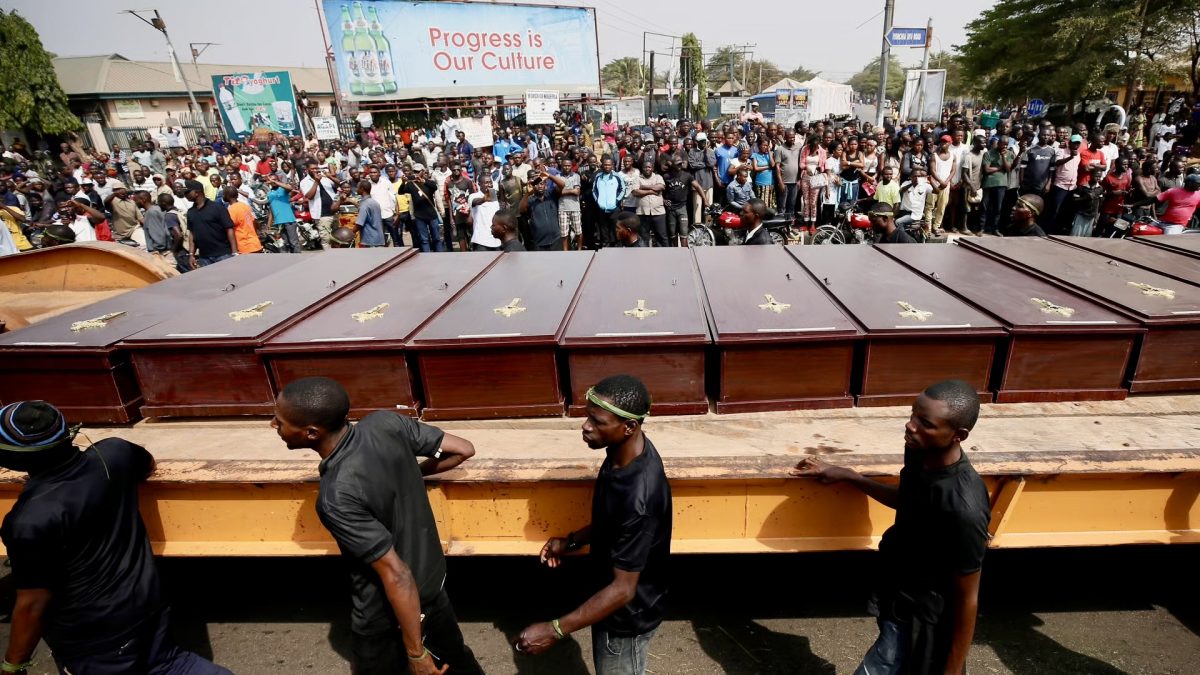
4. Middle Belt Ethnoreligious Insurgency: North‑Central states (Benue, Plateau, Nasarawa etc.) continue to suffer perennial ethnoreligious militia attacks. Annual fatalities have remained very high (~1,700–1,780 per year) and displaced persons spiked to ~580,000 by early 2025.
5. Southern insurgency: In the South-East, “unknown gunmen” linked to separatist groups (IPOB/ESN) and cult militias continue deadly raids. Kidnap attacks are rising there too. There were 257 abductees in one year. Amnesty reports approximately 1,844 violent deaths in the South‑East from Jan 2021 to mid‑2023. Militancy is limited to the region today, but it stokes popular fear and undermines trust in the state.
6. Niger Delta unrest: After years of quiet, pipeline militants have resurfaced. A new Niger Delta Liberation Movement (NDLM) bombed Chevron lines in 2024, warning of further strikes. Frequent oil infrastructure attacks (and potential reprisals) threaten Nigeria’s oil output and cost security firms billions in lost production.
National context and drivers: Nigeria’s volatile security mix has deep roots. Chronic poverty, youth unemployment and low state capacity have long fuelled rural banditry and jihadism. A recent economic shock has sharpened tensions. President Tinubu’s 2023 reforms ended petrol subsidies and floated the naira. These actions sent inflation sky-high and hollowed household budgets.
Public discontent is widespread – labour unions and citizen groups have protested hunger and violence alike.
Regional grievances have persisted over time. Boko Haram’s insurgency has been ongoing since 2009. Additionally, the Middle Belt herder–farmer wars have been fueled by secular laws. Desertification has exacerbated the conflict. These factors have pitted communities against each other.
Meanwhile, a fractured security architecture struggles to cope. In January 2025, analysts noted that “the need for a more robust approach is increasingly evident.” This includes community engagement and intelligence-driven operations.
Nigeria’s instability now rates as “critical” – its Instability Risk Index jumped from 45 to 52 in 2025. The US lists the country as a “country of particular concern.” This is due to claims of genocide against Christians. These claims magnify its diplomatic isolation.
All told, the stage is set for turbulence. Entrenched governance gaps drive this turbulence. Socio-economic strains add to the situation. Fractured communities also combine to drive each flashpoint.
Flashpoints
North-West Nigeria: Banditry and Kidnapping Epidemic
The wild north‑west is spiralling into a broad warzone. Zamfara, Katsina, Kaduna and Sokoto are hit hardest by organised bandit gangs. ACLED and SBM data show that fatalities in this region exceeded 9,300 in 2023–25. Kidnappings reached 716 incidents. There were 290 incidents in 2024 alone.
Rival criminal networks now openly terrorise villages: cattle rustling, mass shootings and child abductions are daily reality. In 2025 bandits even struck outside their old haunts – gunmen abducted 303 students in Niger State and 25 girls in Kebbi.
A new group, Lakurwa, epitomises the threat: it fuses Islamist extremism with outlaw tactics. These gangs hide in porous forests and demand record ransoms (one Delta family’s kidnappers asked ₦30 billion). The flashpoint is self-sustaining: villagers now pay “levies to NSAGs” (armed groups) just to farm.
Without a forceful crackdown, near‑term triggers loom large – the rainy season will bring herders (and bandits) into farmlands, and any high-profile kidnapping (e.g. school or church) could spark copycat raids.
Middle Belt (North-Central): Communal and Herdsmen Violence
Nigeria’s agrarian heartland remains trapped in a cycle of ethnoreligious carnage. Plateau, Benue, Nasarawa and neighbouring states see recurring genocidal terror attacks. From 2023–2025 each year saw roughly 1,700–1,800 deaths (latest figures). Displacement is endemic: mid‑2024 estimates topped half a million internally displaced across the zone.
The violence is driven by land grabbing and political scapegoating of minorities. Paradoxically, efforts to solve the problem have backfired: Benue and other states passed anti‑grazing laws that restrict pastoralists’ movements. These laws “instead became a major flashpoint” – perceived as ethnic targeting, they fuel reprisals instead of peace.
The result is a self-reinforcing insecurity cycle. In 2026, we expect fresh clashes around planting seasons. Trigger scenarios include lightning reprisals for communal attacks or breakdowns of fragile local peace pacts.
North-East: Boko Haram/ISWAP Insurgency
The long-suffering North-East shows mixed trends. The Nigerian military has pushed back Boko Haram significantly – by 2024 authorities claimed ~4,000 militants surrendered through an amnesty programme.
Towns like Maiduguri see fewer mass attacks. Nonetheless hardline factions endure, especially Islamic State West Africa Province (ISWAP) cells near the Lake Chad basin. These groups continue raids on villages and military posts.
In 2025 the insurgency’s footprint is narrower than a decade ago, but danger remains. The region still houses over 2 million displaced and faces a humanitarian crisis.
Near-term shocks could include jihadists exploiting Burkina Faso/Mali turmoil to recruit or raid across borders, or sudden mass surrenders fracturing the groups. Vigilance is needed as any lull is fragile: past patterns show militants regroup during rainy season to strike anew.
South-East: Separatist Violence and Kidnap Surge
Often overlooked, the South-East has become one of Nigeria’s fastest-degenerating trouble spots. Armed groups variously linked to the Indigenous People of Biafra (IPOB), cults and vigilantes have waged a campaign of killings and kidnappings. Amnesty documents ~1,844 violent deaths (2021–June 2023) from clashes, ambushes and extrajudicial killings.
Simultaneously, kidnappers for ransom are on the rise: SBM Intelligence reports 257 abductions in just one year. Attacks have targeted security officers, journalists and churchgoers alike. The socio-political context is fraught: distrust runs deep after perceived injustices (e.g. the 2021 arrest of IPOB leader Nnamdi Kanu) and heavy-handed security operations.
Without urgent dialogue, any spark could ignite widespread unrest. For example, any high-casualty attack on a church or university could inflame ethnic tensions. In the next quarter, we watch for militant rallies and reprisals if perceived grievances (economic or political) are triggered.
Niger Delta: Pipeline Blasts and Rebel Activity
Nigeria’s oil-rich Delta region is no stranger to militancy – and it is stirring again. After dormancy, a new cell calling itself the Niger Delta Liberation Movement attacked Chevron pipelines in late 2024.
These bombings (Operation “Chevron Dragnet”) signal renewed hostilities by aggrieved youth demanding jobs and local rights. Other groups (e.g. NDPS, formerly NDGJM) could join in. Energy infrastructure is therefore a near-term flashpoint: each new blast risks forcing oil companies to halt production. This would send revenues plunging (at one point Nigeria lost ~150,000 barrels/day after 2008 attacks).
Onshore unrest also endangers export logistics via Port Harcourt and Warri. In 2025 any major disruption of oil flow – for instance around global price spikes – could become the shock trigger for copycat strikes. Niger Delta violence remains largely contained to the South-South today, but a big attack on a major export line would have immediate pan-Nigerian and international repercussions.
Cross-cutting risk analysis
Nigeria’s conflicts are not neatly isolated. They feed on and spill into one another, threatening nationwide escalation. For example, the kidnap economy in the North‑West is now spilling south and east – criminal gangs have carried out strikes in Kwara and Ekiti, while ransom proceeds often flow out of rural zones.
Likewise, dissatisfied herders fleeing an anti-grazing crackdown might swell criminal ranks in bandit areas or move into the South‑East, spreading violence. These interactions create a contagion effect. One study warns that Nigeria’s deteriorating security “threaten[s] national stability, food security and economic recovery”.p
Internationally, turmoil raises alarms: the US has labelled Nigeria a “Country of Particular Concern” and hinted at sanctions or military pressure over alleged genocidal killings.
Geopolitically, an unchecked Boko ISWAP could team up with Sahel jihadists, extending the crisis into Cameroon or the Sahara.
Conversely, stabilisation in one zone could have benefits elsewhere: for instance, clearing Boko bases may free troops to pursue Delta saboteurs, while rural development could ease Middle Belt strife.
The risk matrix is stark: without coordinated containment, these flashpoints could cascade (worst-case, pushing Nigeria toward de facto fragmentation), whereas decisive action could short-circuit that slide.
Impact on business, investors and ordinary citizens
Everyday Nigerians and businesses are already feeling the fallout. Agriculture – the backbone of many communities – is buckling: in Zamfara State alone insecurity erased an estimated ₦43 billion of farm revenue in 2022, and surveyed farmers report income drops of 30–40% as fields lie fallow.
Food prices have spiked as grain traders fear highway bandits. Nationwide, schools in 19 states were closed amid November 2025 raids on pupils, disrupting education and local economies.
Transport and logistics are paralyzed: major highways become ransom traps (fuel and goods lifelines cut off), and blackouts rise when vandals strike power infrastructure.
Insurance premiums for cargo and personnel in Nigeria are soaring. Foreign investors – who had begun cautiously returning (Nigeria saw record capital inflows in 2024) – are now jittery again.
Experts warn that “uncertainty and fear would lead investors to adopt a wait-and-see posture”, and money is being diverted to safer African markets.
For citizens, life is dominated by risk. Parents fear sending children to school; commuters travel in convoys or not at all. Local companies often pay informal protection levies. Urban markets face shortages as rural produce vanishes. In short, conflict is eating away at Nigeria’s economic fabric and daily life.
Policy and security recommendations
1. Disrupt criminal networks. Launch intelligence-driven operations to dismantle kidnap, bandit and militant cells. Use financial forensics and tracking tech to follow ransom payments and seize insurgent revenue streams. Coordinate military and police raids with community tip-offs to uproot armed gangs.
2. Engage communities. Establish genuine State and local policing. Partner with trusted local leaders (traditional, religious) for early warning and conflict resolution. Incorporate vigilantes (e.g. Ebube Agu, Amotekun) under oversight. Improve inter-agency cooperation (Army, Police, DSS) and emphasise human intelligence (often locals know militants).
3 Reform counter-insurgency policy. Scale up Operation Safe Corridor (reintegrating surrendered militants) and negotiate where possible. Pressure state governments to repeal divisive anti‑grazing bans – instead invest in modern ranches and water schemes to defuse farm–pastoralist tensions. Replicate successful crop-protection and shared farming programs.
4. Strengthen governance. Accelerate deployment of state police forces under civilian control. Launch rapid governance missions in hot states: restore basic services, medicine and schooling in displaced camps, thereby undermining militant narratives. Transnationally, work with neighbours (Niger, Chad, Cameroon) to seal borders against fighters and arms.
5. Economic resilience. Boost livelihoods in conflict zones: donors and the federal government should fund job training, credit and food-security projects in the North and Middle Belt, to tackle the poverty that feeds recruitment. Private industry (especially oil) must invest in local development agreements to win community buy-in. Encourage schools and businesses to factor risk (e.g. security training, insurance) into planning.
Closing outlook and call to action
In the coming quarter Nigeria’s conflict map will remain in flux. The rainy season (June–Oct 2025) will shift violence patterns – expect fresh farmer–herder clashes and bandit raids as fields go to ground. At the same time, separatist groups and militants may seek to prove strength through high-profile attacks.
Decision-makers must therefore watch shifting incident maps and community grievances day by day. The window for change is narrow: only concerted, 90‑day initiatives on security and development can tip the balance toward stability.
Sign up for Atlantic Post
Follow us on our broadcast channels today!
- WhatsApp: https://whatsapp.com/channel/0029VawZ8TbDDmFT1a1Syg46
- Telegram: https://t.me/atlanticpostchannel
- Facebook: https://www.messenger.com/channel/atlanticpostng


Join the debate; let's know your opinion.