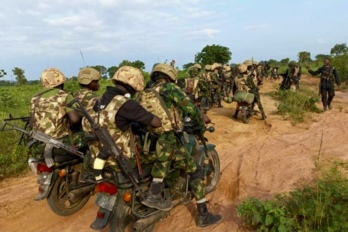
The International Committee of the Red Cross (ICRC) and the Nigerian Army (NA) have decided to deepen their collaboration in order to provide security, humanitarian aid, and observance of international humanitarian law (IHL), thereby broadening the boundaries of peace and stability throughout Nigeria.
The resolution was reaffirmed today, Wednesday, January 31, 2024, at Army Headquarters in Abuja when Mr. Yann Bonzon, the head of the ICRC team in Nigeria, was received by Lieutenant General Taoreed Lagbaja, the COAS.
In his briefing to the COAS, Mr. Yann stated that the ICRC is dedicated to provide humanitarian relief in combat areas across the globe, much like it is doing in North-East Nigeria, where forces are waging counterterrorism warfare and operations against insurgencies. According to him, the Nigerian Red Cross Society (NRCS) has been able to fulfil its mandated duties in many regions of the nation because to friendly working relationships with the NA. So he filed a lawsuit to keep it alive.
The COAS thanked the ICRC in his speech for its dedication to providing humanitarian relief, noting that it had improved the living conditions of conflict victims in unstable areas.
Speaking on the NA’s efforts to increase its capabilities in terms of understanding and applying international humanitarian law to the conduct of operations, the Army Chief noted that the NA has codified its protocol, which is currently used as a manual for NA soldiers to follow. According to him, the ICRC package is taught in to make sure junior officers, senior non-commissioned officers, and non-commissioned officers at all NA institutions are aware of the weight and expectations put on them to adhere to global best practices.
The COAS praised the ICRC for its cooperation in providing training and medical aid, among other things, and promised that the NA would fortify its strong relationship with the ICRC and other statutory organisations in order to aid and relieve conflict victims and broaden the nation’s borders in terms of security and stability.