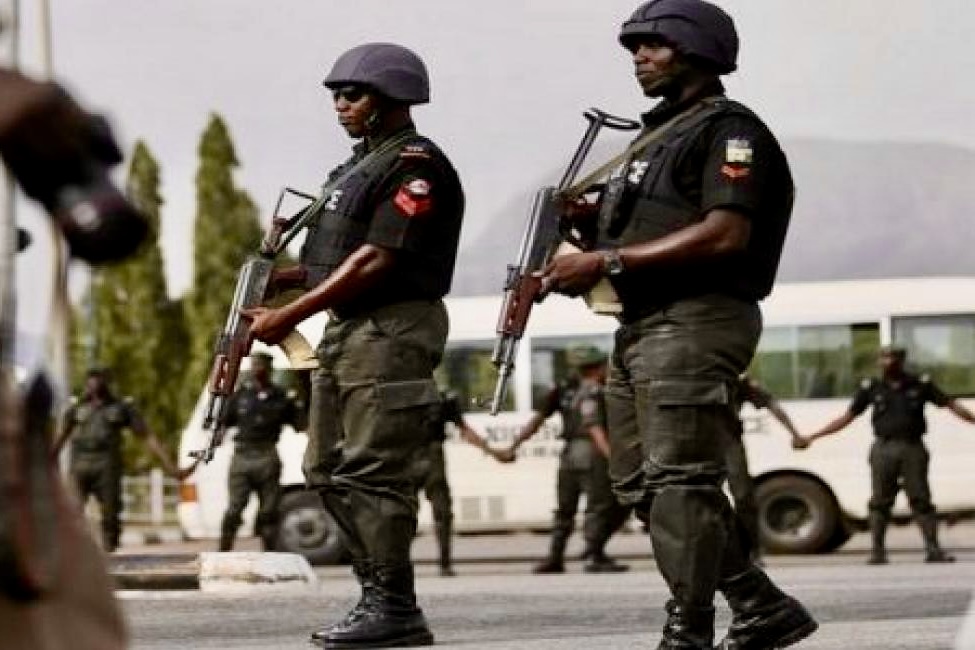
Inspector Ohia Ifeanyi alleges that he was arrested by officers from Zone 9 while helping his family negotiate with his sister’s kidnappers. He says an investigation cleared him, yet the experience left him afraid for his career and convinced that junior officers need a complaints system they can trust.
A Nigerian police inspector says he was detained while trying to help rescue his kidnapped sister, an ordeal that has raised troubling questions about police accountability, the treatment of junior officers and the effectiveness of the channels through which members of the force are supposed to report misconduct.
Inspector Ohia Ifeanyi says he helped negotiate a reduction in the kidnappers’ ransom demand from ₦150 million to ₦3 million. But as his family prepared to meet the abductors, he alleges, a team of officers from Police Zone 9 arrested him.
He maintains that a subsequent investigation established his innocence. The available account, however, does not include the investigation report, custody records or a formal statement from the police explaining why he was arrested.
His allegations were reported by SaharaReporters on October 21, 2026, following a recorded interview with social media personality English Alhaji.
The case presents a difficult question for Inspector-General of Police Olatunji Disu and President Bola Tinubu: what protection does a serving officer have when helping a relative in a kidnapping case exposes him to suspicion, and what happens when that officer subsequently alleges misconduct within the institution he serves?
Ifeanyi says he is prepared to face dismissal, demotion or confinement in the barracks rather than remain silent.
“I know that the commanders, the senior officers, they will not be happy with me because I’m trying to expose the hidden truth,” he said.
He was asked whether he understood the potential consequences of speaking publicly.
“Dismissal. Reduction in rank. Confinement in barracks,” he replied.
He added: “I’ve made up my mind. I’ve asked my wife for apology if I leave the job even though I die because I know that the commander, the senior officers, they will not be happy with me because I’m trying to expose the hidden truth.”
His account is an allegation, not an independently established finding of institutional wrongdoing. But it also raises questions that go beyond one officer’s personal dispute.
From a ₦150 Million Ransom Demand to an Alleged Arrest
According to Ifeanyi, the crisis began while he was recovering from a shoulder injury sustained during an arm-wrestling competition.
He said his sister’s son telephoned to inform him that she had been kidnapped. He contacted relatives and spoke with his brothers as the family tried to establish what had happened and secure her release.
One of his brothers allegedly urged him to do everything possible to ensure their sister was not harmed.
Ifeanyi said he agreed to help negotiate with the kidnappers and recorded conversations to preserve evidence of the discussions.
The initial ransom demand, he claimed, was ₦150 million. He said the negotiations brought the figure down to ₦3 million.
“From N150 million, we started with the kidnapper to N3 million. The children now brought the money. The day the children brought the money, we had to start to negotiate, go to where the kidnapper asked us to come,” he said.
The distinction matters. Helping negotiate a ransom does not, by itself, establish that someone participated in a kidnapping. Nor does the fact that a person is a police officer automatically resolve questions about their role in a criminal investigation.
Investigators would need to establish what the communications showed, how the officer became involved, what evidence supported any suspicion against him and why arrest was considered necessary.
Ifeanyi alleged that the police did not explain their intervention before taking him away.
“A team of police from Zone 9 came and arrested me. No signal. They didn’t inform my office. My wife was not aware. My children were not aware. They took me away,” he said.
He maintained that his brother had previously asked him to assist with the negotiations.
“Why are you arresting me? Why do you want to arrest me again? You are the one that sent me. Look at your voice notes. I have it here,” he recalled telling his brother.
He further alleged that the brother subsequently claimed not to recognise the telephone number Ifeanyi said he had used for more than a decade.
“The number I have used for over 10 years is unknown to him,” he said.
The precise circumstances surrounding the alleged arrest remain unclear from the publicly available account. It does not establish the formal grounds for his detention, the date and duration of his custody or the specific evidence investigators considered.
Those omissions are central to understanding the case.
The Investigation That Ifeanyi Says Cleared Him
Ifeanyi said he was eventually released after investigators concluded their inquiry.
“Investigation have been concluded. I’m innocent. It was a mere allegation,” he said.
That is his account of the outcome. A copy of the investigation report or an independent official confirmation of its findings was not included in the report reviewed by Atlantic Post.
The distinction is important. If an investigation formally cleared him, the report could help establish what prompted the arrest, what evidence was examined and whether any misconduct occurred. If the investigation reached a different conclusion, that should also be made clear.
Ifeanyi alleged that accusations against him continued after his release. He said relatives circulated voice messages blaming him for his sister’s abduction and threatening to damage his reputation.
He described the experience as emotionally devastating.
“I lost my mind. The first frustration. Then after that, investigation proved me innocent,” he said.
He also described a confusing turn in the rescue effort. According to him, police officers subsequently asked him to continue communicating with the kidnappers to secure his sister’s freedom, even though his office had earlier advised him to distance himself from the matter.
“I said, no, sir. You said I’m being involved,” he recalled.
He eventually agreed to resume negotiations after his wife pleaded with him to help his sister.
The alleged kidnappers did not release the woman immediately after the ₦3 million was paid, Ifeanyi said. He claimed they told him to return home and wait, only for him to discover that his sister was not there.
As the uncertainty continued, he said he offered to exchange himself for her.
“I told them that either they kill me, that I’m coming. They should tell me where they are, that I’m coming. Let me exchange myself with my sister, so my sister can go,” he said.
Ifeanyi said his sister was eventually released at about 10pm. He later asked her how the kidnappers had obtained his number and was told that they had taken her telephone.
His account describes the extraordinary pressure on a family trying to secure a kidnapped relative’s freedom. It also raises a question for the authorities: what procedures govern situations in which a serving police officer becomes personally involved in ransom negotiations?
Clear operational guidance could help distinguish legitimate family assistance from conduct that warrants investigation. It could also protect evidence, reduce misunderstandings and prevent relatives from being left to navigate sensitive negotiations without reliable professional support.
Allegations of Police Power Being Used to Intimidate
Ifeanyi’s criticism extends beyond the kidnapping case.
He alleged that some officers use their positions to intimidate members of the public, including people who have not committed an identifiable offence.
He recounted an incident involving an Assistant Superintendent of Police whom he accused of arresting and detaining a man after the man questioned the officer’s alleged closeness to his wife.
The allegation has not been independently established in the material reviewed. No name, date, station record or response from the officer concerned was supplied.
Nevertheless, Ifeanyi said the incident disturbed him because he believed the man had been unfairly targeted.
“I cried that day like a baby. So why should you arrest a poor man? Is it because we are police? It’s not done,” he said.
He accused some officers of using allegations as a tool of intimidation.
“You know, police, when they want to victimise you, they give you things you have never done,” he said.
These claims should be tested against evidence rather than accepted as proof of widespread misconduct. But they identify a fundamental issue in law enforcement: the difference between having the authority to investigate an allegation and using that authority arbitrarily.
A credible accountability process must be capable of determining whether an arrest was justified, whether an officer acted within the law and whether a complaint against an officer has itself triggered retaliation.
Without records and independent scrutiny, it becomes difficult to distinguish a legitimate investigation from an abuse of power.
Nigeria Already Has a Police Complaints Framework
One of the most consequential aspects of Ifeanyi’s appeal is his demand for a reliable platform through which junior officers can report misconduct and mistreatment.
“The complaint, the complaint, the platform I have is nothing because I have been calling the platform. The platform is not going,” he said.
He appealed directly to the Inspector-General.
“Please, the Inspector-General of Police, our father should give us a platform where our voice will be heard because many have decided to die without minding the consequences,” he said.
There is an important distinction between the absence of a complaints mechanism and the failure of an existing one to provide an effective remedy.
Nigeria’s Police Act 2020 already provides for a Police Complaints Response Unit at Force Headquarters and in police commands across the federation and the Federal Capital Territory.
Sections 131 to 134 establish the unit’s framework and provide for complaints about police misconduct from members of the public and other police personnel or authorities. They also outline investigative and reporting procedures.
The statutory framework therefore recognises that misconduct complaints may originate within the force itself, rather than exclusively from members of the public.
There are also publicly listed government complaint channels. The Ministry of Police Affairs maintains information about the Police Public Complaints Committee, including a facility for submitting complaints and tracking their status.
In July 2026, Voice of Nigeria reported that the Nigeria Police Force had strengthened its Complaint Response Unit, describing it as a digital mechanism for receiving, tracking and resolving citizens’ complaints. The report said the force had introduced upgrades intended to improve response times and transparency.
These arrangements complicate the question raised by Ifeanyi. The principal issue is not simply whether a website, telephone line or complaints unit exists. It is whether the channel is accessible, responsive and safe to use, particularly when the complaint concerns someone with greater authority than the person making it.
The existence of a complaint portal does not demonstrate that every submission is received, investigated or resolved. Nor does an operational mechanism for citizens necessarily answer the needs of serving officers who fear disciplinary consequences for reporting their superiors.
The statutory placement of the Police Complaints Response Unit under the Force Public Relations Section also raises a legitimate question about how complaints against senior personnel are handled and what safeguards apply when an internal complaint challenges the conduct of a command.
A credible system should be able to answer five basic questions: Was the complaint received? Who was assigned to investigate it? What protection was available to the complainant? Was a decision reached? And can the complainant challenge an inadequate response without facing retaliation?
Ifeanyi’s allegation that he repeatedly attempted to use a complaints platform without success has not been independently tested. His case nevertheless provides a concrete reason to examine whether the existing framework works in practice for the personnel it is intended to serve.
Low Pay and Welfare Concerns Add to the Pressure
The inspector also described financial hardship as a major source of frustration among junior police officers.
Asked why he did not resign rather than risk punishment for speaking publicly, he pointed to the difficulty of supporting a family amid Nigeria’s rising cost of living.
“My brother, the current situation of Nigeria now, to get one cup of rice is very difficult,” he said.
He added: “The salary is a meal and make a small thing to compare to life.”
Ifeanyi disclosed that he has four children. He also spoke about a colleague who he said died by suicide earlier in 2026, linking the death to frustration and financial pressures. The colleague was not named in the source report, and Atlantic Post could not independently verify the death or establish the circumstances.
His account should not be taken as proof that inadequate pay caused the colleague’s death. It does, however, draw attention to the importance of welfare and psychological support for personnel operating under occupational pressure.
There is a current policy context. On August 4, 2026, the Federal Government announced that a ministerial and stakeholder committee was reviewing the police salary structure, allowances, insurance, pension-related benefits and other welfare packages.
That announcement confirms that the government has placed police remuneration and welfare under review. It does not establish the precise salary paid to Ifeanyi or independently verify his individual financial circumstances.
For the force, the wider challenge is to make sure that welfare reform reaches officers in practice and is accompanied by accessible support for work-related stress, family difficulties and other personal crises.
An officer who cannot reliably support a household may face intense pressure. An officer who also believes that speaking about institutional problems could end his career may be reluctant to seek help.
That is a risk for both personnel welfare and public safety. Officers under severe strain need credible avenues for assistance, while allegations of misconduct must be investigated fairly, irrespective of the rank of the people involved.
Ifeanyi said his own experiences had affected his children’s attitudes towards policing. He claimed they had expressed reluctance to join the force because of what they had seen and heard about the treatment of officers.
Whether that experience is representative of other families is unknown. But it illustrates how institutional reputation can be shaped by the experiences of serving personnel in their own homes.
The Questions IGP Disu Must Answer
The case now calls for documentary clarification, not a contest of competing assertions.
The Nigeria Police Force and Zone 9 could help establish the facts by clarifying the grounds for Ifeanyi’s alleged arrest, the unit that authorised it, the duration of his detention and the outcome of the investigation he says cleared him.
The authorities should also establish whether any complaint was filed by or against him, whether a written investigation report exists and whether his allegations about the conduct of other officers have been referred for independent examination.
A review of the complaints framework should examine how serving officers can report misconduct confidentially, how complaints involving senior officers are escalated and what safeguards exist against reprisals.
The process should produce verifiable outcomes, not merely confirm that a complaint has been received.
An online portal can accept submissions. It cannot, on its own, guarantee a fair investigation, protect a whistleblower or ensure that a complaint results in corrective action.
These issues are especially important where an officer fears dismissal, demotion or confinement in the barracks for speaking out. If those fears are justified, they could discourage legitimate reporting. If they are not, a transparent and fair process is still the best means of dispelling them.
The source report did not provide an official response from the police to Ifeanyi’s allegations. His account therefore remains uncorroborated on several central points, and no conclusion about the legality of his arrest or the conduct of the officers involved can responsibly be reached from the interview alone.
A Complaints System Is Only as Strong as Its Protection
Ifeanyi’s account begins with a kidnapping, a family’s desperate attempt to secure a relative’s freedom and an alleged arrest that he says left him feeling abandoned by both relatives and colleagues.
It ends with an appeal to the leadership of the country and the police force to create a way for junior officers to speak without fear.
“I know that the commanders, the senior officers, they will not be happy with me because I’m trying to expose the hidden truth,” he said.
His allegations remain matters for investigation. But the institutional question is clear enough to demand an answer.
Nigeria does not need to start from the assumption that no complaints mechanisms exist. Its Police Act already provides for a unit that can receive misconduct complaints from police personnel, and government channels for public complaints are also listed online.
The test is whether these mechanisms work when the complaint is difficult, the accused officer is senior or the person reporting the problem fears losing a career on which a family depends.
If Ifeanyi’s account is inaccurate, a documented investigation can help establish that. If his account identifies failures in police procedure or complaint handling, those failures should be acknowledged and corrected.
Either way, the solution is not to let the allegations fade without scrutiny.
A police force must be able to investigate its own personnel. It must also be able to protect those who report genuine misconduct, distinguish evidence from accusation and show that rank does not place anyone beyond accountability.
The most important question raised by Inspector Ohia Ifeanyi is therefore not whether a complaints platform exists.
It is whether a junior officer can use it, challenge wrongdoing and receive a fair hearing without having to gamble his livelihood to make his voice heard.
Follow us on our broadcast channels today!
- WhatsApp: https://whatsapp.com/channel/0029VawZ8TbDDmFT1a1Syg46
- Telegram: https://t.me/atlanticpostchannel
- Facebook: https://www.messenger.com/channel/atlanticpostng

Join the debate; let’s know your opinion.