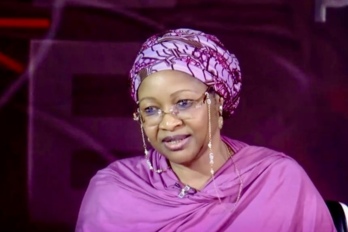
In a sharply worded statement on 27 July 2025, the Middle Belt Forum (MBF) launched a frontal attack on a contentious clause in the National Council for Traditional Rulers of Nigeria (Establishment) Bill, 2024. Sponsored by Senator Simon Bako Lalong (Plateau South).
The legislation seeks to institutionalise the Sultan of Sokoto—and potentially the Ooni of Ife—as permanent co‑chairmen of the proposed council.
The MBF, speaking through its National Spokesman Luka Binniyat, declared its “unequivocal rejection, abhorrence, and condemnation” of the Sultan’s inclusion, arguing that it flies in the face of historical precedent, constitutional equity, and moral decency.
This two‑part investigative report unpacks the MBF’s eight‐point rejection, situating each contention within Nigeria’s rich historical mosaic.
We also explore comparative data on traditional institutions, demography, and secular principles to gauge the full gravity of this legislative gambit.
Legislative Context and MBF’s Stance
The Bill’s Progress
Originally introduced on 8 October 2024, the National Council for Traditional Rulers (Establishment) Bill cleared its second reading in the Senate on 13 March 2025.
Senator Lalong, a former Plateau State governor, championed the bill as a means to formalise and empower traditional rulers at the federal level, harking back to their influential role under colonial indirect rule and during the First Republic.
Referred to the Senate Committee on Establishment and Public Service, the bill now awaits final debate, with its most controversial clause perched at the centre of a storm.
MBF’s Declaration
In its 27 July statement from Abuja, the MBF contended that the bill’s attempt to make the Sultan of Sokoto a permanent co‑chairman offends the federal principle, risks religious bias, and ignores the Middle Belt’s proud heritage of autonomous monarchies.
The MBF threatened a wholesale boycott of the council unless the clause is removed, signalling a potential national crisis if the bill proceeds unchanged.
Point 1: Sokoto Sultanate’s Historical Junior Status
The MBF asserts that the Sokoto Caliphate—founded by Usman dan Fodio’s jihad in 1804—is relatively young compared to Middle Belt polities that trace their origins to as early as the 13th century.
Kwararafa Confederacy: Flourishing along the Benue River, the Kwararafa state existed from at least the 15th century (c. 1500) and possibly earlier, under a multi‑ethnic confederacy system that predated Sokoto by centuries.
Wukari Federation: As successor to Kwararafa, the Aku Uka of Wukari claims lineage to the confederacy’s apex, reinforcing its primacy over later Fulani‑led emirates.
Thus, the MBF argues, it would be an affront to sit the Sultan—whose sovereign authority is scarcely two centuries old—above the Aku Uka in a federal council of traditional rulers.
Point 2: Attah of Igala’s Superior Pedigree
Positioned at the strategic confluence of the Niger and Benue rivers, the Igala Kingdom dates back to at least the 14th century. Governed by the Àtá Ígáláà, the kingdom maintained independence from the Sokoto Caliphate and boasted complex administration and military prowess.
Pre‑14th century: Archaeological and oral records place Igala authority well before much of Hausaland came under the Sokoto Caliphate.
Political autonomy: Unlike regions absorbed by Fulani jihadists, the Igala persisted, negotiating its status with both British colonial administrators and post‑independence governments.
The MBF thus holds that elevating the Sultan above the Attah would distort the historical and cultural hierarchy of Nigeria’s monarchies.
Point 3: Tor Tiv and the Tiv Nation’s Independence
The Tiv people, numbering over 5 million and comprising about 2.4% of Nigeria’s population, established no centralised monarchy until the British colonial creation of the Tor Tiv stool in 1946.
Acephalous tradition: Prior to 1946, the Tiv operated largely through autonomous clan structures and seasonal councils, refusing emirate‑style centralisation.
Tor Tiv’s role: The creation of the chairmanship was an act of colonial convenience, not a surrender of heritage. To subordinate this symbol of Tiv unity to the Sultan’s religious authority is, in the MBF’s view, a grievous insult.
Point 4: Nupe Kingdom’s Precedence
With roots stretching back to the 15th century, the Nupe Kingdom (also known as Bida Emirate) wielded considerable influence along the Niger–Kaduna corridor before Fulani incursions in the early 19th century.
15th–18th centuries: Under legendary rulers like Tsoede (c. 1496–1591), the Nupe expanded through warfare, alliance, and trade, rivaling neighbouring states.
Cultural endurance: Despite subjugation during the Fulani jihad (1835–?), the Etsu Nupe today remain custodians of a kingdom that predates Sokoto’s claim to primacy.
Thus, in no coherent framework can the Sultan’s office legitimately outrank the Etsu Nupe.
Point 5: Sultan as Religious, Not Secular, Figurehead
The MBF emphasises that the Sultan of Sokoto serves principally as the spiritual head of Nigerian Muslims—not as a secular, ethnocultural monarch.
Today, the Sultan’s writ extends across the 19 Northern States and the Federal Capital Territory, where he presides over Jama’atu Nasril Islam and wields considerable moral authority in religious affairs.
Under Nigeria’s 1999 Constitution, Section 10 explicitly enshrines a secular state: “The Government of the Federation or of a State shall not adopt any religion as State Religion” and guarantees freedom of thought, conscience and religion to all citizens.
To institutionalise the Sultan—a clerical figurehead—at the apex of a statutory council of traditional rulers would contravene the secular spirit of the Constitution and risk alienating Christian and indigenous faith adherents.
It would also undermine Nigeria’s commitment to religious neutrality and equal representation, skewing the Council’s balance in favour of Islam.
Point 6: Kanem‑Borno Legacy Outranks the Caliphate
Though not of the Middle Belt, the Kanem–Bornu Empire predates the Sokoto Caliphate by nearly a millennium. Originating in the Kanem kingdom circa the 9th century, it became one of Africa’s longest‑running dynasties, maintained by the Sayfawa dynasty until the 19th century, when the al‑Kanemi Shehus assumed power.
By contrast, the Sokoto Caliphate was founded in 1804 and lasted barely a century before British colonial restructuring.
Today, the Shehu of Borno, seated at Yerwa, is routinely recognised—after the Sultan—as the second most important traditional Muslim leader in Nigeria, a testament to Kanem‑Borno’s enduring prestige.
If the Sultan’s office is unworthy of rotational parity with the Aku Uka of Wukari or the Attah of Igala, it certainly cannot claim undisputed primacy over the Shehu of Borno.
Point 7: Patronage of MACBAN and Fulani‑Herders Violence
Perhaps the most explosive allegation concerns the Sultan’s permanent patronage of the Miyetti Allah Cattle Breeders Association of Nigeria (MACBAN), an organisation widely associated with violent Fulani herdsmen attacks.
From 2020 to 2024, over 2,300 fatalities were recorded in armed invasion of farming communities by militant Fulani herdsmen, with recent massacres in Benue State alone claiming 42 lives in late May 2025 and at least 150 more in June’s Yelewata onslaught.
Genocide Watch now ranks Nigeria 6th on its Global Terrorism Index—yet this metric fails fully to account for Fulani militia atrocities, which continue unabated across the Middle Belt, displacing millions and decimating agrarian communities.
By refusing to publicly repudiate or sanction MACBAN’s militant wing, the Sultan has left victims feeling betrayed.
Enshrining him as perpetual co‑chair of the Traditional Rulers’ Council would appear as state‑sanctioned complicity in regional violence.
Point 8: The Middle Belt’s Historic Autonomy
From the 19th‑century jihad waged by Usman dan Fodio to British colonial indirect rule, the Middle Belt fiercely defended its autonomy.
While Hausaland succumbed to Fulani Emirates, the region retained its acephalous clans and confederations, resisting full absorption until the colonial administration forcibly placed chiefs under emirate jurisdiction.
Today, these inherited structures—embodied in the titles of Aku Uka, Tor Tiv and Attah of Igala—symbolise a sovereign heritage untainted by Fulani dominion.
To subordinate them to a “First Among Equals” who rose to prominence through religious conquest and colonial favour would reopen old wounds and betray the very essence of federal equality.
MBF’s Firm Position
In unambiguous terms, the Middle Belt Forum declares that, should the bill pass with the contested clause intact:
- Boycott of Council: All Middle Belt traditional rulers will refuse to attend or recognise Council meetings under a Sultan‑co‑chair regime.
- Formation of Alternative Council: A self‑determined Council of Middle Belt Traditions, democratically constituted and reflective of indigenous values, will be established.
- Mobilisation: Ethnic nationalities across the Middle Belt will be mobilised to resist, through lawful and constitutional means, any imposition of Sultanine primacy.
The Path Forward: Proposals for Equity
To avert national fracturing and preserve true federal character, the MBF urges:
- Rotational Chairmanship
– A fixed tenure (e.g., three years), rotating among geo‑political zones, ensures equal voice and ownership. - Democratic Selection
– Traditional rulers themselves, through secret ballot, elect the Council Chair(s), guaranteeing representation untainted by executive fiat. - Inclusivity Charter
– The Council’s constitution must enshrine secular principles, historical parity, and transparent governance, safeguarding against religious or ethnic bias.
Conclusion
Nigeria stands at a constitutional crossroads. Sixty-five years after independence, genuine national cohesion demands fairness, mutual respect and recognition of our diverse historical legacies.
The Middle Belt Forum’s uncompromising stance exposes the dangerous folly of elevating a purely religious figurehead over secular monarchs whose lineages stretch back centuries.
Any attempt to immortalise the Sultan of Sokoto as perpetual co‑chair of the National Council for Traditional Rulers would not only violate the secular clause of the Constitution but also resurrect colonial hierarchies and deepen regional fault lines.
The MBF vows to resist such a travesty using every lawful, democratic means.