The Nigerian National Petroleum Company Limited (NNPC Ltd) yesterday emphatically quashed rumours of a divestment of the Port Harcourt Refining Company, opting instead to accelerate an already protracted rehabilitation.
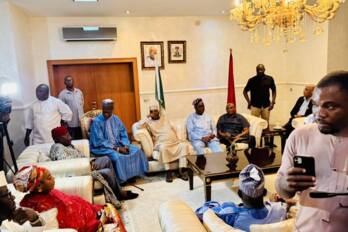
In a dramatic address at the NNPC Towers town hall, Group Chief Executive Bashir Bayo Ojulari dismissed speculation—sparked by his recent “all options are on the table” quip in Vienna—as ill‑advised noise.
Yet, behind the applause from staff, sceptics question whether this volte‑face masks deeper dysfunction in Nigeria’s refining saga.
Once the Crown Jewel, Now a Rusting Relic
Commissioned in 1965 and expanded from 38,000 to 60,000 barrels per day (bpd) in the 1970s to meet surging demand, Port Harcourt was once Nigeria’s refining flagship.
Today, it languishes alongside Warri (125,000 bpd) and Kaduna (110,000 bpd) as part of NNPC’s triplet of moribund refineries, which collectively boast a theoretical 445,000 bpd capacity but seldom exceed single‑digit utilisation.
Over the past decade alone, Abuja has outlaid some ₦11.35 trillion (approx. US$25 billion) on repairs—with scant uptick in output—prompting the Senate to demand a forensic audit of the US$1.5 billion contract awarded in 2021 for Port Harcourt’s turnaround maintenance.
A History of False Dawns
NNPC’s rationale for retention emphasises “high‑graded partnerships” to complete rehabilitation, asserting that pre‑emptive operations prior to full overhaul were “ill‑informed and sub‑commercial”.
Yet, this admission only underscores years of poor planning: dozens of feasibility studies, endless technical reviews and boardroom reshuffles have yielded nothing beyond invoices.
Industry analysts estimate that Nigeria has poured upwards of US$20 billion into its refineries over the last 30 years, with “nothing to show” in sustained production capacity.
Oil Import Bill Plummets—What’s Left for NNPC?
Paradoxically, Nigeria’s downstream woes have been partially masked by the meteoric rise of the privately owned Dangote refinery.
The 650,000 bpd facility has sliced petrol import bills by over 54% in Q1 2025—falling from ₦3.81 trillion to ₦1.76 trillion year‑on‑year—while also trimming state expenditure on foreign‑refined products by nearly half.
As Dangote clamps down on imports, NNPC is left with idle towers at Port Harcourt, its own flagship facility, and the spectre of continued losses.
“All Options” and Other Off‑The‑Cuff Remarks
The Bloomberg interview in Vienna, where Ojulari declared that “all options are on the table,” ignited a media frenzy over potential sales or joint‑ventures with foreign majors.
Headlines speculating on the privatisation of national assets proliferated, stoking anxiety in both political and business circles.
Within 24 hours, investors and op‑eds alike were debating whether Nigerian oil infrastructure was for sale to the highest bidder—a conversation subsequent neatly quashed at yesterday’s town hall.
“Selling at this juncture would invite further value erosion,” Ojulari told attendees, insisting that technical partnerships—not transfer of ownership—were the way forward. Yet insiders whisper that chronic underfunding and mismanagement leave few genuine “partnerships” willing to absorb NNPC’s baggage.
Conservative Critique: A Call for Accountability
From a political conservative standpoint, the U‑turn raises red flags about governance and fiscal probity.
If NNPC cannot efficiently manage, let alone complete, a rehabilitation project of such magnitude, why should Nigerians foot the bill again?
Critics argue that the Federal Government’s refusal to seek external equity or management buy‑in betrays an ideological zeal to retain control, even at steep economic cost.
As one veteran banker commented—off the record—“We’re pouring good naira after bad. It’s time for strategic sell‑downs, not limping along with ghost plants.”
Moreover, Nigeria’s balance of payments continues to suffer from fuel imports.
Despite Dangote’s interventions, the country still imported over US$4.78 billion of crude and refined products in Q1 2025, representing more than 30% of total import value—hardly a vindication of NNPC’s stewardship.
With global oil markets volatile and the naira under pressure, maintaining three ageing refineries appears less strategic imperative and more fiscal folly.
Comparative Lessons from Abroad
Contrasting Nigeria’s travails with peers highlights the gulf in efficiency. India’s state‑owned Bharat Petroleum revamped its Kochi refinery through a US$2 billion joint venture in just four years, boosting capacity by 180,000 bpd and attracting international investment.
Meanwhile, South Africa’s PetroSA turned the tide at its ageing refinery by forming a public‑private consortium, cutting operating costs by 30% and achieving self‑sufficiency.
By contrast, NNPC’s 2021 contract remains mired in delays and cost overruns.
Behind the Rhetoric: Workforce Morale and the Road Ahead
The town hall’s applause from “hundreds” of staff suggests a workforce eager for clarity after years of false starts.
Described by attendees as “reassuring” and “transformational,” the meeting offered a rare moment of alignment—albeit within the echo chamber of NNPC’s corporate enclave.
The Executive Vice Presidents’ progress reports across Upstream, Downstream, Finance, Gas and New Energy units laid bare both achievements and lingering gaps, but concrete timelines for Port Harcourt’s restart remain elusive.
“We are unwavering in our responsibility to Nigerians,” Ojulari concluded, yet stopped short of a definitive restart date. He did, however, promise quarterly updates—a commitment that, if honoured, would mark the first sustained timeline in more than half a decade.
Conclusion: National Pride or Perpetual Promise?
NNPC’s re‑announcement of Port Harcourt’s non‑sale does little to assuage fundamental concerns: chronic underinvestment, opaque procurement and the absence of private capital.
For Nigerian economists and taxpayers, the most pressing question is not whether the refinery will be sold, but whether it will ever operate profitably, sustainably and on schedule.
With global refining margins under pressure and domestic policy oscillating between protectionism and liberalisation, the fate of Port Harcourt may well determine Nigeria’s broader energy security.
Until then, the refinery remains a symbol—of national ambition, bureaucratic inertia and the existential struggle between state control and market pragmatism.
In the words of a retired industry regulator, “Port Harcourt has always been the country’s lost child—born of hope, raised by broken promises, and watched over by well‑meaning but hapless guardians.”
Whether NNPC Ltd can break this cycle is the true test of both leadership and legacy.